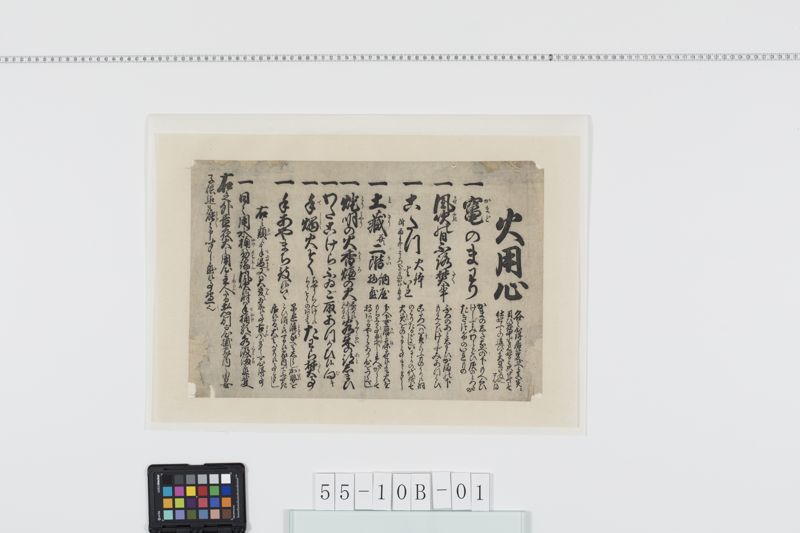
翻刻
《題:火用心》《割書:各々心得居候事候へと真実に|用ひ夜中にも見廻ると只口斗にて|仕廻ふとの違ひゟ大変にも及也| 可心得》
《題:一 竈(かまど)のまわり》《割書:かまのしたなべの下もへくひ|けしずみわらばひ灰のとつたの|たきつけのいれもの》
《題:一 風吹(かせふき)のふろ焚(たく)事》《割書:ふろのあとしまひかまの下|もえくひけらずみあつはひ》
《題:一 こたつ》《割書:火鉢|火いれ》《割書:こたつへは簀(す)といふものうり候銅|のはりたるがよしいさゝかの代銭にて|火 災(さい)をのかるゝ事まゝ多し》
《割書:附 留主中 こたつへきものかけ置事|》
《題:一 土蔵(とさう)》并に《題:二 階(かい)》《割書:納屋|物置》《割書:下人下女二 階(かい)に寝(ね)させ候とも火を|もち上る事(こと)禁(いましむ)へし主人へかくして|持あがるやからあり心をつくべし》
《題:一 灯明(とうみやう)の火 香炉(かうろ)の火》《割書:しめり候|あとも|見ること》《題:客来(きやくらい)の跡(あと)しまひ》
《題:一わたこけらふゐご取あつかひ候 向(む) ̄キ》
《題:一 手燭(てしよく)火そく》《割書:ちやうちんけし候|らうそくのあとも》《題:たわら焚(たく)事》
《題:一手あやまち致候はゝ》《割書:早速 隣(となり)家へもしらし加勢(かせい)を|こひ消とめ可申候家内にてふせき|居候間に大火になり候事多し》
右之 類(るい)ゟ手過(てあやまち)又は大 変(へん)に相成候事 古今(ここん)に多し可心得事
《題:一日々用水 桶(おけ)は勿論(もちろん)風吹候時は手桶(ておけ)類へ水 汲溜(くみため)置候事》
右之外昼夜火之用心 主人(しゆじん)たる者別て心掛家内之男女
子供迠も能々(よく〳〵)申聞し置候事専一也
現代語訳
**火の用心(火災予防)**
> 各自が心得ているとは言っても、真実に実行して夜中にも見回るのと、ただ口先だけで済ませるのとでは大きな違いがあり、大変な事態にもなりかねない。よく心得るべきこと。
**一、竈(かまど)のまわり**
> 釜の下、鍋の下の燃え残り・消し炭・藁灰・灰の取り扱い、焚きつけの入れ物(に注意すること)。
**一、風が吹く日の風呂焚きについて**
> 風呂のあと片付け、釜の下の燃え残り・消し炭・熱い灰(に注意すること)。
**一、こたつ・火鉢・火入れ**
> こたつには「簀(す)」と呼ばれるもの——銅を張ったもの——が売られており、それを使うのがよい。わずかな代金で火災を防げることが多い。
>
> 附記:留守中にこたつへ着物をかけておくことに注意。
**一、土蔵および二階・納屋・物置**
> 下男・下女を二階に寝かせることがあっても、火を持って上がることを禁じるべきである。主人に隠して火を持ち上がる者があるので、十分に気をつけるべし。
**一、灯明の火・香炉の火**(湿った後も確認すること)**・客が帰った後の片付け**
**一、綿・こけら(木片)・ふいご(鞴)の取り扱いについて 向き(方角)**
**一、手燭・火束**(提灯を消したあと、蝋燭の後始末も)**・たわらを焚くこと**
**一、手違いや過失があった場合**
> すぐに隣家にも知らせ、助けを求めて消し止めるべきである。家の中だけで防いでいる間に大火になることが多い。
右のような事柄から、手過ち、あるいは大変な事態になることは古今を通じて多い。よく心得るべきことである。
**一、日々の用水桶はもちろん、風が吹く時には手桶の類に水を汲み溜めておくこと。**
以上のほか、昼夜を問わず火の用心については、主人たる者がとりわけ心がけ、家内の男女・子供に至るまで十分に申し聞かせておくことが何より大切である。
英語訳
**Fire Safety Precautions**
> Although everyone believes they are prepared, there is a great difference between truly practicing fire safety—including making rounds at night—and merely paying lip service to it. This difference can lead to great disaster. Take heed of this well.
**1. Around the Hearth (Kamado)**
> Pay attention to embers and charcoal remaining beneath the pot and kettle, ash from straw, the handling of ash, and the containers used for kindling.
**1. Bathing Fires on Windy Days**
> After the bath, carefully attend to the remains beneath the furnace: unburned pieces of fuel, charcoal residue, and hot ash.
**1. Kotatsu, Hibachi (charcoal braziers), and Fire Containers**
> For the kotatsu, it is advisable to use a product sold called a *su* (簀)—a copper-lined cover. For a modest price, it can prevent fire disasters in many cases.
>
> Note: Take care not to leave clothing draped over the kotatsu when the house is unoccupied.
**1. Storehouses (Dozō), Upper Floors, Storerooms, and Outbuildings**
> Even if male and female servants are allowed to sleep on the upper floor, they must be strictly forbidden from carrying fire upstairs. Be vigilant, as there are those who carry fire upstairs in secret, hiding it from the master of the house.
**1. Votive Lamp Flames and Incense Burner Flames** (Check even after they appear to be extinguished.) **Tidying up after guests have visited.**
**1. Handling Cotton, Wood Shavings (Kokera), and Bellows — Directions (Orientation)**
**1. Hand Candles and Torches** (Attend to the remains of candles even after lanterns are extinguished.) **Burning straw bales.**
**1. In the Event of an Accidental Mistake**
> Immediately notify the neighboring household, ask for their assistance, and work together to extinguish the fire. Many great fires have broken out because people attempted to handle the situation within their own household while the fire grew.
In the manner described above, accidents and great disasters arising from such causes have been numerous throughout history. Take heed of this well.
**1. Keep water buckets filled for daily use at all times; on windy days, be sure to fill hand buckets and other containers with water in advance.**
Beyond the above, the master of the household must be especially mindful of fire safety at all hours of the day and night, and it is of the utmost importance that he thoroughly instruct all members of the household—men, women, and children alike.