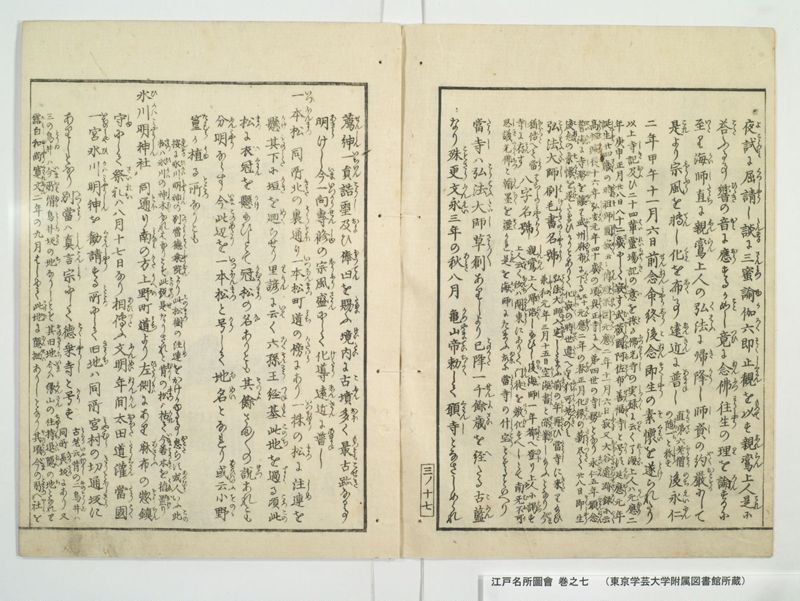
翻刻
【右丁】
夜(よ)試(こゝろみ)に屈請(くつしやう)し談(たんする)に三蜜諭伽(さんみつゆか)#1六即(ろくそく)止観(しくわん)を以(もつて)す親鸞上人(しんらん )是(これ)に
答(こた)ふる事 響(ひゝき)の音(おと)に應(おう)するか如(こと)し竟(つひ)に念佛往生(ねんふつわうしやう)の理(り)を論(ろん)するに
至(いた)り海師(かいし)直(たゝち)に親鸞上人(しんらん )の弘法(くはふ)に帰降(きかう)し師資(しし)の約(やく)嚴(おこそか)にして
是(これ)より宗風(しうふう)を轉(てん)し化(くえ)を布(しく)事 遠近(ゑんきん)に普(あまね)し《割書:直弟(ちきてい)六老僧( らうそう)|の随一(すゐいち)と称(しよう)す》後(のち)永仁(えいにん)
二年甲午十一月六日 前念命終(せんねんみやうしう)後念即生(こねんそくしやう)の素懐(そくわい)を遂(とけ)られたり
《割書:以上 寺記(しき)及(およ)ひ二十四輩靈塲記( はいれいちやうき)の意(い)を採(と)る佛光寺(ふつくわうし)の実録(しつろく)に云(いは)く了海上人(れうかい )は元應(けんおう)二|年庚申正月廿八日 八十二歳( さい)にして寂(しやく)す武蔵國(むさしのくに)阿佐布(あさふ)善福寺(んふくし)と号(かう)す延應(えむおう)元年》
《割書:誕生(たんしやう)廿四歳( さい)の時(とき)祖師(そし)圓寂(ゑんしやく)云々傳燈系図(てんとうけいつ)元應(けんおう)二年十一月六日 寂(しやくす)又 大谷遺跡録(おほたにゆゐせきろく)に云(いはく)|髙祖(かうそ)滅後(めつこ)十六年 弘安(こうあん)元年 四十歳( さい)の頃(ころ)興正寺(こうしやうし)に入弟四世の寺務(しむ)となり永仁(えいにん)五年 願念(くわんねん)》
《割書:誓海(せいかい)に寺務(しむ)を讓(ゆつ)り武州(ふしう)麻布(あさふ)に下(くた)る《割書:五十|九》元應(けんおう)二年の春(はる)正月 化縁(けえん)の薪(たきゝ)尽(つき)て廿八日 即生(そくしやう)|後念(こねん)の素懐(そくわい)を遂(とけ)たまひけりとありて化寂(けしやく)の時世(しせい)違(たか)へり猶(なほ)可考(かんかふへき)のみ》
弘法大師刷毛書名號(こうはふたいしはけかきのみやうかう)《割書:弘法大師(こうはふたいし)入定(にふちやう)したまふ前(まへ)の年(とし)再(ふたゝ)ひ當寺(たうし)に来(きた)り給ひ|承和(しやうわ)元年三月十五日 空海書(くうかいしよ)と染筆(せんひつ)し給ふとなり今(いま)》
《割書:猶(なほ)傳(つた)へて當(たう)|寺(し)に存(そん)す》八字名號(はちしのみやうかう)《割書:親鸞上人(しんらん )帰洛(きらく)し給ひし後(のち)海師(かいし)一年 都(みやこ)へ登(のほ)り上人に謁(えつ)す|上人 云(いは)く汝(なんち)は關東(くわんとう)にありて門徒(もんと)を教化(けうけ)すへしとて南无不可(なむふか)》
《割書:思議光佛(しきくわうふつ)と翰墨(かんほく)を灑(そゝ)かれ是(これ)を海師(かいし)にたまふ故(ゆゑ)に當寺(たうし)の什宝(しうはう)とするといへり|》
當寺(たうし)は弘法大師(こうはふたいし)草創(さう〳〵)ありしより已降(このかた)一千餘歳( せんよさい)を経(へ)たる古藍(こらん)
なり殊更(ことさら)文永(ふんえい)三年の秋(あき)八月 亀山帝(かめやまてい)勅(ちよく)して願寺(くわんし)となさしめられ
【左丁】
薦紳(せんしん)一員(いちいん)詰璽(こうし)及(およ)ひ俸田(ほうてん)を賜(たま)ふ境内(けいたい)に古墳(こふん)多(おほ)く最(もつとも)古跡(こせき)なる事
明(あきら)けし今(いま)一向専修(いつかうせんしゆ)の宗風(しうふう)盛(さかん)にして化導(けたう)遠近(ゑんきん)に普(あまね)し
一本松(いつほんまつ) 同所 北(きた)の裏通(うらとほ)り一本松町道(いつほんまつ みち)の傍(かたはら)にあり一株(いつちゆう)の松(まつ)に注連(しめ)を
懸(かけ)其下(そのした)に垣(かき)を廻(めく)らせり里諺(りけん)に云(いは)く六孫王経基(ろくそんわうつねもと)此地(このち)を過(すく)る頃(ころ)此(この)
松(まつ)に衣冠(いくわん)を懸(かけ)給ひしとて冠松(かむりまつ)の名(な)ありとも其餘(そのよ)さま〳〵の説(せつ)あれとも
分明(ふんみやう)ならす今(いま)此辺(このあたり)を一本松(いつほんまつ)と号(かう)して地名(ちめい)となれり或云(あるひはいふ)小野(をのゝ)
篁(たかむら)か植(うゆ)る所(ところ)なりとも
《割書:按(あんする)に氷川明神(ひかはみやうしん)の別當(へつたう)德乗院(とくしやうゐん)より此(この)松樹(まつ)の注連(しめ)をかけかゆる事 怠(おこた)らす或人(あるひと)いふ此(この)|松(まつ)は氷川(ひかは)の神木(しんほく)なれはなりとそ此説(このせつ)是(せ)なりされと昔(むかし)の松(まつ)は枯(かれ)て今(いま)若木(わかき)を植置(うゑおけ)り》
氷川明神社(ひかはみやうしん ) 同 通(とほ)り南(みなみ)の方(かた)上野町道(うへの みち)より左側(ひたりかは)にあり麻布(あさふ)の惣鎮(そうちん)
守(しゆ)にして祭礼(さいれい)は八月十七日なり相傳(あひつた)ふ文明年間(ふんめいねんかん)太田道灌(おほたたうくわん)當國(たうこく)
一宮(いちのみや)氷川明神(ひかはみやうしん)を勧請(くわんしやう)する所(ところ)にして旧地(きうち)は同所 宮村(みやむら)の切通坂(きりとほしさか)に
ありしとなり別當(へつたう)は真言宗(しんこんしう)にして德乗寺(とくしやうし)と号(かう)す《割書:古老云(こらういふ)昔(むかし)の二鳥井(にのとりゐ)は|同所 長坂(なかさか)にあり又》
《割書:《振り仮名:三の鳥井| とりゐ》は今(いま)所謂(いはゆる)鳥井坂(とりゐさか)の地(ち)なりしとそ其(その)旧地(きうち)今(いま)は縁山(えんさん)の住持(ちゆうち)退隱(たいゐん)の地(ち)となれり|露白和尚(ろはくおしやう)寛文(くわんふん)二年の九月はしめて此地(このち)に隱栖(ゐんせい)ありしとなり其頃(そのころ)今(いま)の所(ところ)へ社(やしろ)を》
現代語訳
【右丁】
ある夜、試しに屈請して談論する際に、三密瑜伽や六即止観について論じた。親鸞上人はこれに答えること、響きが音に応じるかのようであった。ついに念仏往生の理について論じるに至り、了海師は直ちに親鸞上人の弘法に帰依し、師弟の約束は厳かなものとなった。これより宗風を転じて教化を布くこと、遠近に広く行き渡った。《直弟子六老僧の随一と称する》後に永仁二年甲午十一月六日、前念命終後念即生の本懐を遂げられた。
《以上、寺記および二十四輩霊場記の意を採る。仏光寺の実録によれば、了海上人は元応二年庚申正月二十八日、八十二歳にして寂した。武蔵国麻布善福寺と号す。延応元年誕生、二十四歳の時、祖師円寂云々。伝燈系図では元応二年十一月六日寂す。また大谷遺跡録によれば、高祖滅後十六年、弘安元年四十歳の頃、興正寺に入り第四世の寺務となり、永仁五年、願念誓海に寺務を譲り、武州麻布に下る《五十九》。元応二年の春正月、化縁の薪尽きて二十八日、即生後念の本懐を遂げたまいけりとあって、化寂の時世が違っている。なお考えるべきのみ》
弘法大師刷毛書名号《弘法大師入定したまう前の年、再び当寺に来たり給い、承和元年三月十五日、空海書と染筆し給うとなり。今なお伝えて当寺に存す》
八字名号《親鸞上人帰洛し給いし後、了海師一年、都へ登り上人に謁す。上人云く、汝は関東にありて門徒を教化すべしとて、南無不可思議光仏と翰墨を灑がれ、これを了海師にたまう。故に当寺の什宝とするといえり》
当寺は弘法大師草創ありしより以降、一千余歳を経たる古刹なり。殊更文永三年の秋八月、亀山帝勅して願寺となさしめられ
【左丁】
薦紳一員、国師および俸田を賜う。境内に古墳多く、最も古跡なること明らけし。今一向専修の宗風盛んにして、教導遠近に普し。
一本松 同所北の裏通り一本松町道の傍らにあり。一株の松に注連を懸け、その下に垣を廻らせり。里諺に云く、六孫王経基この地を過ぐる頃、この松に衣冠を懸け給いしとて冠松の名ありとも、その余さまざまの説あれども分明ならず。今この辺りを一本松と号して地名となれり。或いは云う、小野篁が植うる所なりとも。
《按ずるに、氷川明神の別当徳乗院より、この松樹の注連をかけ替ゆること怠らず。或る人いう、この松は氷川の神木なればなりと、そこの説これなり。されど昔の松は枯れて、今若木を植え置けり》
氷川明神社 同通り南の方、上野町道より左側にあり。麻布の総鎮守にして祭礼は八月十七日なり。相伝う、文明年間太田道灌当国一宮氷川明神を勧請する所にして、旧地は同所宮村の切通坂にありしとなり。別当は真言宗にして徳乗寺と号す。《古老云う、昔の二の鳥居は同所長坂にあり、また三の鳥居は今所謂鳥居坂の地なりしとそ。その旧地、今は縁山の住持退隠の地となれり。露白和尚寛文二年の九月初めてこの地に隠棲ありしとなり。その頃今の所へ社を》
英語訳
[Right page]
One night, as a trial, he humbly requested a discussion on the Three Mysteries of Yoga and the Six Stages of Meditation. Saint Shinran responded to this as naturally as an echo responds to sound. Eventually they came to discuss the principle of rebirth through the nembutsu, and Master Ryōkai immediately converted to Saint Shinran's teachings, with their master-disciple bond being solemnly established. From this point, he changed his sectarian style and spread his teachings widely, both far and near. <<He is called one of the six direct disciples>> Later, on the 6th day of the 11th month of the 2nd year of Einin (1294), he achieved his long-cherished wish of "dying in the previous moment, being reborn in the next moment."
<<The above is taken from temple records and the Record of Twenty-four Sacred Sites. According to the actual records of Bukko-ji Temple, Saint Ryōkai died on the 28th day of the 1st month of the 2nd year of Gen'ō (1320) at age 82. He was called Zenpuku-ji of Azabu, Musashi Province. Born in the 1st year of En'ō, when the founder passed away at age 24... According to the Lineage Chart of the Transmission of the Lamp, he died on the 6th day of the 11th month of the 2nd year of Gen'ō. Also, according to the Record of Ōtani Sites, sixteen years after the founder's death, around the 1st year of Kōan when he was 40, he entered Kōshō-ji and became the fourth temple administrator. In the 5th year of Einin, he transferred the temple administration to Gannen Seikai and went down to Azabu in Musashi Province <<age 59>>. In the spring of the 2nd year of Gen'ō, in the 1st month, when his karmic connections were exhausted, on the 28th day he achieved his long-cherished wish of immediate rebirth in the next moment. However, there are discrepancies in the dates of his death that still need to be examined>>
Kōbō Daishi's Brush-written Sacred Name <<The year before Kōbō Daishi entered eternal meditation, he came again to this temple, and on the 15th day of the 3rd month of the 1st year of Jōwa, he wrote with his brush "Written by Kūkai." This is still preserved at our temple>>
Eight-Character Sacred Name <<After Saint Shinran returned to Kyoto, Master Ryōkai went up to the capital for a year and had an audience with the Saint. The Saint said, "You should teach the followers in the Kantō region," and brushed the characters "Namu Fukashigi Kō Butsu" (Homage to the Buddha of Inconceivable Light) and gave this to Master Ryōkai. Therefore, it is said to be a treasured possession of our temple>>
This temple is an ancient monastery that has existed for over a thousand years since its founding by Kōbō Daishi. Especially in the autumn of the 3rd year of Bun'ei (1266), Emperor Kameyama issued an imperial edict making it an imperial prayer temple
[Left page]
He granted it a court noble position, national teacher status, and stipend fields. There are many ancient tombs within the temple grounds, clearly indicating it is a most ancient site. Now the Pure Land exclusive practice sectarian style flourishes, and its teachings spread widely both near and far.
Ipponmatsu (One Pine Tree) - Located beside the road of Ipponmatsu-machi on the back street to the north of the same area. A shimenawa rope is hung on a single pine tree, with a fence built around its base. According to local legend, when Prince Rokuson'ō Tsunemoto passed through this area, he hung his court dress and cap on this pine, hence the name "Crown Pine," though there are various other explanations that are not clear. Now this area is called Ipponmatsu and has become a place name. Some say it was planted by Ono no Takamura.
<<Upon consideration, the Tokujo-in, which serves as the administrator of Hikawa Myōjin Shrine, never fails to replace the shimenawa rope on this pine tree. Someone said that this pine is a sacred tree of Hikawa, and this explanation seems correct. However, the old pine died and now a young tree has been planted>>
Hikawa Myōjin Shrine - Located on the left side from Ueno-machi road, to the south of the same street. It is the general tutelary shrine of Azabu, with its festival on August 17th. According to tradition, during the Bunmei era, Ōta Dōkan established this shrine by inviting the spirit of Hikawa Myōjin, the first shrine of this province. The old site was at Kiritōshi slope in Miyamura of the same area. The administrator is of the Shingon sect and is called Tokujō-ji. <<The elderly say that the old second torii gate was at Nagasaka in the same area, and the third torii gate was at what is now called Torii slope. That old site has now become the retirement place for the head priest of Enzan. The priest Rōhaku first took up hermitage at this site in the 9th month of the 2nd year of Kanbun (1662). Around that time the shrine was moved to its current location>>