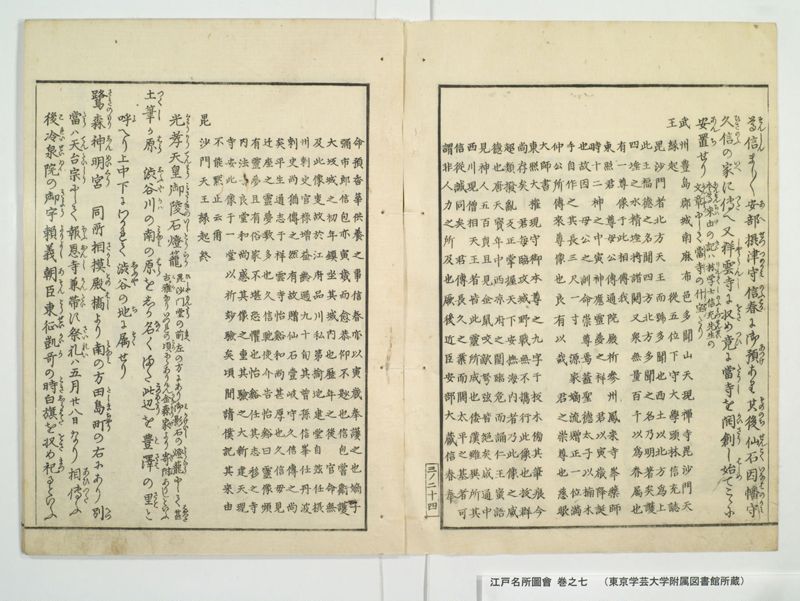
翻刻
【右丁】
尊信(そんしん)まし〳〵安倍摂津守信春(あへせつつのかみのふはる)に御預( あつけ)あり其後(そののち)仙石因幡守(せんこくいなはのかみ)
久信(ひさのふ)の家(いへ)に傳(つた)へ又 祥雲寺(しやううんし)に収(をさ)め竟(つひ)に當寺(たうし)を開創(かいさう)し始(はしめ)てこゝに
安置(あんち)せり《割書:本尊(ほんそん)来由(らいゆ)の記(き)は林学士(りんかくし)信充先生(のふみつせんせい)の|文章(ふんしやう)にして當寺(たうし)の什宝(しうはう)たり》
武州豊島郡城南麻布邑多聞山天現禪寺毘沙門天
王縁起 從五位下守大學頭林信充誌
毘沙門者北方天王而號多聞也西土以北方爲上
此王福德之名聞四方北方多聞之名乃明著矣護
四埵之水精埵將諸閱又衆無量百千以爲眷属也
有一尊像于此相傳我
東照君 尊母公傳通院殿析#1參州鳳来寺峯藥師
時十二神之中寅神應靈夢之祥 君以寅歳䧏誕
也故因 母公之訓命崇尊焉蓋聖德太子以楠木
手自作之其長三尺一寸 源家嫡流贈正一位満
仲公所傳來尊像也良有以哉 君之崇尊也慈眼
大師書
東照大権現守御本尊之九字于板木𠊓其筆痕今
尚存矣 君毎臨攻城野戰無不擕行此像也㧞群
超類撥亂反正掌握天下安撫海内者乃此像之威
德也唐天寳年中西凉府之圍臨危而誦仁王蜜語
見神人五百員且見金鼠咬歒弩弦皆絶矣咸通中
西川現僧相天王者皆此靈所成也倭漢雖異所其
信從誠同矣 君傳長久之業而開太平之基者可
謂非人力之所及也厥後近臣安部大蔵信春奉
【左丁】
命預香華供養之事信春亦以寅歳奉護之也嫡子
彌市郎信包亦寅歳而愈恭仰不尟也信包嘗衛護
大坂城之初年鎮㘴其城内也歴年之後 官命無
及此像㕝故於江府品川私第揄地建堂自玆任摂
州刺史官禄増益齢過九十旬其曽孫信峯任丹波
矣平生通志于祥雲寺怡谿和尚甚厚也久信母見
迁座之靈夢数多也久信馳使介告怡谿曰靈像頻
有靈夢且有俗家不堪恐懼也怡谿任其志移之寺
内法子良堂和尚感其像之重其驗之大新建天現
寺安此像于一堂以祈玅驗矣頃間請僕記其来由
不能黙止云爾
毘沙門天王縁起終
光孝天皇御陵石燈籠(くわうかうてんわうみさゝきのいしとうらう)《割書:毘沙門堂(ひしやもんたう)の前(まへ)左の方にあり御影石(みかけいし)の燈籠(とうらう)にて甚(はなはた)|古雅(こか)なりいつれの頃(ころ)にかありけん金森家(かなもりけ)より寄附(きふ)ありしといふ》
《振り仮名:土筆か原|つくし はら》 渋谷川(しふやかは)の南(みなみ)の原(はら)をしか名(なつ)くまた此辺(このあたり)を《振り仮名:豊澤の里|とさは さと》と
呼(よ)へり上中下にわかれて渋谷(しふや)の地(ち)に属(そく)せり
鷺森神明宮(さきのもりしんめいくう) 同所《振り仮名:相模殿𣘺|さかみとのはし》より南(みなみ)の方 田島町(たしまちやう)の右にあり別(へつ)
當(たう)は天台宗(てんたいしう)にして報恩寺(ほふおんし)兼帯(けんたい)す祭礼(さいれい)は五月廿八日なり相傳(あひつた)ふ
後冷泉院(これいせいゐん)の御宇(きよう)頼義朝臣(よりよしあそん)東征(とうせい)凱哥(かいか)の時(とき)白旗(しらはた)を収(をさ)め祀(まつ)るといふ
現代語訳
【右丁】
尊信はますます安部摂津守信春に御預けがあり、その後仙石因幡守久信の家に伝えられ、また祥雲寺に収められ、ついに当寺を開創し、初めてここに安置された。《割書:本尊来由の記は林学士信充先生の文章であって当寺の什宝である》
武州豊島郡城南麻布邑多聞山天現禅寺毘沙門天王縁起 従五位下守大学頭林信充記
毘沙門は北方天王であって多聞と号する。西土では北方を上とし、この王の福徳の名は四方に聞こえ、北方多聞の名はすなわち明らかである。四埵の水精埵将諸閲又衆無量百千を以て眷属とする。
ここに一つの尊像がある。相伝によれば我が東照君の尊母公伝通院殿が参州鳳来寺峯薬師で十二神の中の寅神が霊夢の祥に応じ、君が寅年に降誕したので、故に母公の訓命によって崇尊した。思うに聖徳太子が楠木で手ずから作ったもので、その長さは三尺一寸、源家嫡流贈正一位満仲公が伝来した尊像である。まことに理由があることか、君の崇尊は。慈眼大師が「東照大権現守御本尊」の九字を板木に書き、その筆痕は今なお存在する。君は攻城野戦に臨むたびに必ずこの像を携行した。群を抜き類を超え、乱を撥ね正に反し、天下を掌握し海内を安撫したのは、すなわちこの像の威徳である。唐の天宝年中、西涼府の囲みで危険に臨んで仁王密語を誦すると、神人五百員を見、また金鼠が敵の弩弦を咬んでことごとく絶った。咸通中、西川に僧相の天王が現れたのは、皆この霊が成したものである。倭と漢は異なる所であるが、その信従は誠に同じである。君が長久の業を伝えて太平の基を開いたのは、人力の及ぶところではないと言える。その後、近臣安部大蔵信春が
【左丁】
命を奉じて香華供養の事を預かった。信春もまた寅年に奉護した。嫡子弥市郎信包もまた寅年で、ますます恭仰すること少なくなかった。信包はかつて大坂城を衛護した初年、その城内を鎮めた。年を経た後、官命がこの像に及ばないので、江府品川の私第で地を掘って堂を建て、これより摂州刺史に任じられ、官禄が増益し、年齢は九十を過ぎた。その曾孫信峯は丹波に任じられた。平生祥雲寺の怡渓和尚と志を通じて甚だ厚かった。久信の母が遷座の霊夢を数多く見た。久信は使いを馳せて怡渓に告げて言った「霊像に度々霊夢があり、また俗家では恐れ畏れることに堪えない」と。怡渓はその志を任せて寺内に移し、法子良堂和尚がその像の重さとその験の大きさに感じて新たに天現寺を建立し、この像を一堂に安置して妙験を祈った。近頃私にその来由を記すことを請うので、黙止することができない。
毘沙門天王縁起終
光孝天皇御陵石灯籠《割書:毘沙門堂の前左の方にあり、御影石の灯籠で甚だ古雅である。いつの頃からあったのか、金森家より寄附があったという》
土筆ヶ原 渋谷川の南の原をそう名付ける。またこの辺りを豊沢の里と呼ぶ。上中下に分かれて渋谷の地に属する。
鷺森神明宮 同所相模殿橋より南の方、田島町の右にある。別当は天台宗で報恩寺が兼帯する。祭礼は五月二十八日である。相伝によれば後冷泉院の御世、頼義朝臣東征凱歌の時、白旗を収めて祀るという。
英語訳
【Right page】
Sonshin was increasingly entrusted to Abe Settsu-no-kami Nobuharu, and later passed to the house of Sengoku Inaba-no-kami Hisanobu, was also kept at Shōun-ji temple, and finally when this temple was founded, it was first enshrined here. {{Annotation: The record of the principal image's origins is written by Scholar Lin Nobumitsu and is a treasure of this temple}}
Record of the Origins of Bishamonten'ō of Tamonzan Tengen Zen Temple, Azabu Village, South of the Castle, Toshima District, Musashi Province Recorded by Junior Fifth Rank Lower Grade, Acting Grand Academy Head Lin Nobumitsu
Bishamon is the Heavenly King of the North, called Tamon (Much Hearing). In the Western lands, north is considered supreme. This king's name for good fortune is heard in all four directions, and the name "Tamon of the North" is indeed renowned. He commands the water spirits of the four directions and has countless hundreds and thousands of followers as his retinue.
There is one sacred image here. According to tradition, when our Tōshō-kun's revered mother, Dentsū-in-dono, visited Hōrai-ji temple peak's Yakushi in Mikawa Province, among the twelve divine generals, the Tiger deity responded to an auspicious spiritual dream, and the lord was born in a Tiger year. Therefore, following his mother's instruction, he revered this image. It is said that Prince Shōtoku carved it himself from camphor wood, measuring three feet one inch in length - a sacred image passed down by Minamoto family heir, posthumously granted Senior First Rank, Mitsunaka-kō. There is indeed reason for the lord's reverence. The Great Master Jigen wrote the nine characters "Tōshō Daigongen Mamori Gohonzon" on wooden boards, and those brush traces still exist today. Whenever the lord faced castle sieges or field battles, he invariably carried this image with him. That he surpassed all others, quelled disorder and restored righteousness, controlled the realm and pacified the land - this was the power and virtue of this image. During the Tianboa era of Tang China, when surrounded at Xiliang Prefecture, facing danger while reciting the Niō secret words, 500 divine beings appeared, and golden rats were seen gnawing and severing all the enemy crossbow strings. During the Xiantong period, the appearance of the Heavenly King in monk form in Xichuan - all this was accomplished by this divine power. Though Japan and China are different places, their faithful devotion is truly the same. That the lord transmitted an enduring legacy and established the foundation of great peace - this can be said to exceed human capability. Thereafter, close retainer Abe Ōkura Nobuharu received
【Left page】
orders to oversee the incense and flower offerings. Nobuharu also served as guardian, being born in a Tiger year. His heir Ichimarō Nobukane was also born in a Tiger year and showed ever-increasing respectful devotion. Nobukane once guarded Ōsaka Castle in its early years, maintaining peace within the castle. After many years, when official commands no longer concerned this image, he excavated land at his private residence in Shinagawa, Edo, and built a hall. From this time he was appointed governor of Settsu Province, his official stipend increased, and he lived past ninety. His great-grandson Nobumune was appointed to Tanba. Throughout his life he maintained very close spiritual communion with Ikei Oshō of Shōun-ji temple. Hisanobu's mother had many spiritual dreams about relocating the image. Hisanobu sent a messenger to inform Ikei: "The sacred image frequently appears in spiritual dreams, and moreover, a lay household cannot bear such awe and fear." Ikei accepted this wish and moved it within the temple. Dharma-successor Ryōdō Oshō, moved by the weight of this image and the greatness of its miraculous power, newly established Tengen-ji temple and enshrined this image in a hall to pray for wonderful miraculous responses. Recently I was asked to record its origins, so I cannot remain silent about this.
End of the Record of Bishamonten'ō's Origins
Stone Lantern of Emperor Kōkō's Imperial Tomb {{Annotation: Located to the front left of Bishamon Hall, it is a granite lantern of great antiquity and elegance. From some unknown period, it is said to have been donated by the Kanamori family}}
Tsukushi-ga-hara: The plain south of Shibuya River is so named. This area is also called Tosawa-no-sato (Village of Abundant Marsh). It is divided into upper, middle, and lower sections belonging to Shibuya territory.
Saginomori Shinmei Shrine: Located south of Sagami-dono Bridge at the same location, to the right of Tajima-chō. The temple administrator belongs to the Tendai sect, with Hōon-ji temple serving concurrently. The festival is held on May 28th. According to tradition, during the reign of Emperor Go-Reizei, when Yoriyoshi Ason returned triumphantly from his eastern campaign, he enshrined a white banner there.