翻刻
八升俵い六百俵に十三匁をかくれば〽銀七貫八百目としるゝ。四斗俵六
百俵に十三匁をかくれば七貫八百目と成又左に四斗八升と置四斗にて
われば十二となる此十二を以て七貫八百目をわれば銀六貫五百目と知る也
三斗弐升俵六百俵これにも十三両をかくれば七貫八百目になる又左
に四斗八升と置三斗弐升にてわれば十五となる此十五にて七貫八百目を
われば銀五貫二百目としれ申也 銀三口合拾九貫五百目なり
『第十二』俵すぎさんの事
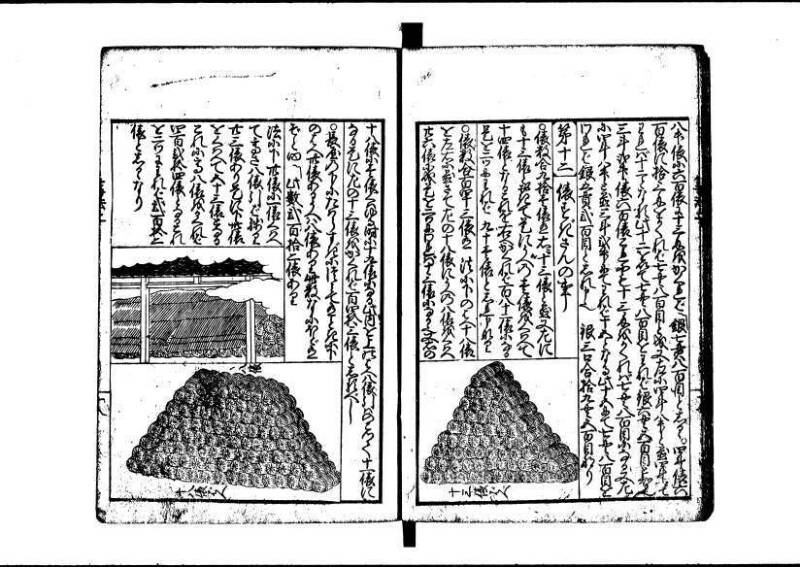
○俵数合九拾壱俵有に十三俵と置又左に
も十三俵とおきて是にうへの壱俵をくはへて
十四俵となるこれを右へかくれば百八十二俵になる
是を二つにわれば九十壱俵としれ申なり
【図】十三俵ばへ
○俵数合百四十三俵有 法に下のはへ十八俵
を左右に置さて左の十八俵にうへの八俵をくはへ
廿六俵に成是を二つにわれば十三俵になる也又右の
十八俵に壱俵くはゆる時に十九俵になる此内を上のはへ八俵引はのこつて十一俵に
なる是に左の十三俵をかくれば百四捨三俵としるべし
【図】十八俵ばへ
八俵
○長屋の下にたはらすぎにつみて有ときに下
のはへ卅俵あるうへは八俵あり#1此数なにほど有
ぞと問〽此数弐百拾二俵あり
法に下卅俵に一俵くはへ
て高さ八俵引ば残り
廿三俵あり是に下卅俵
をくはへて五十三俵となる
これに高八俵をかくれば
四百弐拾四俵となるこれ
を二つにわれば弐百拾二
俵としるゝなり
現代語訳
八升俵600俵に13匁をかけると、銀7貫800目となることがわかる。四斗俵600俵に13匁をかけると7貫800目となる。また左に4斗8升と置き、4斗で割ると12となる。この12で7貫800目を割ると銀6貫500目となることがわかる。
三斗二升俵600俵、これにも13両をかけると7貫800目になる。また左に4斗8升と置き、3斗2升で割ると15となる。この15で7貫800目を割ると銀5貫200目となることがわかる。銀三口合計19貫500目である。
『第十二』俵杉算の事
○俵数合計91俵ある問題:13俵と置き、また左にも13俵と置いて、これに上の1俵を加えて14俵となる。これを右にかけると182俵になる。これを2つに割ると91俵となることがわかる。
【図】13俵積み
○俵数合計143俵ある問題:解法として下の段に18俵を左右に置く。さて左の18俵に上の8俵を加えて26俵になる。これを2つに割ると13俵になる。また右の18俵に1俵加える時に19俵になる。この数から上の段の8俵を引くと残りが11俵になる。これに左の13俵をかけると143俵となることがわかる。
【図】18俵積み
8俵
○長屋の下に俵を杉積みにして積んである時に、下の段に30俵あり、上は8俵ある。この数はいくつあるかという問い。この数は212俵ある。
解法:下30俵に1俵を加えて、高さ8俵を引くと残り23俵ある。これに下30俵を加えて53俵となる。これに高さ8俵をかけると424俵となる。これを2つに割ると212俵となることがわかる。
英語訳
When 600 bales of 8-sho capacity are multiplied by 13 monme, the result is 7 kan 800 me of silver. When 600 bales of 4-to capacity are multiplied by 13 monme, the result is 7 kan 800 me. Also, place 4 to 8 sho on the left, and when divided by 4 to, it becomes 12. When 7 kan 800 me is divided by this 12, the result is 6 kan 500 me of silver.
For 600 bales of 3 to 2 sho capacity, when multiplied by 13 ryo, it also becomes 7 kan 800 me. Also, place 4 to 8 sho on the left, and when divided by 3 to 2 sho, it becomes 15. When 7 kan 800 me is divided by this 15, the result is 5 kan 200 me of silver. The total of the three amounts of silver is 19 kan 500 me.
"Chapter Twelve: Problems of Triangular Stacking of Rice Bales"
○ Problem with a total of 91 bales: Place 13 bales, and also place 13 bales on the left. Add the 1 bale from above to make 14 bales. When this is multiplied to the right, it becomes 182 bales. When divided by two, it becomes 91 bales.
[Diagram] 13-bale stack
○ Problem with a total of 143 bales: In the method, place 18 bales on the left and right of the bottom row. Now, add the 8 bales from above to the left 18 bales to make 26 bales. When divided by two, it becomes 13 bales. Also, when 1 bale is added to the right 18 bales, it becomes 19 bales. When the 8 bales from the top row are subtracted from this number, 11 bales remain. When this is multiplied by the left 13 bales, it becomes 143 bales.
[Diagram] 18-bale stack
8 bales
○ When rice bales are stacked in triangular formation under a long house, there are 30 bales in the bottom row and 8 bales in height. The question asks how many bales there are in total. The answer is 212 bales.
Method: Add 1 bale to the bottom 30 bales, subtract the height of 8 bales, and 23 bales remain. Add the bottom 30 bales to this to get 53 bales. When this is multiplied by the height of 8 bales, it becomes 424 bales. When divided by two, it becomes 212 bales.