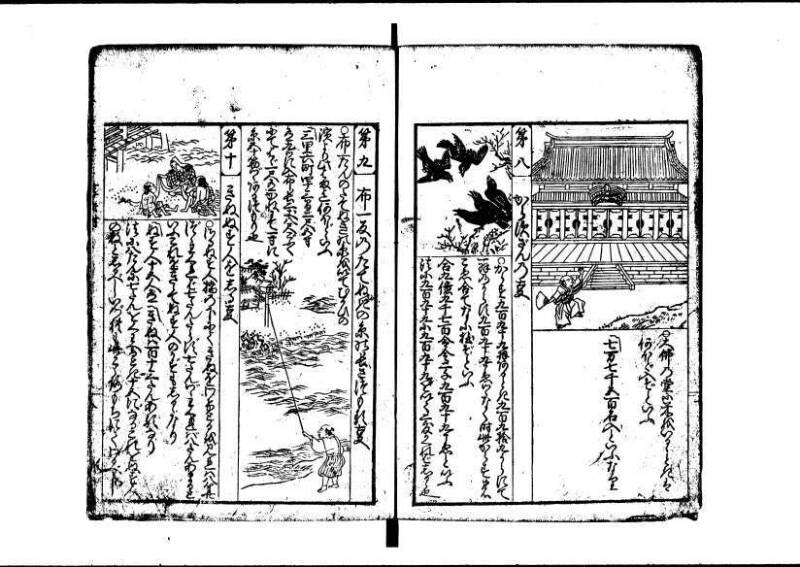
翻刻
○大仏の同に米をいるゝときは
何ほど入るぞといふ
〽七万七千五百石入といふなり
『第八』からすざんの事
○からす九百九十九羽あるとき九百九拾九うらにて【浦にて=場所にて】
一羽のからす九百十拾九こゑつゝなく時此からすの
こゑ合てなに程ぞといふ
合九億九千七百令令二千九百九十九こゑといふ
法に九百九十九に九百九十九を以て二度かくればするゝ也
『第九』布一反のたてぬきの糸の長さつもる事
○布一たんのたてぬきの糸を以てむかひの
浜より此はま迄何ほどゝいふ
〽三里六町四十三間二尺五寸
有九つに入布長二丈八尺ごふく
にてはゞ一尺有かねにて一寸に
糸五十筋づゝあるつもり也
『第十』きぬぬす人をしる事
○さるぬす人橋の下にてきぬをわけとるをみれは八算
づゝわくれば七たんたらず七たんづゝわくれば八たんあまると
いふこれをきゝてぬす人のかずもしるゝなり
〽ぬす人十五人有〽きぬは百十三たんあるなり
法に八たんに七たんをくわへるとき十五になるこれをぬす人
の数としるべしいづれも此こゝろもちにてわるべし
現代語訳
○大仏殿と同じ大きさの容器に米を入れるときは、どのくらい入るかという問題
〽七万七千五百石入るという答えである
『第八』からすの計算について
○からすが九百九十九羽いるとき、九百九十九の場所にて、
一羽のからすが九百九十九回ずつ鳴くとき、このからすの
鳴き声を合わせて何回になるかという問題
答え:合計九億九千七百九十九万八千九百九十九回という
計算法:九百九十九に九百九十九を掛けて二乗すればよい
『第九』布一反の縦糸横糸の糸の長さを積もる計算
○布一反の縦糸横糸の糸を使って、向こうの
浜からこの浜まで何ほどの距離かという問題
〽三里六町四十三間二尺五寸
有松に入る布で長さ二丈八尺の呉服で、
幅一尺有余にて、一寸に
糸五十筋ずつあると積もったものである
『第十』絹を盗んだ人数を知る計算
○ある盗賊が橋の下で絹を分け取るのを見れば、八反
ずつ分ければ七反足らず、七反ずつ分ければ八反余るという。
これを聞いて盗賊の数も知ることができる
〽盗賊十五人いる 〽絹は百十三反ある
計算法:八反に七反を加えるとき十五になる、これを盗賊
の人数として知るべし。いずれもこの心持ちで割るべし
英語訳
○Question: How much rice can be stored in a container the same size as the Great Buddha Hall?
〽Answer: 77,500 koku of rice can be stored.
『Chapter 8』Calculation about crows
○When there are 999 crows, and at 999 locations,
each crow cries 999 times, how many total cries
do these crows make together?
Answer: A total of 997,998,999 cries
Method: Multiply 999 by 999 to get the square.
『Chapter 9』Calculating the total length of warp and weft threads in one tan of cloth
○Using the warp and weft threads of one tan of cloth, what would be the distance
from that shore to this shore?
〽3 ri, 6 chō, 43 ken, 2 shaku, 5 sun
This is cloth from Arimatsu, 2 jō 8 shaku long fabric,
with a width of about 1 shaku, calculated with
50 threads per sun.
『Chapter 10』Finding the number of silk thieves
○Some thieves are seen dividing stolen silk under a bridge. If divided into 8 tan each,
there are 7 tan short; if divided into 7 tan each, there are 8 tan left over.
From hearing this, one can determine the number of thieves.
〽There are 15 thieves 〽There are 113 tan of silk
Method: When you add 8 tan and 7 tan, you get 15, which should be known as the number of thieves. Use this principle for all such division problems.