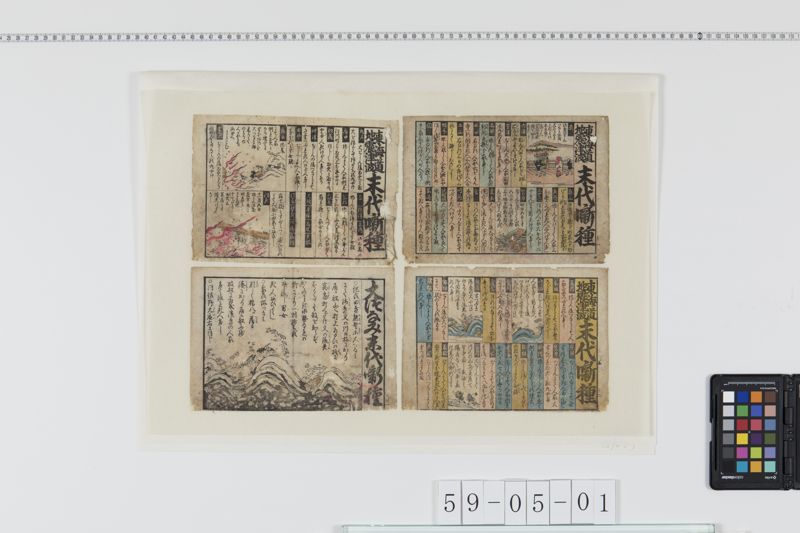
翻刻
【一枚目・右上】
《箱:ト一》
《割書:東海道|地震津波》《題:末代噺種》
《箱:京》
此度のぢしん
つなみ諸国
大ひにあれ
たれども此
平安城は
しづか也
皇(おゝきみ)の御 威(い)
徳(とく)を仰(あふ)ぎ
奉るべし【挿し絵あり】
《箱:大津》地しん大ゆり人家少々傾(かたふ)き
湖水(こすい)浪あらけれともけがなし
《箱:草津》ぢしん大ゆり人家三四
けん崩れいたみ家多し
《箱:石部》地しん烈(はけ)しく人家五六
軒(けん)倒(たふ)れ損(そん)じ家多し
《箱:水口》右同断人家六七けん
寺一軒倒れ死人三人けが十八人有
《箱:土山》右同断三日の夜 鈴(すゞ)か山
何となく騒がしかりしよし
《箱:坂ノ下》地しん烈しく人家大損し土山と
同しく鈴鹿(すゝか)山前夜より物さわがしかりし由
《箱:関》右同断人家大損じ倒
るゝ家三げんけが人四人あり
《箱:亀山》御城少々損じ町家二十軒
ばかり倒(たふ)れ出火あれども早速(さつそく)鎮(しづま)る
《箱:庄野》地しんはげしく人家三
分通りくづれ死人三人けが人多し
《箱:石やくし》同断人家大ぞんじ二
十けんばかり崩れけが人多し
《箱:四日市》四日五日とも
ぢしんはげしく人家
五六十けん例れ土蔵
三十余ヶ所崩る死人
凡二百人けが人数しらず
《箱:桑名》大ぢしんの後大つなみにて
浜辺(はまべ)みな〳〵流れ死人けが人おびたゝし
《箱:宮》同断人家三分通崩るぢ
しん後(ご)つなみにて浜辺残らず流る
《箱:鳴海》大ゆりつなみ人家過半
つぶれ死人けが人多し
《箱:池鯉鮒》大ゆりにて人家こと〴〵く
ゆがみつなみて半潰れに成
《箱:岡崎》右同断 混雑(こんざつ)中つなみ
にて死人多くけが人数しらず
【二枚目・右下】
《箱:ト二》
《割書:東海道|地震津波》《題:末代噺種》
《箱:藤川》地しん後つなみにて人
家過半つぶれ死人多し
《箱:赤坂》同つなみにて七分通り
ながれ死人けが人おびたゞし
《箱:御油》大ぢしんにて
人家多く崩れ死人
けが人有之其後
つなみにて過半流れ
又死人けが人おびたゝし【挿し絵あり】
《箱:二川》ぢしん後つなみきたり
過半つぶれ人死多し
《箱:白須賀》同断つなみにて六分
通りつぶれる
《箱:新居》半つぶれ
海辺の大小ふね
のこりなく流失
御関所つぶれる
死人多し【挿し絵あり】
《箱:舞坂》ぢしん後のおゝつなみ
にて一 駅(しゆく)のこらず流れる
《箱:浜松》地しんにて人家大半
崩れ死人多し
《箱:見付》ぢしんつなみにて過
半潰れ候へども死人至て少し
《箱:袋井》ぢしんにて人家大
半くづれ出火と成丸やけ
《箱:掛川》地しんにて人家悉く
倒れ出火と成のこらず焼失
《箱:日坂》地しん強(つよ)く候へとも少々
の破そんのみにて無難(ぶなん)
《箱:金谷》ぢしんにて人家倒れ
出火と成七八分通りやける
《箱:島田》ぢしんにて人家多崩る
其後つなみにて八九分 潰(つぶ)れる
《箱:富士川》大ぢしんにて
川上の山くづれ落て
せき留し故渡し
場水なく川原(かはら)と成
往来の人 歩行(かち)わたり【挿し絵あり】
《箱:藤枝》ぢしんにて人家くづれ
出火と成半分焼失死人ける人多し
《箱:岡部》ぢしん後(こ)つなみにて
半つぶれに相成
【三枚目・左上】
《箱:トノ三》
《割書:東海道|地震津波》《題:末代噺種》
《箱:丸子》大ぢしん後出火と成
火を防ぐ事あたはず丸やけ【鞠子】
《箱:府中》地しんにて人家倒れ
江川町より出火三分通やける
《箱:江尻》同じく出火と成り丸
やけ人死けが人多くあり
《箱:沖津》ぢしんの後つなみにて
過半つぶれ死人けが人多し【興津】
《箱:由井》ぢしんにて人家損じ
多けれども無難【由比】
《箱:蒲原》地震
にて人家
倒れ出火と
なり焼のこる
半分ありしが
大つなみ押
来りて
のこりの
人家みな
海中へ
まきこむ【挿し絵あり】
《箱:吉原》ぢしんの後出火となり
ふせぐ事ならず丸やけ
《箱:原》《箱:沼津》《箱:三島》此三宿は
地(ち)しんは尤強けれども無難
《箱:箱根》地しん烈しく御本ぢん
三ヶ所崩る山大荒往来留る
《箱:小田原》ぢしんつよく人家少〳〵
崩れ損し家少なからず
《箱:大磯》《箱:平塚》《箱:藤沢》《箱:戸塚》
《箱:程ヶ谷》【保土ケ谷】《箱:神奈川》《箱:川崎》《箱:品川》
右七 駅(しゆく)とも少〳〵つゝ違(ちが)ひあれ
ども大底(たいてい)小田原におなじ
《箱:江戸》
十一月五日#1
地しん御屋
敷方并に
町家□
さる若町
十丁ばかり
出火(くわじ)三
芝居とも
焼失けが人
なし【挿し絵あり】
【四枚目・左下】
《箱:ツ六》
《題:大つなみ末代噺種》
○紀州 田辺(たなべ)熊野(くまの)等(とう)大つなみ
にて海辺(うみべ)又は川口 抔(など)にかゝり
居候船山へ打上あるひは磯(いそ)に
突当(つきあて)打くだけ又は流失(りうしつ)
する事其数を知らず
かくのことき水勢なれば
所により一村残らず
おし流し男女
死人おびたゝし
○泉州堺つなみ
烈(はげ)しく橋八ツ落(をち)る
湊(みなと)にかゝり居候船不残
破船に相成浜辺の人家
多く流れ死人多し
○同佐野 大底(たいてい)右に同じ
現代語訳
## 東海道地震津波 末代噺種(すえだいはなしだね)
### 【一枚目・右上】
**京(みやこ)**
この度の地震・津波は諸国に大きな被害をもたらしたが、この平安城(京都)は静かである。天皇の御威徳をありがたく仰ぎ奉るべきことである。
**大津:** 地震で大きく揺れ、人家がいくらか傾いたが、湖水(琵琶湖)に波が立ち荒れたものの、けが人はなし。
**草津:** 地震で大きく揺れ、人家三~四軒が崩れ、傷んだ家が多い。
**石部:** 地震が激しく、人家五~六軒が倒壊し、損傷した家が多い。
**水口:** 右と同様。人家六~七軒、寺一軒が倒れ、死人三人、けが人十八人あり。
**土山:** 右と同様。三日の夜、鈴鹿山がなんとなく騒がしかったとのこと。
**坂ノ下:** 地震が激しく、人家が大きく損壊。土山と同じく、鈴鹿山が前夜より物騒がしかったとのこと。
**関:** 右と同様。人家が大きく損壊し、倒れた家三軒、けが人四人あり。
**亀山:** お城が少々損壊。町家二十軒ほどが倒れ、出火があったが、すぐに鎮まった。
**庄野:** 地震が激しく、人家三分の一ほどが崩れ、死人三人、けが人多数。
**石薬師:** 同様。人家が大きく損壊し、二十軒ほどが崩れ、けが人多数。
**四日市:** 四日・五日ともに地震が激しく、人家五~六十軒が倒れ、土蔵三十か所余りが崩れた。死人はおよそ二百人、けが人の数は不明。
**桑名:** 大地震の後、大津波により浜辺がみな流れ、死人・けが人おびただしい。
**宮:** 同様。人家三分の一ほどが崩れ、地震の後、津波により浜辺が残らず流れた。
**鳴海:** 大きく揺れ、津波により人家の半数以上が潰れ、死人・けが人多数。
**池鯉鮒(ちりゅう):** 大きく揺れ、人家ことごとく歪み、津波により半壊となった。
**岡崎:** 右と同様。混雑の中、津波にて死人多く、けが人の数は不明。
---
### 【二枚目・右下】
**藤川:** 地震の後、津波にて人家の半数以上が潰れ、死人多数。
**赤坂:** 同じく津波にて七割ほどが流れ、死人・けが人おびただしい。
**御油(ごゆ):** 大地震にて人家多く崩れ、死人・けが人あり。その後、津波にて半数以上が流れ、また死人・けが人おびただしい。
**二川:** 地震の後、津波が来り、半数以上が潰れ、死人多数。
**白須賀:** 同様。津波にて六割ほどが潰れた。
**新居(あらい):** 半壊。海辺の大小の船が残らず流失。御関所が潰れた。死人多数。
**舞坂:** 地震後の大津波にて、一宿(ひとしゅく)が残らず流れた。
**浜松:** 地震にて人家の大半が崩れ、死人多数。
**見付:** 地震・津波にて半数以上が潰れたが、死人は非常に少なかった。
**袋井:** 地震にて人家の大半が崩れ、出火して丸焼けとなった。
**掛川:** 地震にて人家ことごとく倒れ、出火して残らず焼失した。
**日坂:** 地震は強かったものの、少々の破損のみで無難であった。
**金谷:** 地震にて人家が倒れ、出火して七~八割が焼けた。
**島田:** 地震にて人家が多く崩れ、その後、津波にて八~九割が潰れた。
**富士川:** 大地震にて川上の山が崩れ落ちて川をせき止めたため、渡し場に水がなく川原となり、往来の人々が徒歩で渡った。
**藤枝:** 地震にて人家が崩れ、出火して半分が焼失。死人・けが人多数。
**岡部:** 地震の後、津波にて半壊となった。
---
### 【三枚目・左上】
**丸子(まりこ):** 大地震の後、出火し、火を防ぐことができず丸焼けとなった。
**府中(ふちゅう):** 地震にて人家が倒れ、江川町から出火し、三割ほどが焼けた。
**江尻(えじり):** 同じく出火して丸焼けとなり、死人・けが人多数。
**興津(おきつ):** 地震の後、津波にて半数以上が潰れ、死人・けが人多数。
**由比(ゆい):** 地震にて人家に損傷が多かったが、無難であった。
**蒲原(かんばら):** 地震にて人家が倒れ出火し、半分ほどが焼け残っていたが、大津波が押し寄せて、残りの人家がみな海中へ巻き込まれた。
**吉原:** 地震の後、出火し、防ぐことができず丸焼けとなった。
**原・沼津・三島:** この三宿は地震は非常に強かったが、無難であった。
**箱根:** 地震が激しく、御本陣三か所が崩れた。山が大荒れとなり、往来が止まった。
**小田原:** 地震が強く、人家が少々崩れ、損壊した家は少なくない。
**大磯・平塚・藤沢・戸塚・保土ケ谷・神奈川・川崎・品川:** この七宿はそれぞれ多少の違いはあるが、だいたい小田原と同様である。
**江戸:**
十一月五日、地震により御屋敷方ならびに町家が損壊し、若い町十丁ほどで出火し、三芝居ともに焼失したが、けが人はなし。
---
### 【四枚目・左下】
## 大津波 末代噺種
○ **紀州・田辺・熊野など:** 大津波にて海辺や川口などに停泊していた船が山へ打ち上げられ、あるいは磯に突き当たって打ち砕かれ、また流失するものが数えきれないほどであった。このような水勢であるから、地域によっては一村残らず押し流され、男女の死者がおびただしい。
○ **泉州・堺:** 津波が激しく、橋が八か所落ちた。湊に停泊していた船が残らず破船となり、浜辺の人家が多く流れ、死人多数。
○ **同・佐野:** だいたい右と同様。
英語訳
## Tōkaidō Earthquake and Tsunami: Tales for Future Generations (Suedai Hanashidane)
### [Sheet 1 · Upper Right]
**Kyoto (the Capital):**
Although this earthquake and tsunami caused great devastation throughout the provinces, the capital city of Heiankyō (Kyoto) remains calm and undisturbed. We must look up with reverence and gratitude to the august virtue and divine authority of the Emperor.
**Ōtsu:** A great tremor struck, and some houses tilted. Rough waves arose on the lake (Lake Biwa), but there were no injuries.
**Kusatsu:** A great tremor struck; three to four houses collapsed, and many buildings sustained damage.
**Ishibe:** The earthquake was severe; five to six houses were destroyed, and many buildings sustained damage.
**Minakuchi:** Same as above. Six to seven houses and one temple collapsed; three people died and eighteen were injured.
**Tsuchiyama:** Same as above. On the night of the 3rd, Suzuka Mountain was for some reason unsettled and noisy.
**Sakanoshita:** The earthquake was severe and houses suffered great damage. Like Tsuchiyama, Suzuka Mountain was reported to be disturbed from the night before.
**Seki:** Same as above. Houses sustained major damage; three buildings collapsed, and four people were injured.
**Kameyama:** The castle sustained minor damage. About twenty townhouses collapsed. A fire broke out but was quickly extinguished.
**Shōno:** The earthquake was severe; about one-third of all houses collapsed. Three people died and many were injured.
**Ishiyakushi:** Same as above. Houses suffered major damage; about twenty collapsed, and many were injured.
**Yokkaichi:** The earthquake was severe on both the 4th and 5th. Fifty to sixty houses collapsed and more than thirty storehouses (dozō) were destroyed. The death toll was approximately two hundred; the number of injured is unknown.
**Kuwana:** After the great earthquake, a massive tsunami swept away everything along the shore; casualties of dead and injured were enormous.
**Miya:** Same as above. About one-third of houses collapsed; after the earthquake, the tsunami swept away every building along the shore without exception.
**Narumi:** A great tremor and tsunami destroyed more than half of all houses; many dead and injured.
**Chiryu (Chiryū):** A great tremor caused every house to warp and shift; the subsequent tsunami reduced them to half-ruins.
**Okazaki:** Same as above. In the ensuing chaos, a tsunami killed many; the number of injured is unknown.
---
### [Sheet 2 · Lower Right]
**Fujikawa:** After the earthquake, a tsunami destroyed more than half of all houses; many deaths.
**Akasaka:** Similarly, the tsunami swept away about seventy percent of all buildings; casualties were enormous.
**Goyu:** The great earthquake destroyed many houses, with deaths and injuries. Subsequently, the tsunami swept away more than half, with further enormous casualties.
**Futagawa:** After the earthquake, a tsunami arrived, destroying more than half of all buildings; many deaths.
**Shirasuka:** Same as above. The tsunami destroyed about sixty percent of all buildings.
**Arai:** Half-destroyed. Every boat large and small along the coast was swept away. The government checkpoint (sekisho) was destroyed. Many deaths.
**Maisaka:** The great tsunami following the earthquake swept away the entire post-town without a single building remaining.
**Hamamatsu:** The earthquake destroyed the majority of houses; many deaths.
**Mitsuke:** Although more than half of all buildings were destroyed by earthquake and tsunami, casualties were remarkably few.
**Fukuroi:** The earthquake destroyed the majority of houses; a fire broke out and the town burned to the ground.
**Kakegawa:** The earthquake toppled every house; a fire broke out and everything was consumed without remainder.
**Nissaka:** Though the earthquake was strong, there was only minor damage and the town came through safely.
**Kanaya:** The earthquake toppled houses; a fire broke out and seventy to eighty percent burned.
**Shimada:** The earthquake destroyed many houses; the subsequent tsunami reduced eighty to ninety percent to ruins.
**Fujikawa (Fuji River crossing):** The great earthquake caused a mountain upstream to collapse into the river, blocking its flow. As a result, the ferry crossing ran dry and became a riverbed, and travelers crossed on foot.
**Fujieda:** The earthquake destroyed houses; a fire broke out and half of the town was burned down. Many dead and injured.
**Okabe:** After the earthquake, the tsunami reduced the town to half-ruins.
---
### [Sheet 3 · Upper Left]
**Mariko:** After the great earthquake, a fire broke out and could not be contained; the entire town burned to the ground.
**Fuchū (present-day Shizuoka city):** The earthquake toppled houses; a fire broke out in Egawachō district and about thirty percent of the town burned.
**Ejiri:** Similarly, a fire broke out and the entire town burned; many dead and injured.
**Okitsu (Okitsu):** After the earthquake, the tsunami destroyed more than half of all buildings; many dead and injured.
**Yui:** Though many houses sustained damage from the earthquake, the town came through safely.
**Kanbara:** The earthquake toppled houses and a fire broke out. About half the buildings remained standing, but then a great tsunami rushed in and swept every remaining house into the sea.
**Yoshiwara:** After the earthquake, a fire broke out and could not be contained; the entire town burned to the ground.
**Hara, Numazu, Mishima:** These three post-towns experienced very strong shaking but came through without major harm.
**Hakone:** The earthquake was severe; three honjiN (official lodgings) collapsed. The mountains were thrown into great turmoil, and traffic was halted.
**Odawara:** The earthquake was strong; some houses collapsed, and damaged buildings are not few.
**Ōiso, Hiratsuka, Fujisawa, Totsuka, Hodogaya, Kanagawa, Kawasaki, Shinagawa:** These seven post-towns each suffered somewhat differently, but in general the damage was similar to that of Odawara.
**Edo (present-day Tokyo):**
On the 5th day of the 11th month, the earthquake damaged the residences of samurai lords as well as townhouses. A fire broke out in about ten districts, and all three of the major kabuki theaters were destroyed in the blaze. However, there were no injuries reported.
---
### [Sheet 4 · Lower Left]
## Great Tsunami: Tales for Future Generations
○ **Kishū (Wakayama), Tanabe, Kumano, and surrounding areas:** The great tsunami drove ships anchored at coastal shores and river mouths up onto mountains, dashed others against rocky shores and shattered them, or swept them away in the flood — the number lost is beyond counting. With water surging at such force, in some areas entire villages were swept away without a single building remaining; the number of men and women dead is enormous.
○ **Izumi Province, Sakai:** The tsunami was violent; eight bridges fell. Every ship moored in the harbor was wrecked. Many houses along the shore were swept away, and many people died.
○ **Same Province, Sano:** Conditions were largely the same as described above.