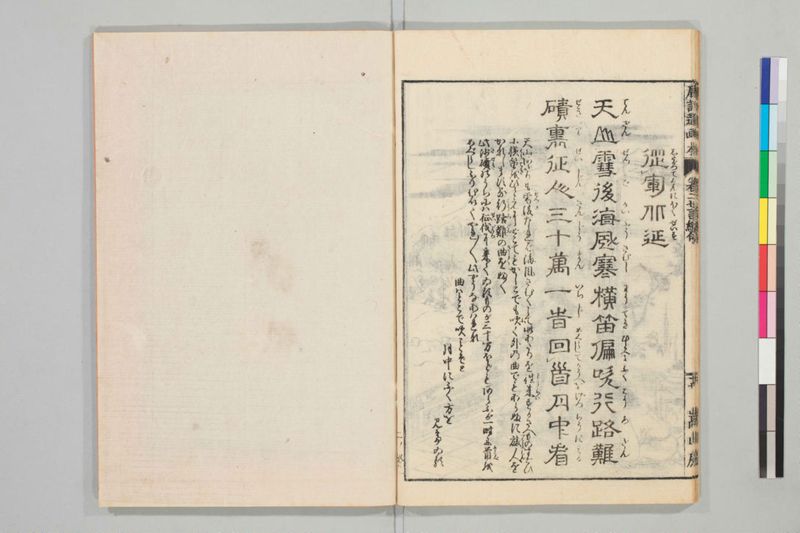
翻刻
従(したがつて)_レ軍(ぐんに)北征(ほくせいす)
天山雪後海風寒(てんざんせつごかいふうさむし)橫笛偏吹行路難(わうてきひとへにふくこうろだん)
磧裏征人三十万(せきりせいじんさんじうまん)一時(いちじ)回(めくらして)_レ首(かうへを)月中看(げつちうにみる)
《割書:天山あたりも雪後(せつご)なれば海風さむくして此あたりを往来(わうらい)するさへものすごひ|に横笛(わうてき)をひとえにどこてもかしこでも吹(ふ)く外の曲でもあらふに旅人(りよじん)を|かなしまする行路難(こうろだん)の曲(きよく)をふく|此/沙磧(させき)のうちには征伐(せいばつ)に来てゐるものが三十万ほどもあらふが一時に首(かうべ)を|めぐらしふりむいてやれ〳〵此やうなあはれな| 曲はとこで吹ことぞと| 月中にふく方を| 見てゐる》
現代語訳
軍に従って北征する
天山雪後海風寒(天山に雪が降った後、海風は寒い)
横笛偏吹行路難(横笛はひたすら「行路難」を吹く)
磧裏征人三十万(砂漠の中にいる征人は三十万)
一時回首月中看(一斉に振り返って月の中を見る)
【割書による解説】
天山あたりも雪が降った後なので海風が寒く、このあたりを往来するだけでも物寂しいのに、横笛をひたすらあちこちで吹いている。他の曲でもよいだろうに、旅人を悲しませる「行路難」の曲を吹く。この砂漠の中には征伐に来ている者が三十万ほどもいるだろうが、一斉に首を巡らせて振り向いて、「やれやれ、このような哀れな曲をどこで吹いていることか」と、月の中で吹いている方を見ている。
英語訳
Following the army on a northern expedition
After snow on Tianshan, the sea wind is cold
The horizontal flute persistently plays "The Road is Hard"
In the desert are three hundred thousand soldiers
All at once they turn their heads to look toward the moon
[Commentary in smaller text]
After snow has fallen around Mount Tianshan, the sea wind is cold, and just traveling through this area is desolate. The horizontal flute persistently plays everywhere. Though other melodies would do, it plays "The Road is Hard," a tune that saddens travelers. In this desert there are probably about three hundred thousand men who have come on this military expedition, and all at once they turn their heads and look back, thinking "Alas, where is this pitiful tune being played?" as they gaze toward where it's being played in the moonlight.