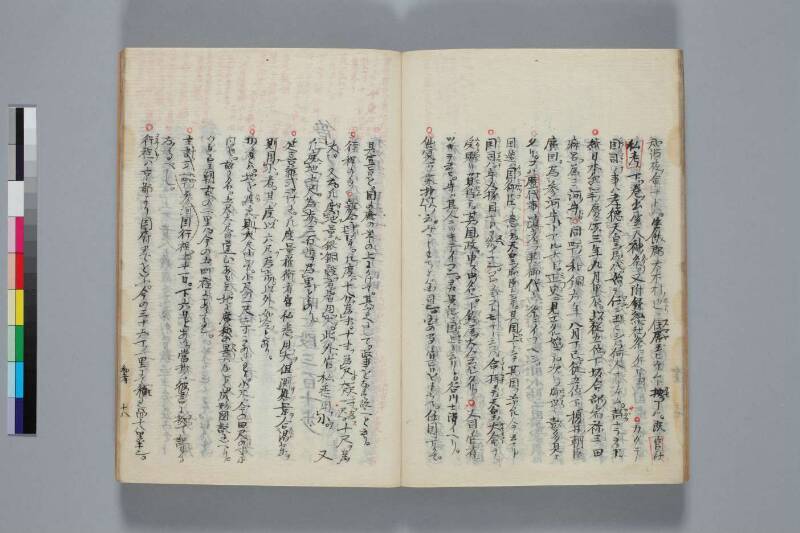
翻刻
知波夜 ̄ノ命ナドハ。宝飯郡大木村 ̄ノ辺(ホトリ)ニ住居(スマヤ)玉ヒケムト按(オモ) ̄フハ。既官社
私考【以上四字朱筆で囲み】下 ̄ツ巻 ̄ノ出雲天神 ̄ノ条(クダリ)。又附録総社 ̄ノ条 ̄ニイヘリ。 ◯カクテ
国司(クニノミコトミチ)【クニノミコトモチのことか】ノ事ハ孝徳天皇 ̄ノ御代。始リテ任(■■)【自信はありませんが素直に読むと「ヨシ」か】シ玉ヒシハ。何人ナリケム。詳(サダカ)ナラネド。
◯続日本紀《割書:三ノ|廾三丁》慶雲三年九月申辰。以従五位 ̄ノ下坂合部 ̄ノ宿袮三田麻呂 ̄ヲ為_二 三河 ̄ノ守_一 ̄ト。◯同《割書:六ノ|四丁》和銅六年八月丁巳。従五位下榎井 ̄ノ朝臣
廣国 ̄ヲ為_二参河守_一 ̄ト トアルナド。正史(ミフミ)ニ見エタル始 ̄ノ ニテ。次〻ノ御世〻(ミヨ〻)数多見エ
タリ。コハ歴代事蹟考【以上五字朱筆で囲み】 ̄ノ其 ̄ノ御代ゝノ条ニイフへシ。
国造ハ国御臣(クニノミヤツコ)ノ意 ̄ニ テ。天皇 ̄ノ御臣トシテ。其 ̄ノ国 ̄ノ上(カミ)トシテ其 ̄ノ国 ̄ヲ治ムル人ヲ云ナリ。
◯国司(クニノミコトモチ)ハ。守介掾目ナドヲ総(スベ)イフ也。コレヲミコトモチ【以上五字に傍線】云フハ。命持(ミコトモチ)ニテ。天皇 ̄ノ大命(オホミコト)ヲ
受賜(ウケタマハ)リ貧持(ナヒモチ)テ。其 ̄ノ国ノ政 ̄ヲ申ス由 ̄ノ名也。ト鈴 ̄ノ屋 ̄ノ大人云ハレタリ◯ 又目ノ官府 ̄ニ
ツキテ云ヒ。守ハ其 ̄ノ人ニツキテノイフ也。霊異記 ̄ニ国上(クニノカミ)ト云リト。谷川士清イヘリ。
◯仙覚万葉抄《割書:十八ノ|八丁》云。みこともちとハ国司也。国の守ハ宣旨をもちて。任国 ̄ヲ下りて。
其宣旨を。国の庁の常の上にかけて。其 ̄ノ まへにして。政事をなす故也と云り。
◯行程の事◯雑令《割書:十ノ|廿七丁》五。凡度 ̄ハ十分 ̄ヲ為_レ寸 ̄ト。十寸 ̄ヲ為_レ尺 ̄ト。《割書:一尺二寸 ̄ヲ為_二 ̄ス|大尺一尺_一 ̄ト。》十尺 ̄ヲ為
《割書: |レ》丈 ̄ト。 又云。凡/度(ハカ)_レ ̄リ地 ̄ヲ量_二 ̄ル銀銅穀_一 ̄ヲ者皆用_レ ̄フ大 ̄ヲ。此 ̄ノ外 ̄ハ官私悉 ̄ク用_レ ̄フ小 ̄ヲ。 又
凡度_レ ̄ル地 ̄ヲ五尺。為_レ歩 ̄ト。三百歩 ̄ヲ為_レ里 ̄トとあり。
◯延喜雑式《割書:五十ノ|二丁》■【意味からすると「に」か】。凡度量権衡 ̄ノ者官私悉 ̄ク用_レ ̄フ大 ̄ヲ。但 ̄シ測_二 ̄リ晷景_一 ̄ヲ合_二 ̄スルト湯茶_一 ̄ヲ
則用_レ ̄フ小 ̄ヲ者。其 ̄ノ度 ̄ハ以六尺 ̄ヲ為_レ ̄ス歩 ̄ト。以外 ̄ハ如_レとあり。
◯かゝれハ。地を度(ハカ)るハ。則 ̄チ大尺にして。小尺の一尺二寸にあたれり。小さ尺 ̄ハ今の曲尺の寸に
同じ。故に名 ̄ハ五尺六尺の違日あれ共。地に廣狭の異(カハリ)ハなしと。成形図説にいへり。
はれ皇朝古 ̄ヘ の一里ハ。今の五町程にあたる也。
◯主計式《割書:廾四ノ|十四丁》参河 ̄ノ国行程。上十一日。下六日とあり。当抄ハ彼 ̄ノ書に拠(ヨリ)て記せる
なるべし。
◯行程(ミチノリ)ハ京都より国府までといふ。今の三十六丁 ̄ノ一里にて積(ツモ)れハ四十六里半也。
和者 十八
現代語訳
知波夜命などは、宝飯郡大木村の辺りに住居されていたであろうと思うのは、すでに官社私考下巻の出雲天神の条、また附録総社の条に述べている。
このように国司のことは孝徳天皇の御代に初めて任命されたが、誰が最初であったかは詳しくは分からない。
続日本紀(三の二十三丁)に「慶雲三年九月申辰、従五位下坂合部宿禰三田麻呂を三河守とす」。同書(六の四丁)に「和銅六年八月丁巳、従五位下榎井朝臣広国を参河守とす」などとあるのが正史に見える最初のもので、その後の御代々に数多く見える。これは歴代事蹟考のその御代々の条に述べるべきである。
国造は「国の御臣」という意味で、天皇の御臣として、その国の長としてその国を治める人をいう。
国司は、守・介・掾・目などを総称していう。これを「みこともち」というのは、「命持」であって、天皇の大命を受け賜わり保持して、その国の政治を申し行うということからの名称である、と本居宣長は述べられている。また「目」は官府について言い、「守」はその人についていう。霊異記に「国上」というとおりだと、谷川士清は言っている。
仙覚万葉抄(十八の八丁)に「みこともちとは国司である。国の守は宣旨をもって任国へ下って、その宣旨を国の庁の常の上にかけて、その前で政事を行うからである」と言っている。
【行程のこと】雑令(十の二十七丁)五に「凡そ度は十分を寸とし、十寸を尺とし(一尺二寸を大尺一尺とする)、十尺を丈とする」。また「凡そ地を度り銀銅穀を量る者は皆大を用いる。この外は官私悉く小を用いる」。また「凡そ地を度るには五尺を歩とし、三百歩を里とする」とある。
延喜雑式(五十の二丁)に「凡そ度量権衡は官私悉く大を用いる。ただし晷景を測り湯茶を合わすには則ち小を用いる。その度は六尺を以て歩とし、以外は同様」とある。
このように地を測るのは、すなわち大尺であって、小尺の一尺二寸にあたる。小尺は今の曲尺の寸と同じ。故に名前は五尺六尺の違いはあるが、地の広狭に異なりはないと、成形図説に言っている。それゆえ皇朝古代の一里は、今の五町程にあたる。
主計式(二十四の十四丁)に「参河国行程、上り十一日、下り六日」とある。当抄はその書に拠って記したものであろう。
行程は京都より国府までという。今の三十六丁の一里で積もれば四十六里半である。
和考 十八
英語訳
Chihaya no Mikoto and others are thought to have resided in the vicinity of Ōki Village in Hōi District, as already stated in the section on Izumo Tenjin in the lower volume of Kansha Shikō, and also in the section on Sōsha in the appendix.
Thus, regarding provincial governors (kokushi), they were first appointed during the reign of Emperor Kōtoku, but it is unclear who was the first appointee.
The Shoku Nihongi (vol. 3, folio 23) states: "On the jitatsu day of the ninth month of Keiun 3 [706], Junior Fifth Rank Lower Sakaaibe no Sukune Mitamaro was made governor of Mikawa." The same work (vol. 6, folio 4) states: "On the teishi day of the eighth month of Wadō 6 [713], Junior Fifth Rank Lower Enoi no Asomi Hirokuni was made governor of Mikawa." These are the first instances seen in official histories, and many more appear in subsequent reigns. This should be discussed in the relevant sections of each reign in the Rekidai Jiseki Kō.
Kuni no miyatsuko (provincial chieftain) means "provincial retainer," referring to one who serves as the Emperor's retainer and governs that province as its head.
Kokushi (provincial governor) is a general term for shu (governor), suke (assistant governor), jō (secretary), and sakan (clerk). The reason this is called "mikoromochi" is that it means "command-bearer," referring to one who receives and holds the Emperor's great command and administers the government of that province - so states Motoori Norinaga. Also, "sakan" refers to the government office, while "shu" refers to the person. As stated in the Ryōi-ki as "kuni no kami," according to Tanigawa Shissei.
The Sen'gaku Man'yōshō (vol. 18, folio 8) states: "Mikoromochi refers to provincial governors. The provincial governor goes down to his appointed province with an imperial edict, hangs that edict above the regular seat in the provincial office, and conducts government business before it."
[On Travel Distances] The Zatsurō (vol. 10, folio 27) states: "Generally, ten bu make one sun, ten sun make one shaku (one shaku two sun make one large shaku), and ten shaku make one jō." It also states: "Generally, when measuring land and weighing silver, copper, and grain, all use the large measure. For all else, both official and private use the small measure." Also: "Generally, when measuring land, five shaku make one bu, and three hundred bu make one ri."
The Engi Zasshiki (vol. 50, folio 2) states: "Generally, for all measurements and weights, both official and private use the large measure. However, when measuring sundial shadows and mixing hot tea, use the small measure. For that measurement, six shaku make one bu, and the rest is the same."
Thus, measuring land uses the large shaku, which corresponds to one shaku two sun of the small shaku. The small shaku is the same as today's curved ruler. Therefore, though the names differ between five and six shaku, there is no difference in the actual area of land, as stated in the Seikei Zusetsu. Hence, one ri in ancient imperial times corresponds to about five chō today.
The Shukei-shiki (vol. 24, folio 14) states: "Mikawa Province travel distance: eleven days going up, six days going down." This extract was probably recorded based on that document.
Travel distance refers to the journey from Kyoto to the provincial capital. Calculated at today's thirty-six chō per ri, it amounts to forty-six and a half ri.
Wakō [Japanese Studies] 18