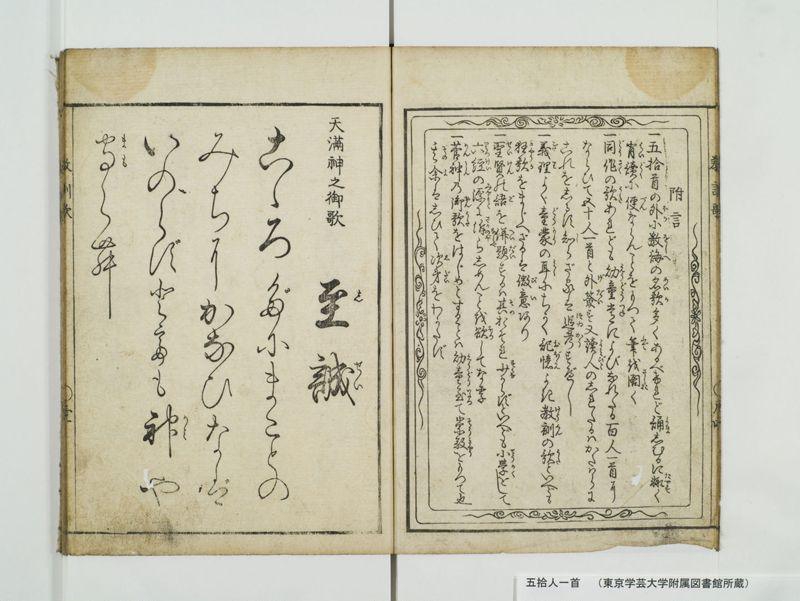
翻刻
【右丁】
附言
一 五拾首の外(ほか)に教誨(をしへ)の名歌(めいか)多くあるべけれど誦(よま)しむるに輒(たやす)#1く
背読(はいどく)に便(べん)ならんことをもつて筆(ふで)を閣(さしお)く
一 同作(どうさく)の歌(うた)あれども幼童(えうどう)常(つね)によびなれたる百人一首に
ならひて五十人一首と外簽(げだい)す又 読人(よみびと)のしれたるはかたはらに
これをしるす知(し)らざるは追考(つゐかう)すべし
一 義理(ぎり)よく童蒙(どうもう)の耳(みゝ)にちかく記憶(おぼえ)よき教訓(けうくん)の歌(うた)といへども
狂歌(きやうか)をまじへざるは微意(びい)あり
一 聖賢(せいけん)の語(ご)を《振り仮名:併題|へいだい|ならべ 》するは其(その)おそれ少(すくな)からずといへども小学(せうかく)をして
六経(りつけい)の源(みなもと)に泝(さかのぼ)らしめんことを欲(ほつ)してなり
一 菅神(かんしん)の御歌(おんうた)をはじめとすることは幼童(えうどう)至(いたつ)て崇敬(そうきやう)をもつて也
其余(そのよ)はしひて次第(しだい)をわかたず
【左丁】
《割書:天満神之御歌》 至誠(しせい)
こゝろだにまことの
みちにかなひなば
いのらずとても神(かみ)や
守(まも)らむ
現代語訳
【右丁】
附言(あとがき)
一、五十首の他にも教えとなる名歌は数多くあるはずだが、子どもたちに誦じさせるにあたり、暗唱しやすく背読(そらんじること)に便利であることを重んじて、筆を置いた(それ以上加えなかった)。
一、同じ作者による歌が複数ある場合もあるが、幼い子どもたちが日ごろから親しんでいる「百人一首」にならって、「五十人一首」と表題とした。また、詠み人が知られているものはその傍らに記した。知られていないものは追って調べるべきである。
一、道理がよく通り、子どもたちの耳に親しみやすく、覚えやすい教訓の歌であっても、狂歌を混じえなかったのには、それなりの深い意図(考え)がある。
一、聖賢の言葉を(歌と)並べて題とすることは、おそれ多いことではあるが、初学の子どもたちに六経の源流までさかのぼらせたいという願いからそうしたのである。
一、菅神(菅原道真公)の御歌を最初に置いたのは、幼い子どもたちが菅神をきわめて崇め敬っているからである。その他の歌については、特に順序を定めなかった。
【左丁】
《菅原天満神の御歌》 至誠(まごころ)
こころだにまことの
みちにかなひなば
いのらずとても神や
守らむ
(心さえ誠の道にかなっているならば、祈らずとも神は守ってくださるだろう。)
英語訳
【Right page】
Postscript
- Beyond these fifty poems, there are surely many other celebrated poems that serve as moral teachings, but in order to make them easy for children to recite and convenient for memorization by heart, I have set down my brush (and included no more).
- Although there are cases where multiple poems by the same author appear, following the model of the *Hyakunin Isshu* (*One Hundred Poems by One Hundred Poets*), which young children are already well acquainted with, I have titled this collection *Gojūnin Isshu* (*One Poem Each by Fifty People*). Where the poet is known, their name has been noted beside the poem. Where the poet is unknown, this should be investigated in due course.
- Even though the poems included are those whose moral reasoning is sound, accessible to children's ears, and easy to remember as lessons, there is a deliberate and considered reason for not including any *kyōka* (comic or satirical verse).
- Although there is no small amount of trepidation in placing the words of sages and wise men alongside the poems as paired titles, this was done out of a desire to lead young beginners back to the very source of the Six Classics.
- The reason the poem of the Kan Deity (Lord Sugawara no Michizane) is placed first is that young children hold this deity in the highest reverence. As for the remaining poems, no particular effort was made to establish an order among them.
【Left page】
《A poem by the Deity of Tenmangū (Sugawara no Michizane)》 Sincerity (*Shisei*)
*Kokoro dani*
*makoto no michi ni*
*kanainaba*
*inorazutotemo kami ya*
*mamoramu*
(If only one's heart is in accord with the true path of sincerity, then even without prayer, surely the gods will protect you.)