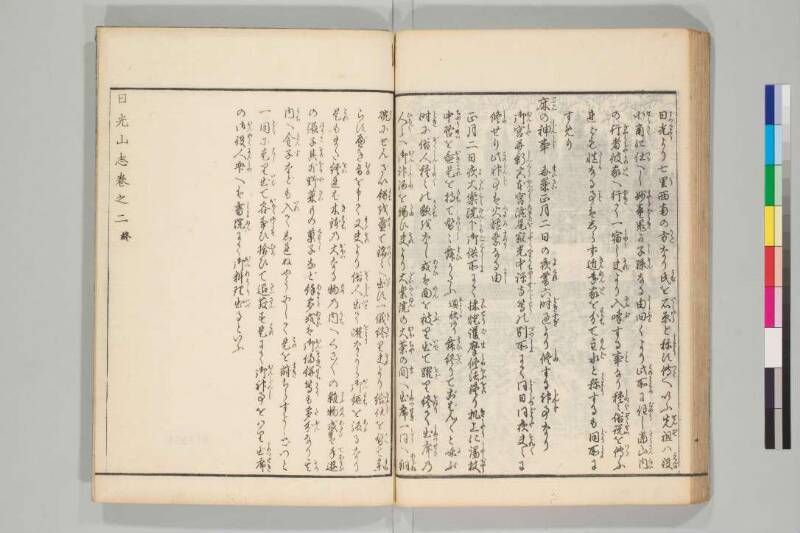
翻刻
【右丁】
日光(につくわう)より七 里(り)西南の方(かた)なり氏(うじ)を石原(いしはら)と称(しよう)す傳(つた)へいふ先祖(せんぞ)は役(えんの)
小角(せうかく)に仕(つか)へし妙童鬼(みやうどうき)か子孫(しそん)なる由(よし)旧(ふる)くより此所(このところ)に住(ぢゆう)し當山内(たうさんない)
の行者(ぎやうじや)彼家(かのいへ)へ行(ゆき)て一 宿(しゆく)し夫(それ)より入峰(にふぶ)する事(こと)なり種(しゆ)〻(〴〵)俗説(ぞくせつ)を傳(つた)ふ
れども慥(たしか)なる事(こと)はしらず近年(きんねん)家(いへ)を分(わかち)て主水(もんど)と称(しよう)するも同所(どうしよ)に
すめり
床(とこ)の神事(じんじ) 毎歳(まいさい)正月二日の夜(よ)暮(くれ)六 时(どき)過(すぎ)より修(しゆ)する神事(じんじ)なり【平出】
御宮(おんみや)并 新宮(しんぐう)本宮(ほんぐう)瀧尾(たきのを)寂光(じやくくわう)中禅寺(ちゆうぜんじ)等(とう)の別所(べつしよ)にて同日(どうじつ)同夜(どうや)夫(それ)〻(〳〵)に
修(しゆ)せり此(この)神事(じんじ)は火爐祭(くわろまつり)なる由(よし)
正月二日 夜(よ)大楽院(だいらくゐん)下御供所(しもごくうしよ)にて採燈護摩修法(さいとうごましゆほふ)終(をは)り机上(きしやう)に錫杖(しやくぢやう)
中啓(ちゆうけい)を置(おき)是(これ)を持(もち)て替(かはる)〻(〳〵)舞(まひ)うたふ《割書:頌歌(しようか)あり》舞(まひ)終(をは)りてごばん〳〵と呼(よ)ぶ
时(とき)に俗人(ぞくしん)種(しゆ)〻(〴〵)の貌(かたち)をなし或(あるひ)は面(めん)を被(かぶ)り出(いで)て躍(をど)り終(をはり)て出席(しゆつせき)の
人(ひと)〻(〴〵)へ御神酒(おんしんしゆ)を賜(たま)ひ夫(それ)より大楽院(だいらくゐん)の大茶(おほちや)の間(ま)へ出席(しゆつせき)一 同(どう)へ銅(あかゞね)
【左丁】
碗(わん)にぜんざい餅(もち)を盛(もり)て銘(めい)〻(〳〵)へ出(いだ)す一 儀(ぎ)終(をは)り夫(それ)より給仕(きふじ)を替(かへ)て参(まゐ)
らすべき㫖(むね)を申て又(また)夫(それ)より俗人(ぞくじん)出(いで)て躍(をとり)ながら御餅(おんもち)を強(しふ)るなり
是(これ)もまた終(をは)れば木鉢(きばち)の大(おほい)なる物(もの)の内(うち)へくさ〳〵の雑物(ざふもつ)或(あるひ)は手逰(てあそび)
の張子(はりこ)其外(そのほか)野菜(やさい)もの菓子(くわし)など餘多(あまた)或(あるひ)は御備餅(おんそなへもち)等(とう)も多分(たぶん)なり其(その)
内(うち)へ金子(きんす)なども入(いれ)てしれぬやうにして是(これ)を蒔(まき)ちらすよしどつと
一 同(どう)に走(はし)り出(いで)て各(おの〳〵)争(あらそ)ひ拾(ひろ)ひて退散(たいさん)す是(これ)にて御神事(おんじんじ)をはり出席(しゆつせき)
の御役人衆(おんやくにんしゆ)へは書院(しよゐん)にて御料理(おんれうり)出(いづ)るといふ
日 光 山 志 巻 之 二《割書: 終》
現代語訳
【右丁】
日光より七里西南の方角にある。氏を石原と称する。伝え言うには、先祖は役小角に仕えた妙童鬼の子孫である由。古くからこの所に住み、当山内の行者は彼の家へ行って一泊し、それから入峰するのが習いである。種々の俗説を伝えているが、確かなことは分からない。近年家を分けて主水と称する者も同所に住んでいる。
床の神事 毎年正月二日の夜暮れ六時過ぎから修する神事である。
御宮並びに新宮・本宮・瀧尾・寂光・中禅寺等の別所にて同日同夜それぞれに修される。この神事は火炉祭である由。
正月二日夜、大楽院下御供所にて採燈護摩修法が終わり、机上に錫杖・中啓を置き、これを持って代わる代わる舞い歌う(頌歌あり)。舞が終わってごばんごばんと呼ぶ時に、俗人が種々の姿をなし、或いは面を被って出て躍り、終わって出席の人々へ御神酒を賜り、それから大楽院の大茶の間へ出席一同へ銅
【左丁】
碗にぜんざい餅を盛って銘々へ出す。一儀が終わり、それから給仕を替えて参らせるべき旨を申して、また それから俗人が出て躍りながら御餅を強いるのである。
これもまた終われば、木鉢の大きな物の内へ草々の雑物、或いは手遊びの張子、その外野菜もの・菓子など数多く、或いは御備餅等も多分にあり、その内へ金子なども入れて分からぬようにして、これを蒔き散らす。どっと一同に走り出て各々争い拾って退散する。これにて御神事が終わり、出席の御役人衆へは書院にて御料理が出るという。
日光山志 巻之二 終
英語訳
【Right Page】
It is located seven ri southwest of Nikko. The family name is Ishihara. According to tradition, their ancestors were descendants of Myōdōki, who served En no Ozunu (En no Gyōja). They have lived in this place since ancient times, and it is customary for ascetic practitioners of our mountain to go to their house for one night's lodging before entering the mountains for spiritual training. Various folk tales are passed down, but nothing certain is known. In recent years, the family has been divided, and one who calls himself Mondo also lives in the same place.
Toko no Shinji (Floor Ritual): This is a Shinto ritual performed every year from after 6 o'clock on the evening of January 2nd.
It is performed on the same day and night respectively at various sacred sites including the Main Shrine, Shingu, Hongu, Takino-o, Jakko, and Chuzenji. This ritual is said to be a fire hearth festival.
On the night of January 2nd, after the Saitō Goma ritual ends at the Dairakuin Lower Offering Hall, a shakujo (monk's staff) and chūkei (folding fan) are placed on the desk, and holding these, people take turns dancing and singing (there are hymns). When the dance ends and "goban goban" is called out, lay people appear in various forms, some wearing masks, and dance. After finishing, sacred sake is bestowed upon those in attendance, and then copper
【Left Page】
bowls filled with zenzai (sweet red bean soup) and rice cakes are served to everyone in the large tea room of Dairakuin. After this ceremony ends, they announce that the service will be changed, and then lay people come out and force rice cakes upon people while dancing.
When this also ends, various miscellaneous items are placed in large wooden bowls - toy papier-mâché figures, vegetables, sweets, and many offering rice cakes, with gold coins also mixed in so they cannot be seen, and these are scattered about. Everyone rushes out at once, competing to pick things up before dispersing. This concludes the sacred ritual, and formal cuisine is served to the attending officials in the study hall.
Nikko Sanshi, Volume Two - End