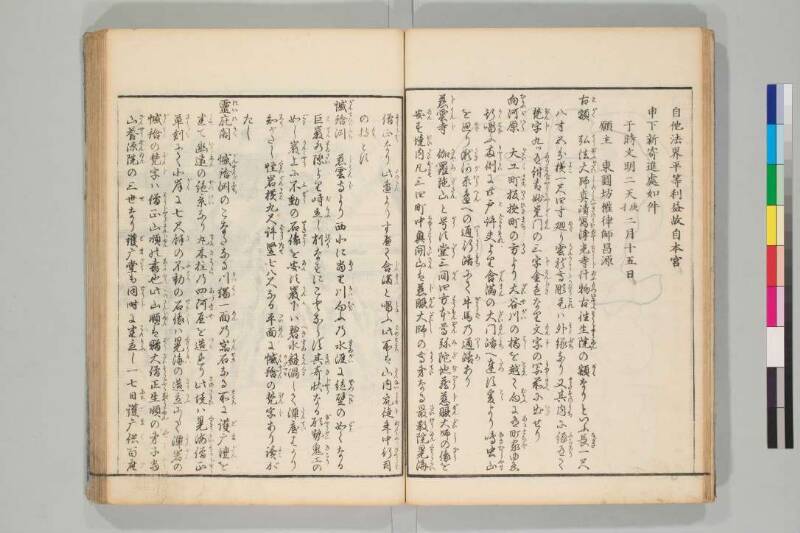
翻刻
【右丁】
自他法界平等利益故自本宮
申下新寄進處如件
于時文明二天《割書:庚|刁》二月十五日
願主 東圓坊權律師昌源
古額(こがく) 弘法大師(こうぼふだいしの)真蹟(しんせきの)冩(うつし)浄光寺(じやうくわうじ)什物(じふもつ)古(いにしへ)徃生院(わうじやうゐん)の額(がく)なりといふ長(ながさ)一尺
八寸五分 横(よこ)一尺四寸 廽(めぐ)り雲龍(うんりよう)高彫(たかぼり)是(これ)は外縁(そとぶち)なり又(また)其内(そのうち)に縁(ふち)有(あり)て
梵字(ぼんじ)九ッ有(あり)紺青(こんじやう)妙覚門(みやうがくもん)の三 字(じ)金色(こんじき)なり文字(もんじ)の写(うつし)前(まへ)に出(いだ)せり
向河原(むかふがはら) 大工町(だいくまち)板挽町(いたひきまち)の方(かた)より大谷川(だいやがは)の橋(はし)を越(こえ)て向(むかふ)に有(ある)町家(まちや)ゆゑ
斯(かく)唱(とな)ふ両側(りやうかは)に廿 戸(こ)許(ばかり)夫(それ)より含満(がんまん)の大門路(だいもんみち)へ達(たつ)す爰(こゝ)より鳴虫山(なきむしやま)
を廻(めぐ)り瀧河原(たきがはら)邊(へん)への通行路(つうかうみち)にて牛馬(ぎうば)の通路(つうろ)あり
慈雲寺(じうんじ) 伽羅陀山(きやらださん)と号(がう)す堂(だう)三 間(げん)四 方(はう)本尊(ほんぞん)弥陀(みだ)地蔵(ぢざう)慈眼大師(じげんだいし)の像(ざう)を
安(あん)す境内(けいだい)凡(およそ)三四町 中興開山(ちゆうこうかいさん)は慈眼大師(じげんだいし)の高㐧(かうてい)なる最敎院(さいけうゐん)晃海(くわうかい)
【左丁】
僧正(そうじやう)なり此邊(このへん)よりすべて含満(じんまん)【ママ】と唱(とな)ふ此所(このところ)は山内(さんない)衆徒(しゆと)年中行司(ねんぢゆうぎやうじ)
の持(もち)とす
憾(がん)𤚥(まんが)淵(ふち) 慈雲寺(じうんじ)より西北に當(あた)り川向(かはむか)ふの水涯(すゐがい)に絶壁(ぜつへき)の如(ごと)くなる
巨巌(こがん)水際(すゐさい)より峙立(ぢりふ)し削(けづり)なすにことならず其(その)奇状(きじやう)なる形㔟(ぎやうせい)鬼工(きこう)の
如(ごと)し巌上(かんしやう)に不動(ふどう)の石像(せきざう)を安(あん)す巌下(かんか)は碧水(へきすゐ)盤渦(はんくわ)【「ウヅマキ」左ルビ】して潭底(たんてい)はかり
知(しり)がたし怪岩(くわいがん)横(よこ)九尺 許(ばかり)竪(たて)七八尺なる平面(へいめん)に憾(かん)𤚥(まん)の梵字(ぼんじ)あり讀(よみ)が
たし
靈庇閣(れいひかく) 憾(がん)𤚥(まんが)淵(ふち)のこなたなる川端(かははた)一 面(めん)の嵓石(がんせき)なる所(ところ)に護广壇(ごまだん)を
建(たて)て幽遠(いうゑん)の絶景(ぜつけい)なり丸木柱(まろきはしら)の四阿屋(あづまや)を造(つく)れり此境(このさかひ)は晃海僧正(くわうかいそうじやう)
草創(さう〳〵)にて北 岸(がん)に七尺 餘(よ)の不動(ふどう)の石像(せきざう)は晃海(くわうかい)の造立(さうりふ)にて潭岩(たんがん)の
憾(がん)𤚥(まん)の梵字(ぼんじ)は僧正(そうじやう)山順(さんじゆん)の書(しよ)也(なり)此(この)山順(さんじゆん)は贈大僧正(ぞうだいそうじやう)生順(しやうじゆん)の㐧子(でし)當(たう)
山(ざん)養源院(やうげんゐん)の三 世(せ)なり護广堂(ごまだう)も同时(どうじ)に建立(こんりふ)し一七 日(にち)護广供(ごまく)百 座(ざ)
現代語訳
【右丁】
自他法界平等利益故自本宮
申下新寄進處如件
于時文明二天庚寅二月十五日
願主 東圓坊權律師昌源
古額 弘法大師の真跡の写し、浄光寺の什物。古くは往生院の額であったという。長さ一尺八寸五分、横一尺四寸。周りに雲龍の高彫りがあり、これは外縁である。また、その内に縁があって梵字が九つある。紺青色で、「妙覚門」の三字は金色である。文字の写しは前に出した。
向河原 大工町・板挽町の方から大谷川の橋を越えて向こうにある町家なので、このように呼ぶ。両側に二十戸ほどある。それより含満の大門路へ達する。ここから鳴虫山を回り、滝河原辺への通行路で、牛馬の通路がある。
慈雲寺 伽羅陀山と号する。堂は三間四方。本尊は弥陀・地蔵・慈眼大師の像を安置する。境内はおよそ三、四町。中興開山は慈眼大師の高弟である最教院晃海
【左丁】
僧正である。このあたりからすべて含満と呼ぶ。この所は山内衆徒年中行事の持ちとする。
憾満ヶ淵 慈雲寺より西北に当たり、川向こうの水際に絶壁のような巨岩が水際より峙立し、削りなすのと変わらない。その奇状なる形勢は鬼工のようである。岩上に不動の石像を安置する。岩下は碧水が渦巻いて、淵底は計り知りがたい。怪岩は横九尺ほど、縦七、八尺ほどの平面に憾満の梵字があるが、読みがたい。
霊庇閣 憾満ヶ淵のこちら側の川端、一面の岩石である所に護摩壇を建てて、幽遠の絶景である。丸木柱の四阿屋を造った。この境内は晃海僧正の草創で、北岸に七尺余りの不動の石像は晃海の造立で、淵岩の憾満の梵字は僧正山順の書である。この山順は贈大僧正生順の弟子、当山養源院の三世である。護摩堂も同時に建立し、一七日護摩供百座を
英語訳
【Right Page】
"For the equal benefit of all dharma realms of self and others, from the main shrine
This new donation is hereby declared as stated.
At this time, Bunmei 2nd year, kanoe-tora (1470), February 15th
Patron: Tōenbo Gonritshi Shōgen"
Ancient plaque: A copy of the authentic calligraphy of Kōbō Daishi, treasured at Jōkōji Temple. It is said to have formerly been a plaque of Ōjōin Temple. Length: 1 shaku 8 sun 5 bu, width: 1 shaku 4 sun. Around it are high-relief carvings of cloud dragons, which form the outer frame. Inside this, there is another frame with nine Sanskrit characters. They are in dark blue, while the three characters "Myōgaku-mon" are in gold. A transcription of the characters was presented earlier.
Mukōgawara: Since there are townhouses beyond the bridge over the Daiya River from the direction of Daiku-machi and Itahiki-machi, it is called thus. There are about twenty households on both sides. From there it reaches the main gate road to Ganman. From here, going around Nakimushi Mountain, there is a thoroughfare to the Takigawara area with a path for cattle and horses.
Jiunji Temple: Called Kyarada-san. The hall is three ken square. The principal images are Amida, Jizō, and a statue of Jigen Daishi. The temple grounds are about three to four chō. The restoring founder was Saikyōin Kōkai,
【Left Page】
a high disciple of Jigen Daishi who became a sōjō (high priest). From this area, everything is called Ganman. This place is maintained by the mountain clergy for year-round religious services.
Kanman-ga-fuchi (Ganman Pool): Located northwest of Jiunji Temple, on the water's edge across the river, giant rocks like sheer cliffs rise from the water's edge, no different from carved work. Their strange forms are like the work of demon craftsmen. A stone statue of Fudō is enshrined on top of the rocks. Below the rocks, blue-green water swirls, and the depth of the pool is unfathomable. On the flat surface of the strange rock, about nine shaku wide and seven to eight shaku tall, there are Sanskrit characters for "Ganman," but they are difficult to read.
Reihi Pavilion: At the riverside on this side of Ganman-ga-fuchi, on a place that is all rocky surface, a fire altar (goma-dan) was built, creating a secluded and magnificent scenic spot. A gazebo with round wooden pillars was constructed. This area was originally developed by Priest Kōkai. The stone statue of Fudō, over seven shaku tall on the north bank, was erected by Kōkai, and the Sanskrit characters for "Ganman" on the pool rocks were written by Priest Sanjun. This Sanjun was a disciple of the late Dai-sōjō Shōjun and the third abbot of Yōgenin Temple of this mountain. The fire ritual hall was also built at the same time, and one hundred sessions of seven-day fire rituals were