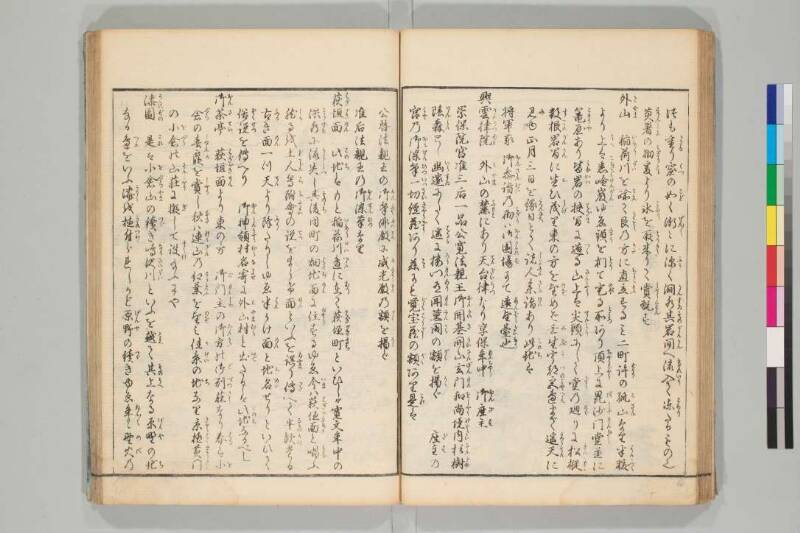
翻刻
【右丁】
つも重(かさな)り窟(くつ)の如(こど)【ママ】く漸(ぜん)〻(〳〵)に深(ふか)く澗水(かんすゐ)其(その)岩間(がんかん)へ流入(ながれいり)て凍(こほり)たるもの也
炎暑(えんしよ)の砌(みぎり)爰(こゝ)より氷(こほり)を取來(とりきた)りて賞翫(しやうくわん)す
外山(とやま) 稲荷川(いなりがは)を踰(こえ)て艮(うしとら)の方(かた)に直立(ちよくりふ)すること二町 許(ばかり)の孤山(こさん)なり半腹(はんふく)
より上(うへ)は悉(こと〴〵く)嶮巌(けんがん)ゆゑ鎖(くさり)を捫(とり)て登(のぼ)る所(ところ)あり頂上(ちやうじやう)に毘沙門堂(びしやもんだう)並に
篭屋(こもりや)あり皆(みな)岩(いは)の挟間(はざま)に造(つく)る山上(さんしやう)は尖頭(せんとう)にして堂(だう)の廽(めぐ)りに松(まつ)樅(もみ)
数根(すこん)岩間(がんかん)に生(お)ひ茂(しげ)り東の方を望(のぞ)めば壬生(みぶ)宇都宮(うつのみや)邊(へん)まで遥天(えうてん)に
見(み)ゆ正月三日を縁日(えんにち)とて諸人(しよにん)参詣(さんけい)あり此地(このち)は
将軍家 御参詣(おんさんけい)の砌(みぎり)は御圍塲(おんかこひば)にて遠望臺(ゑんばうだい)也(なり)
興雲律院( うんりつゐん) 外山(とやま)の麓(ふもと)にあり天台律(てんだいりつ)なり享保 年中(ねんちゆう) 御座主(おんざす)
崇保院宮准三后一品公寛法親王 御開基(おんかいき)開山(かいさん)玄門和尚(げんもんをしやう)境内(けいだい)杉樹(さんじゆ)
陰森(いんしん)とし幽邃(いうすゐ)にして遥(はるか)に楼門(ろうもん)有(あり)聞薫閣(もんくんかく)の額(がく)を掲(かゝ)ぐ 座主(ざす)の
宮(みや)の御染筆(おんせんひつ)一切經蔵(いつさいきやうざう)あり兹(こゝ)にも覚宝蔵(がくはうざう)の額(がく)あり是(これ)は
【左丁】
公啓法親王の御筆(おんふで)佛殿(ぶつでん)に威光殿(ゐくわうでん)の額(がく)を掲(かゝ)ぐ
准后法親王の御染筆(おんせんひつ)なり
萩垣面(はぎがきめん) 此地(このち)はもと稲荷川邊(いなりがはへん)に在(あり)て萩垣町(はぎがきまち)といひしが寛文年中の
洪水(こうずゐ)に流失(りうしつ)し其後(そのゝち)同町の畑地面(はたぢめん)に住(ぢゆう)するゆゑ今(いま)は萩垣面(はぎがきめん)と唱(とな)ふ
然(しか)るを土人等(どじんら)附會(ふくわい)の説(せつ)をまうけ面(めん)といふを誤(あやま)り傳(つた)へて半(なかば)缺(かけ)たる
古(ふる)き面(めん)一つ天(てん)より降(ふり)たりしゆゑ半(はん)かけ面(めん)と地名(ちめい)せりといひて
俗説(ぞくせつ)を傳へり 御神領村(おんしんりやうむら)名寄(なよせ)に外山村(とやまむら)と出(いで)たるは此地(このち)なるべし
御茶亭(おんさてい) 萩垣面(はぎがきめん)より東の方 御門主(ごもんしゆ)の御方(おんかた)の御別荘(ごべつさう)なり春(はる)は小(を)
倉(ぐら)の春霞(しゆんか)を賞(しやう)し秋(あき)は連山(れんざん)の紅葉(こうえふ)を望(のぞ)み佳景(かけい)の地(ち)なり京極黄門(きやうごくくわうもん)
の小倉(をぐら)の山荘(さんしやう)に擬(ぎ)して設(まうけ)給ふにや
漆園(うるしぞの) 是(これ)は小倉山(をぐらやま)の續(つゞ)き鳴沢川(なるさはがは)といふを越(こえ)て其上(そのうへ)なる原㙒(げんや)の地(ち)
なる邊(へん)をいふ漆(うるし)を植付(うゑつけ)られしかど原㙒(げんや)の續(つゞ)きゆゑ年(ねん)〻(〳〵)㙒火(のび)の
現代語訳
【右丁】
積み重なって洞窟のようになり、次第に深くなって、谷川の水がその岩の間に流れ込んで凍ったものである。
炎暑の時期に、ここから氷を取ってきて楽しむ。
外山 稲荷川を越えて北東の方に直立すること二町ほどの孤立した山である。中腹より上は全て険しい岩壁のため、鎖を伝って登る所がある。頂上に毘沙門堂と篭屋がある。皆岩の隙間に造られている。山上は尖った頂で、堂の周りに松や樅の木数本が岩の間に生い茂り、東の方を眺めれば壬生や宇都宮辺りまで遥か天空に見える。正月三日を縁日として多くの人が参詣する。この地は将軍家が御参詣の時は御囲場で、遠望台である。
興雲律院 外山の麓にある。天台律である。享保年中に御座主崇保院宮准三后一品公寛法親王が御開基され、開山は玄門和尚。境内は杉の木が陰森として幽邃で、遥かに楼門があり、聞薫閣の額を掲げる。座主の宮の御染筆である。一切経蔵があり、ここにも覚宝蔵の額がある。これは
【左丁】
公啓法親王の御筆である。仏殿に威光殿の額を掲げる。准后法親王の御染筆である。
萩垣面 この地はもと稲荷川辺にあって萩垣町と言っていたが、寛文年中の洪水に流失し、その後同町の畑地面に住むので今は萩垣面と称える。
しかし土地の人々が付会の説を設けて、「面」というのを誤り伝えて、半分欠けた古い面一つが天から降ったので「半かけ面」と地名にしたと言って俗説を伝えている。御神領村名寄に外山村と出ているのはこの地であろう。
御茶亭 萩垣面より東の方。御門主の御方の御別荘である。春は小倉の春霞を賞し、秋は連山の紅葉を望み、佳景の地である。京極黄門の小倉の山荘に擬して設け給うのか。
漆園 これは小倉山の続き、鳴沢川というのを越えてその上なる原野の地なる辺りをいう。漆を植え付けられたけれど、原野の続きのため年々野火の
英語訳
【Right Page】
It accumulates in layers like a cave, gradually deepening, and valley water flows into the rock crevices and freezes.
During the blazing heat of summer, ice is taken from here for enjoyment.
Mt. Toyama - This is an isolated mountain that rises straight up about two chō to the northeast after crossing the Inari River. Above the mid-slope, it is all steep rock faces, so there are places where one climbs holding onto chains. At the summit are Bishamonhall and a hermitage, all built in rock crevices. The mountaintop has a pointed peak, and around the hall several pine and fir trees grow thick between the rocks. Looking eastward, one can see as far as Mibu and Utsunomiya in the distant sky. The third day of the first month is the festival day when many people make pilgrimages. This place serves as an enclosure and observation platform when the Shogun makes his pilgrimage.
Kōun-ritsu-in - Located at the foot of Mt. Toyama. It belongs to the Tendai-ritsu sect. During the Kyōhō era, it was founded by the temple head, Prince Sūho-in-no-miya Jun-sangō Ippon Kōkan Hōshin-nō, with founding abbot Genmon Oshō. The temple grounds are shadowy and secluded with cedar trees, and there is a tower gate in the distance bearing a plaque reading "Monkunkaku" written by the Prince who serves as temple head. There is a sutra repository, and here too there is a plaque reading "Gakuhōzō." This is
【Left Page】
by Prince Kōkei Hōshin-nō's brush. The Buddha hall bears a plaque reading "Ikōden," written by Prince Jun-gō Hōshin-nō.
Hagigaki-men - This place was originally located by the Inari River and was called Hagigaki-machi, but it was washed away by floods during the Kanbun era. Afterward, people lived on the former farmland of the same town, so it is now called Hagigaki-men.
However, the local people have created an explanatory tale, mistakenly transmitting the meaning of "men" (face), saying that because an old broken mask fell from heaven, the place was named "Hankake-men" (half-broken mask), thus spreading folk tales. The Toyama Village mentioned in the village registry of the sacred domain lands is probably this place.
Imperial Tea Pavilion - East of Hagigaki-men. This is a villa belonging to the head priest's family. In spring one enjoys the spring mist of Ogura, in autumn one views the autumn leaves of the mountain ranges - it is a place of beautiful scenery. Perhaps it was established in imitation of Lord Kyōgoku's mountain villa at Ogura.
Urushi-zono (Lacquer Garden) - This refers to the area that continues from Mt. Ogura, crossing what is called Narusawa River, in the wilderness above. Lacquer trees were planted, but because it continues into wilderness, year after year wildfires