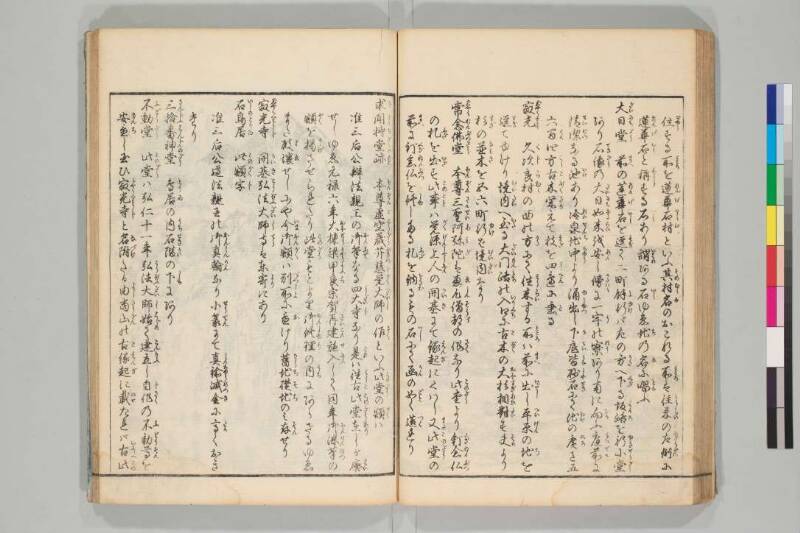
翻刻
【右丁】
住(ぢゆう)する所(ところ)を蓮蕐石村(れんげいしむ[ら])といふ其(その)村名(むらな)のおこれる所(ところ)は往來(わうらい)の左側(ひだりがは)に
蓮蕐石(れんげいし)と稱(しよう)する石(いし)あり謂(いはれ)ある石(いし)ゆゑ地(ち)の名(な)に唱(とな)ふ
大日堂(だいにちだう) 前(まへ)の蓮蕐石(れんげいし)を逕(すぎ)て二町 餘(よ)行(ゆけ)ば左の方(かた)へ下(くだ)る坂路(はんろ)を行(ゆき)小堂(せうだう)
あり石像(せきざう)の大日如來(だいにちによらい)を安(あん)し傍(かたはら)に一 宇(う)の寮(れう)あり南に向(むか)ふ庭前(ていざん)に
清潔(せいけつ)なる池(いけ)あり冷泉(れいせん)地中(ちちゆう)より涌出(ゆしゆつ)し下底(かてい)皆(みな)砂石(しやせき)にて池(いけ)の廣(ひろ)さ五
六 間(けん)四 方(はう)古木(こぼく)栄(さか)えて枝(えだ)を四邊(しへん)に垂(た)る
寂光(じやくくわう) 久次良村(くじらむら)の西の方(かた)にて徃來(わうらい)する所(ところ)は前(まへ)に出(いだし)し平原(へいげん)の地(ち)を
逕(すぎ)てゆけり境内(けいだい)へ至(いた)る大門路(だいもんみち)の入口(いりくち)に古木(こぼく)の大杉(おほすぎ)相對(あひたい)す夫(それ)より
杉(すぎ)の並木(なみき)を五六町 行(ゆけ)ば境内(けいだい)なり
常念佛堂(じやうねんぶつだう) 本尊(ほんぞん)三聖(さんせい)阿弥陀(あみだ)は恵心僧都(ゑしんそうづ)の作(さく)なり此堂(このだう)より釘念仏(くぎねんぶつ)
の札(ふだ)を出(いだ)す此事(このこと)は覚源上人(がくげんしやうにん)の開基(かいき)にて縁起(えんぎ)にくはし又(また)此堂(このだう)の
前(まへ)に釘念仏(くぎねんぶつ)を修(しゆ)したる札(ふだ)を納(おさむ)るもの石(いし)にて凾(かん)の如(ごと)く造(つく)れり
【左丁】
求聞持堂跡(ぐもんぢだうのあと) 本尊(ほんぞん)虚空蔵𦬇(こくうざうぼさつ)慈覚大師(じがくだいし)の作(さく)といふ此堂(このだう)の額(がく)は【平出】
准三后公辨法親王の御筆(おんふで)なる四大寺(しだいじ)なり是(これ)は徃古(わうこ)此堂(このだう)在(あり)しが廃(はい)
せしゆゑ元禄六年 大棟梁(おほとうりやう)甲良(かふら)宗賀 再建(さいこん)施入(せにふ)して同年 御染筆(おんせんひつ)の
額(がく)を掲(かゞげ)させられたり此堂(このだう)もとより御修理(おんしゆり)の内(うち)にあらざるゆゑ
また破壊(はゑ)せしにや今(いま)御額(おんがく)は別所(べつしよ)に置(お)けり《振り仮名:𦾔地|きうち》礎地(そち)のみ存(そん)せり
寂光寺(じやくくわうじ) 開基(かいき)弘法大師(こうぼふだいし)寺(てら)は東 寄(より)にあり
石鳥居(いしのとりゐ) 此(この)額字(がくじ)【平出】
准三后公遵法親王の御真翰(おんしんかん)なり小篆(せうてん)にて真鍮滅金(しんちゆうめつき)に高(たか)くおき
たり
三拾番神堂(さんじふはんじんのだう) 鳥居(とりゐ)の内(うち)石階(せきかい)の下(しも)にあり
不動堂(ふどうだう) 此堂(このだう)は弘仁十一年 弘法大師(こうぼふだいし)始(はじめ)て建立(こんりふ)し自作(じさく)の不動尊(ふどうそん)を
安置(あんち)し玉ひ寂光寺(じやくくわうじ)と名附(なづけ)たる由(よし)當山(たうざん)の古縁起(こえんぎ)に載(のせ)たれば古(いにしへ)此(この)
現代語訳
【右丁】
住んでいる所を蓮華石村(れんげいしむら)という。その村名の起こった所以は、往来の左側に蓮華石と称する石があり、謂れのある石ゆえに地名として唱えられている。
大日堂 前の蓮華石を過ぎて二町余り行けば、左の方へ下る坂路を行き、小堂がある。石像の大日如来を安置し、傍らに一宇の僧房がある。南に向かう庭の前に清潔な池があり、冷泉が地中より湧き出し、下底はすべて砂石で、池の広さは五、六間四方。古木が栄えて枝を四方に垂らしている。
寂光 久次良村の西の方にて、往来する所は前に述べた平原の地を過ぎて行く。境内へ至る大門路の入口に古木の大杉が相対している。それより杉の並木を五、六町行けば境内である。
常念仏堂 本尊三聖阿弥陀は恵心僧都の作である。この堂より釘念仏の札を出す。この事は覚源上人の開基にて、縁起に詳しい。また、この堂の前に釘念仏を修した札を納めるもの、石にて函のように造られている。
【左丁】
求聞持堂跡 本尊虚空蔵菩薩は慈覚大師の作という。この堂の額は准三后公辨法親王の御筆による四大寺である。これは往古この堂があったが廃したゆえ、元禄六年大棟梁甲良宗賀が再建施入して、同年御染筆の額を掲げさせられた。この堂もとより御修理の内にあらざるゆえ、また破壊したのであろうか。今御額は別所に置かれ、礎地のみ存している。
寂光寺 開基弘法大師。寺は東寄りにある。
石鳥居 この額字は准三后公遵法親王の御真筆である。小篆にて真鍮滅金に高く置いてある。
三十番神堂 鳥居の内、石階の下にある。
不動堂 この堂は弘仁十一年弘法大師が初めて建立し、自作の不動尊を安置し玉い、寂光寺と名付けた由、当山の古縁起に載せられているので、古くこの
英語訳
【Right Page】
The place where [they] reside is called Rengeishi Village. The origin of this village name comes from a stone called Rengeishi (Lotus Flower Stone) on the left side of the road, and because it is a stone with significance, it is used as the place name.
Dainichi Hall: After passing the aforementioned Rengeishi and walking more than two chō, one takes a slope path descending to the left, where there is a small hall. It enshrines a stone statue of Dainichi Nyorai, with a monks' quarters beside it. In front facing south, there is a clean pond with cold spring water bubbling up from underground. The bottom is entirely made of sand and stones, and the pond is about five to six ken square. Ancient trees flourish, hanging their branches in all directions.
Jakkō: Located west of Kujira Village, the road passes through the plain area mentioned earlier. At the entrance to the main gate path leading to the temple grounds, large ancient cedar trees face each other. From there, walking five to six chō through cedar-lined roads leads to the temple grounds.
Jōnenbutsu Hall: The principal image, the Three Saints Amida, is the work of Eshin Sōzu. This hall issues talismans for nail nenbutsu (nail Buddha invocation). This practice was established by the founding priest Gakugen Shōnin, as detailed in the temple's origin story. In front of this hall, there is something made of stone like a box for depositing talismans used in nail nenbutsu practice.
【Left Page】
Site of Gumonji Hall: The principal image, Kokūzō Bosatsu, is said to be the work of Jikaku Daishi. The plaque of this hall bears "Shidaiji" written by Prince Kōben Hōshin'ō, Junior Third Rank. Originally this hall existed in ancient times but fell into ruin, so in Genroku 6, master carpenter Kōra Sōga reconstructed it as a donation, and in the same year the calligraphed plaque was hung. Since this hall was not originally within the scope of official repairs, it may have deteriorated again. Now the imperial plaque is kept elsewhere, and only the foundation stones remain.
Jakkōji Temple: Founded by Kōbō Daishi. The temple is located toward the east.
Stone Torii: The characters on this plaque are the authentic calligraphy of Prince Kōjun Hōshin'ō, Junior Third Rank, written in small seal script and mounted high in gilt bronze.
Sanjū Banjin Hall: Located below the stone steps within the torii.
Fudō Hall: This hall was first built in Kōnin 11 by Kōbō Daishi, who enshrined his own carved Fudō-son and named it Jakkōji Temple. According to the ancient origin records of this temple, in ancient times this