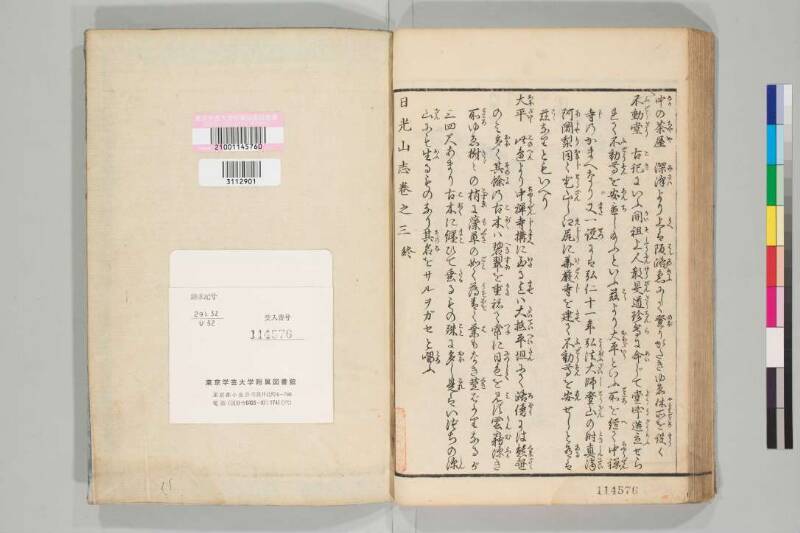
翻刻
【右丁】
中(なか)の茶屋(ちやや) 深澤(みさは)より上(うへ)は阪路(はんろ)急(きふ)にして登(のぼ)りがたきゆゑ休所(やすみどころ)を設(まう)く
不動堂(ふどうだう) 古記(こき)にいふ開祖上人(かいそしやうにん)敎旻(けうびん)道珍(だうちん)等(ら)に命(めい)じて堂宇(だうう)造立(ざうりふ)せら
れて不動尊(ふどうそん)を安置(あんち)し給ふといふ兹(こゝ)より大平(おほだいら)といふ所(ところ)を經(へ)て中禅(ちゆうぜん)
寺(じ)のかまえなり又(また)一 説(せつ)には弘仁十一年 弘法大師(こうぼふだいし)登山(とうざん)の时(とき)真済(しんさい)
阿闍梨(あじやり)同(おなじ)く登山(とうざん)し江尻(えじり)に蕐厳寺(けごんじ)を建(たて)て不動尊(ふどうそん)を安(あん)せしと有(ある)は
兹(こゝ)なりともいへり
大平(おほだいら) 此邊(このへん)より中禅寺構(ちゆうぜんじかまへ)に至(いた)る迄(まで)は大抵(たいてい)平坦(へいたん)にて路傍(ろばう)には熊笹(くまざゝ)
のみ多(おほ)く其餘(そのよ)の古木(こぼく)は碧翠(へきすゐ)を重(かさ)ねて常(つね)に日色(につしよく)を見(み)ず雲霧(うんむ)深(ふか)き
所(ところ)ゆゑ樹(き)〻(ゞ)の梢(こずゑ)に藻草(もぐさ)の如(ごと)く薄青(うすあを)く葉(は)もなき莖(くき)ばかりなるが
三四尺あまり古木(こぼく)に纒(まと)ひて垂(たる)るもの殊(こと)に多(おほ)し是(これ)はいづちの深(しん)
山(ざん)にも生(おふ)るものなり其名(そのな)をサルヲガセと唱(とな)ふ
日 光 山 志 巻 之 三《割書: 終》
現代語訳
【右ページ】
中の茶屋 深沢より上は坂道が急で登りにくいため、休憩所を設けている。
不動堂 古記によると、開祖上人が教旻、道珍らに命じて堂宇を造立させ、不動尊を安置されたという。ここから大平という所を経て中禅寺の構えとなっている。また一説には、弘仁十一年に弘法大師が登山した時、真済阿闍梨も同じく登山し、江尻に華厳寺を建てて不動尊を安置したのがここであるともいわれている。
大平 この辺りから中禅寺構えに至るまでは大体平坦で、路傍には熊笹のみが多く、その他の古木は青緑色を重ねて常に日の光を見ず、雲霧の深い所である。そのため樹々の梢に、もぐさのように薄青く葉もない茎ばかりのものが三、四尺余り古木に絡まって垂れているものが特に多い。これはどこの深山にも生えるもので、その名をサルオガセと呼ぶ。
日光山志 巻之三《終》
英語訳
【Right Page】
Naka-no-chaya (Middle Tea House) - Since the slope becomes steep and difficult to climb above Misawa, a rest station has been established here.
Fudō Hall - According to ancient records, the founding master ordered Kyōbin, Dōchin, and others to construct the hall buildings and enshrine the Fudō deity. From here, passing through a place called Ōdaira, one reaches the precincts of Chūzenji Temple. According to another account, in the 11th year of Kōnin era (820), when Kōbō Daishi climbed the mountain, Ajari Shinsai also climbed together and built Kegon-ji Temple at Ejiri, enshrining the Fudō deity - this is said to refer to this location.
Ōdaira - From this area to the Chūzenji precincts, the terrain is generally flat, with only bamboo grass (kumazasa) abundant along the roadside. The other ancient trees layer their blue-green foliage so thickly that sunlight never penetrates, making this a place of deep clouds and mist. Therefore, hanging from the treetops in abundance are pale blue, leafless stems resembling mugwort that extend three to four shaku in length, clinging to and draping from the ancient trees. This plant grows in deep mountains everywhere and is called "saruogase" (old man's beard lichen).
Records of Mount Nikkō, Volume Three 《End》