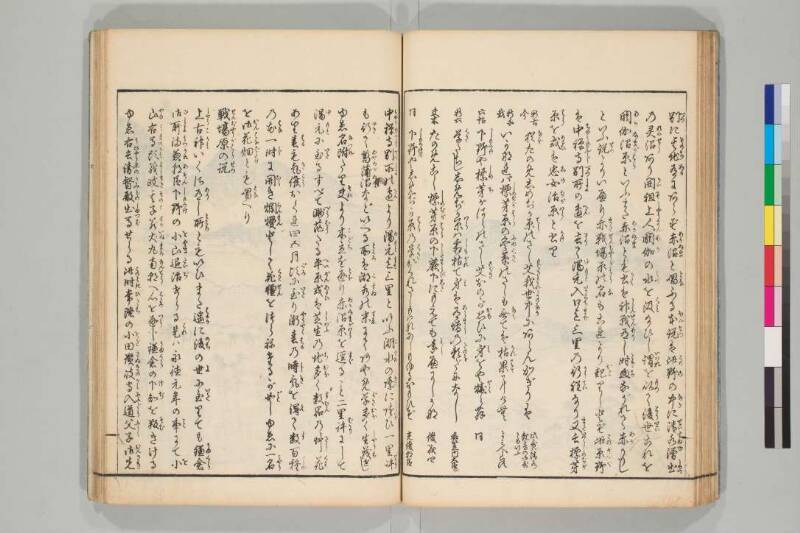
翻刻
【右丁】
別(べつ)に其地(そのち)有(ある)にあらず赤沼(あかぬま)と唱(とな)ふる本説(ほんせつ)は此野(このの)の中(なか)に清水(せいすゐ)湧出(ゆ[う]しゆつ)
の㚑沼(れいせう)あり開祖上人(かいそしやうにん)閼伽(あか)の水(みづ)を汲(くみ)給ひし謂(いはれ)を以(もつ)て後世(こうせい)これを
閼伽沼原(あかぬまがはら)といふまた赤沼(あかぬま)とも書(かく)は神戦(しんせん)有(あり)し时(とき)血(ち)ながれて赤(あか)かりし
といふ説(せつ)よりいへり亦(また)戦塲原(せんぢやうがはら)の名(な)もこれより起(おこ)りしとぞ此(この)原野(げんや)
は中禅寺(ちゆうぜんじ)別所(べつしよ)の邊(へん)を去(さり)て湯元(ゆもと)入口(いりくち)迄(まで)三里の行程(かうてい)なり又(また)云(いはく)標芽(しめぢが)
原(はら)を或(あるひ)は忠女治原(しめぢがはら)と書(かけ)り
《割書:新古|今》猶(なほ)たのめしめぢか原(はら)のさし艾(もぐさ)我(われ)世中(よのなか)にあらんかぎりは 《割書:此哥は清水|觀音の御哥|ともいふ》
《割書:新千|載》いかなれば標芽原(しめぢがはら)の冬草(ふゆくさ)のさしも無(なく)ては枯果(かれはて)にけむ 《割書:よみ人しらす》
《割書:六帖》下野(しもつけ)や標芽(しめち)がはらのさし艾(もぐさ)おのが思(おも)ひに身(み)をや燒(やく)らむ 《割書:同》
《割書:新六》草(くさ)たちししめぢか原(はら)は霜枯(しもがれ)て身(み)は有増(あらまし)の頼(たのみ)だになし 《割書:衣笠内大臣》
《割書:夫木》たのめこし標芽原(しめぢがはら)の下蕨(したわらび)下(した)にもえても年(とし)へにしかな 《割書:俊成卿》
《割書:同 》下野(しもつけ)やしめぢか原(はら)の草(くさ)がくれさしもはなにしもゆるおもひぞ 《割書:光俊朝臣》
【左丁】
中禅寺(ちゆうぜんじ)別所(べつしよ)の邊(へん)より湯元(ゆもと)迄(まで)三里といふ湖水(こすゐ)の際(きは)に随(したが)ひ一里 許(ばかり)
も行(ゆき)て菖蒲沼(あやめがぬま)などいへる所(ところ)は湖水(こすゐ)の末(すゑ)にてあやめ草(ぐさ)多(おほ)く生茂(しやうも)せし
ゆゑ名附(なつげ)たり夫(それ)より木立(こだち)を通(とほ)り赤沼原(あかぬまがはら)を逕(すぐ)ること二里 許(ばかり)にして
湯元(ゆもと)に至(いた)るすべて渺茫(べうばう)たる平原(へいげん)或(あるひ)は芝生(しばふ)の地(ち)多(おほ)く数品(すひん)の艸花(さうくわ)
あり春(はる)も気(き)𠊱(こう)おくれ四五月 頃(ごろ)に至(いた)り漸(やうやく)春(はる)の時気(じき)を得(え)て数(す)百 種(しゆ)
の花(はな)一 时(じ)に開(ひら)き爛漫(らんまん)として花氊(くわせん)をつらねたるが如(ごと)しゆゑに一 名(みやう)
を御花畑(おんはなばたけ)とも唱(とな)へり
戦塲原(せんぢやうがはら)の説(せつ)
上古(しやうこ)神(かみ)いくさ有(あり)し所(ところ)ともいひまた遥(はるか)に後(のち)の世(よ)に至(いた)りても鎌倉(かまくら)
御所(ごしよ)満兼朝臣(みつかねあそん)下野(しもつけ)の小山(をやま)退治(たいぢ)せらる是(これ)は永徳元年の事(こと)にて小(を)
山右馬頭義政(やまうまのかみよしまさ)其子(そのこ)若犬丸(わかいぬまる)南朝(なんてう)へ心(こゝろ)を通(つう)じ鎌倉(かまくら)の下知(けぢ)を叛(そむ)きける
ゆゑ右兵衛督殿(うひやうゑのかみどの)出馬(しゆつば)せらる此时(このとき)常陸(ひたち)の小田讃岐守入道(をださぬきのかみにふだう)父子(ふし)御先(おんさき)
現代語訳
【右丁】
別にその地があるわけではない。赤沼と称する本来の説は、この野の中に清水が湧き出る霊沼があり、開祖上人が閼伽の水を汲まれた謂れを以て、後世これを閼伽沼原というようになった。また赤沼とも書くのは、神戦があった時、血が流れて赤かったという説によるものである。また戦場原の名もこれより起こったとされる。この原野は中禅寺別所の辺りを去って湯元入口まで三里の行程である。また、標芽原を或いは忠女治原とも書く。
《新古今》なおたのめ標芽が原のさし艾、我が世の中にあらん限りは 《この歌は清水観音の御歌ともいう》
《新千載》いかなれば標芽原の冬草の、さしもなくては枯れ果てにけむ 《詠み人知らず》
《六帖》下野や標芽が原のさし艾、おのが思いに身をや焼くらむ 《同》
《新六》草立ちし標芽が原は霜枯れて、身はあらましの頼みだになし 《衣笠内大臣》
《夫木》頼めこし標芽原の下蕨、下にもえても年経にしかな 《俊成卿》
《同》下野や標芽が原の草がくれ、さしもはなにしもゆる思いぞ 《光俊朝臣》
【左丁】
中禅寺別所の辺りより湯元まで三里という。湖水の際に従い一里ばかりも行って、菖蒲沼などという所は湖水の末端で、あやめ草が多く生い茂ったゆえ名付けられた。それより木立を通り赤沼原を経ること二里ばかりで湯元に至る。すべて広々とした平原で、或いは芝生の地が多く、数品の草花がある。春も気候が遅れ、四五月頃に至りようやく春の時気を得て、数百種の花が一時に開き、爛漫として花の敷物を連ねたようである。ゆえに一名を御花畑とも称する。
戦場原の説
上古に神いくさがあった所ともいい、またはるかに後の世に至っても、鎌倉御所満兼朝臣が下野の小山を退治された。これは永徳元年の事で、小山右馬頭義政とその子若犬丸が南朝へ心を通じ鎌倉の下知を叛いたゆえ、右兵衛督殿が出馬された。この時常陸の小田讃岐守入道父子が御先
英語訳
【Right Page】
It is not that this place exists separately. The original explanation for calling it Akanuma is that there is a sacred swamp with spring water gushing forth in this field, and because the founding monk drew ritual water (aka) here, later generations came to call it Akanuma-gahara. It is also written as Akanuma because according to another theory, when there was a battle of the gods, blood flowed and made it red. The name Senjōgahara (Battlefield Plain) is also said to have originated from this. This plain extends for three ri (about 12 km) from the vicinity of Chūzenji Bessho to the entrance of Yumoto. It is also written as Shimeji-gahara or sometimes as Chumeji-gahara.
《Shinkokin》Still I rely on the moxa of Shimeji-gahara, as long as I exist in this world 《This poem is also said to be a sacred poem of Shimizu Kannon》
《Shinsenzai》Why is it that the winter grass of Shimeji-gahara has withered away without such moxa 《Anonymous》
《Rokujō》In Shimotsuke, the moxa of Shimeji-gahara - does one burn oneself with one's own thoughts? 《Same》
《Shinroku》The grass-grown Shimeji-gahara is frost-withered, and there is not even the hope of what might have been 《Kinugasa Naidaijin》
《Fuboku》The promised bracken shoots of Shimeji-gahara have sprouted below and aged through the years 《Shunzei》
《Same》In Shimotsuke, hidden in the grass of Shimeji-gahara, what feelings burn without reason 《Mitsutoshi Ason》
【Left Page】
It is said to be three ri from the vicinity of Chūzenji Bessho to Yumoto. Following along the edge of the lake for about one ri, there is a place called Ayame-ga-numa, which is at the end of the lake and was so named because iris grass grew abundantly there. From there, passing through groves of trees and crossing Akanuma-gahara for about two ri, one reaches Yumoto. It is entirely a vast plain, mostly grassland, with various kinds of flowers and plants. Spring comes late here, and only around the fourth or fifth month does it finally receive the spring season, when hundreds of varieties of flowers bloom all at once, creating a gorgeous display like spread flower carpets. Therefore, it is also called Onhanabatake (Imperial Flower Garden).
The Story of Senjōgahara
It is said to be a place where battles of the gods occurred in ancient times, and even in much later ages, Lord Mitsukane of the Kamakura court subjugated Oyama in Shimotsuke. This happened in the first year of Eitoku, when Oyama Umanosuke Yoshimasa and his son Waka-inu-maru communicated with the Southern Court and rebelled against Kamakura's orders, so the Right Guard Commander set out on campaign. At this time, the Oda Sanuki-no-kami Priest and his son from Hitachi led the van