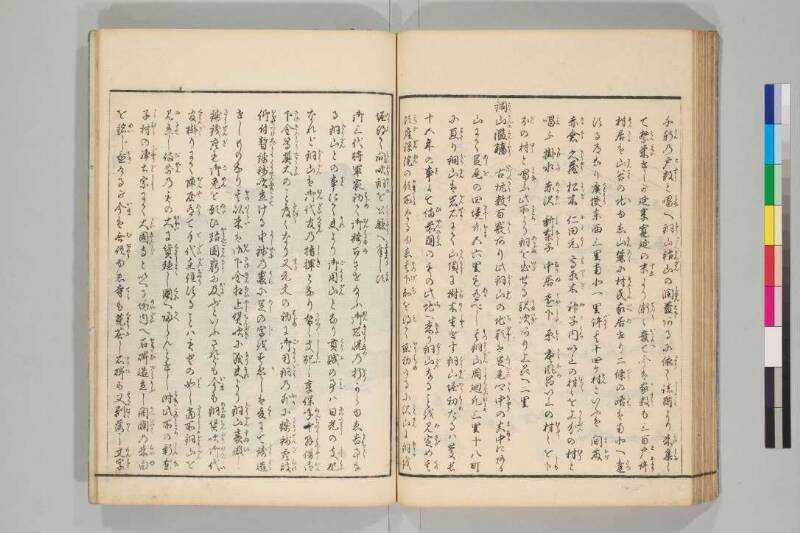
翻刻
【右丁】
千 軒(げん)の戸数(こすう)と唱(とな)へ銅山(ごうざん)銀山(ぎんざん)の潤益(じゆんえき)あるに依(より)て諸國(しよこく)より來集(らいしふ)し
て繁栄(はんえい)せしが延享寛延の末(すゑ)より漸(ぜん)〻(〳〵)衰(おとろへ)て今は家数(かすう)も三百 戸(こ)許(ばかり)
村居(そんきよ)は山谷(さんこく)の地(ち)ゆゑ山麓(さんろく)に村民(そんみん)家居(いへゐ)せり二 條(でう)の路(みち)は南北へ達(たつ)
する道なり廣狹(くわうさ)東西三里南北一里 許(ばかり)其十四ヶ村(そん)といふは 間藤(まふぢ)
赤倉(あかくら) 久蔵(きうざう) 松木(まつぎ) 仁田元(にたもと) 高原木(たかはらぎ) 神子内(みこうち)以上の村(むら)〻(〳〵)を上分(かみぶん)の村(むら)と
唱(とな)ふ 掛水(かけみづ) 赤沢(あかざは) 新梨子(しんなし) 中居(なかゐ) 遠下(とほした) 原(はら) 唐風呂(からふろ)以上の村(むら)〻(〳〵)を下(しも)
分(ぶん)の村(むら)と唱(とな)ふ此 所(ところ)より銅(あかゞね)を出(いだ)せる駅次(うまつぎ)あり上刕へ二里
銅山濫觴(どうざんのらんしやう) 古(いにしへ)坑数(かうす)百 竅(けう)あり此 銅山(どうざん)の地形(ちぎやう)は足尾郷中(あしをがうちゆう)の真中(まなか)にある
山にて足尾(あしを)の四 境(きやう)凢(およそ)五六里も有(ある)べし其(その)銅山(どうざん)周(しう)𢌞(くわい)凢(およそ)三里十八町
に亘(わた)り銅山(どうざん)は岩石(がんせき)にて山頂(さんちやう)に樹木(じゆもく)生(しやう)ぜす銅山(どうざん)堀初(ほりはじめ)たるは慶長
十五年の事(こと)にて備前國(びぜんのくに)のもの此 地(ち)へ來(きた)り銅山(どうざん)なることを見定(みさだ)め其(その)
頃(ころ)座禅院(ざぜんゐん)の領所(りやうしよ)なるゆゑ其(その)下知(げぢ)を得(え)て堀初(ほりはじめ)けるに沢山(たくさん)に銅(あかゞね)を
【左丁】
堀得(ほりえ)て問吹銅(とひぶきあかゞね)を公廳(こうちやう)へ奉(たてまつり)し頃(ころ)【平出】
御三代將軍家 初(はじめ)て御袴(おんはかま)召(め)させ給ふ御恐悦(おんきようえつ)の折(をり)からゆゑ吉事(きちじ)な
る銅山(どうざん)との事(こと)にて夫(それ)より御用山(ごようざん)となり貢賦(こうふ)の事(こと)は日光(につくわう)の支配(しはい)
なれど銅山(どうざん)は御代官(おんだいくわん)の指揮(しき)となり替(かはる)〻(〴〵)支配(しはい)し享保 年中(ねんぢゆう)拝借(はいしやく)御(おん)
下金(さげきん)等(とう)莫大(ばくたい)のこと度(たび)〻(〳〵)なり又(また)元文の初(はじめ)に御用銅(ごようとう)の外(ほか)に鋳銭座(たうせんざ)被(られ)
仰付(おほせつけ)暫(しばらく)鋳銭(たうせん)吹立(ふきたて)ける由(よし)銭(ぜに)の裏(うら)に足(あし)の字(じ)をすゑしは爰(こゝ)にて鋳造(たうざう)
せしものなり其(その)以來(いらい)は御下金(おんさげきん)相止(あひやみ)賃吹(ちんぶき)に成(なり)夫(それ)より銅山(どうざん)衰微(すいび)し
鋳銭座(たうせんざ)も御免(ごめん)を願(ねが)ひ殆(ほとんど)困窮(こんきう)に及(およ)ぶといふされども今(いま)も銅(あかゞね)賃吹(ちんぶき)御代(おんだい)
官掛(くわんがゝ)りにて陣屋(ぢんや)有(あり)て手代(てだい)在住(ざいぢゆう)することはもとの如(ごと)し當所(たうしよ)銅山(どうざん)を
見立(みたて)し備前(びぜん)のもの大(おほい)に貨殖(くわしよく)し國(くに)へ帰(かへ)らんとせし时(とき)此所(このところ)の新梨(しんな)
子村(しむら)の浄土宗(じやうどしう)にて大圓寺(だいゑんじ)といへる境内(けいだい)へ石碑(せきひ)造立(ざうりふ)し開闢(かいびやく)の來由(らいゆ)
を銘(めい)じ置(おき)けるが今(いま)は無住(むぢゆう)ゆゑ寺(てら)も荒蕪(くわうふ)し石碑(せきひ)も又(また)剥落(はくらく)し文字(もんじ)
現代語訳
【右丁】
千軒の戸数と称し、銅山・銀山の利益があることによって諸国より人々が集まってきて繁栄していたが、延享・寛延の末(1748年頃)より次第に衰退して、今は家数も三百戸ばかりである。
村の住居は山間の地であるため、山のふもとに村民が家を構えている。二条の道は南北へ通じる道である。広さは東西三里、南北一里ほどである。その十四ヶ村というのは、間藤・赤倉・久蔵・松木・仁田元・高原木・神子内、以上の村々を上分の村と称する。掛水・赤沢・新梨子・中居・遠下・原・唐風呂、以上の村々を下分の村と称する。この所より銅を産出する宿場があり、上州へ二里である。
銅山の起源 昔は坑道の数が百穴あった。この銅山の地形は足尾郷中の真ん中にある山で、足尾の四方の境界はおよそ五、六里もあるであろう。その銅山の周囲はおよそ三里十八町にわたり、銅山は岩石でできており、山頂に樹木は生えない。銅山を掘り始めたのは慶長十五年(1610年)のことで、備前国の者がこの地へ来て銅山であることを見定め、その頃座禅院の領地であったため、その許可を得て掘り始めたところ、たくさんの銅を
【左丁】
掘り当てて、試し吹きした銅を幕府へ献上した頃、三代将軍家が初めて袴を着用される御祝いの時期と重なったため、縁起の良い銅山ということで、それより幕府直轄の山となり、年貢のことは日光の支配であるが、銅山は代官の指揮となって代々支配し、享保年中(1716-1736年)には拝借金・下付金等が莫大な額になることが度々あった。また元文の初め(1736年頃)に幕府用の銅の他に鋳銭座を設置するよう命じられ、しばらく銭貨を鋳造していたという。銭の裏に「足」の字を入れたのは、ここで鋳造したものである。その後は下付金も停止され、賃吹きとなって、それより銅山は衰微し、鋳銭座も免除を願い出て、ほとんど困窮に及ぶという。しかし今も銅の賃吹きは代官の管轄で、陣屋があって手代が在住することは昔の通りである。当地の銅山を発見した備前の者は大いに財を成し、国へ帰ろうとした時、この所の新梨子村の浄土宗で大円寺という寺の境内へ石碑を建立し、開発の経緯を銘文として残したが、今は無住のため寺も荒廃し、石碑もまた剥落して文字が
英語訳
【Right Page】
It was said to have a thousand households, and due to the profits from copper and silver mines, people gathered from various provinces, creating prosperity. However, from the end of the Enkyō and Kan'en eras (around 1748), it gradually declined, and now has only about three hundred households.
The village dwellings are in mountainous terrain, so the villagers built their homes at the foot of the mountains. Two roads run north and south. The area extends about three ri east-west and one ri north-south. The fourteen villages are: Matō, Akakura, Kyūzō, Matsuki, Nitamoto, Takaharagi, and Mikouchi - these villages are called the upper division. Kakemizu, Akazawa, Shinnashi, Nakai, Tōshita, Hara, and Karafuro - these villages are called the lower division. From this place, there is a post station that produces copper, two ri to Jōshū.
Origins of the Copper Mine: In ancient times, there were a hundred mine shafts. The topography of this copper mine is a mountain in the center of Ashio Village, and Ashio's four boundaries extend about five to six ri. The copper mine's circumference spans approximately three ri and eighteen chō, and the copper mine consists of rock formations with no trees growing on the mountain peak. The copper mine began being excavated in Keichō 15 (1610), when people from Bizen Province came to this area and determined it was a copper mine. Since it was then the territory of Zazen-in Temple, they obtained permission and began digging, discovering abundant copper.
【Left Page】
They extracted it and presented trial-smelted copper to the government authorities. At that time, it coincided with the third Shogun's first wearing of formal hakama trousers for celebration, so it was considered an auspicious copper mine. From then on, it became a government mountain, and while tribute matters were under Nikkō's jurisdiction, the copper mine came under the magistrate's command, with successive generations managing it. During the Kyōhō period (1716-1736), borrowed money and government loans frequently reached enormous amounts. Also, in early Genbun (around 1736), in addition to government copper, they were ordered to establish a coin-minting facility and briefly produced coins. The coins with the character "Ashi" (足) on the back were minted here. Subsequently, government funding ceased, it became contract smelting, and from then the copper mine declined. They petitioned for exemption from the coin-minting facility and nearly fell into poverty. However, even now, copper contract smelting remains under the magistrate's jurisdiction, with a garrison office and resident deputies as before. The person from Bizen who discovered this copper mine made great wealth and, when about to return to his home province, erected a stone monument in the grounds of Daien-ji Temple, a Jōdo sect temple in Shinnashi Village, inscribing the history of the mine's development. However, now the temple is abandoned and deteriorated, and the stone monument has also deteriorated with the characters