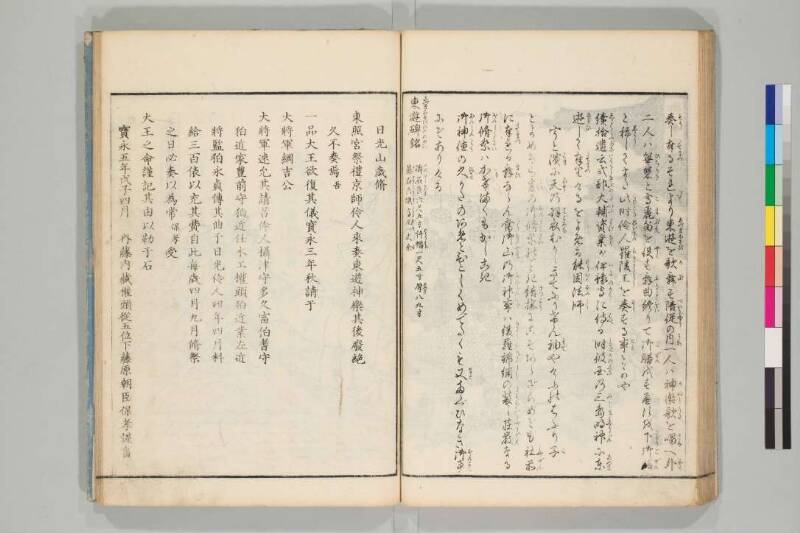
翻刻
【右丁】
奏(そう)し奉(たてまつ)るそれより東逰(あずまあそび)を歌舞(かぶ)す陪従(べいじゆう)の内(うち)一人は神樂歌(かぐらうた)を唱(とな)へ外(ほか)
二人は篳篥(ひちりき)と高䴡笛(こまぶえ)を役(やく)す舞曲(ぶきよく)終(をは)りて御膳(ごぜん)をすべすを下御膳(さがりごぜん)
と称(しよう)してまた此时(このとき)伶人(れいじん)羅陵王(らりようわう)を奏(そう)する事(こと)とかや
續拾遺(しよくしふゐに)云(いはく)式部大輔(しきぶのたいふ)資業(すけなり)が伊豫守(いよのかみ)に侍(はべ)る时(とき)彼国(かのくに)の三島明神(みしまみやうじん)に東(あづま)
逰(あそび)して奉(たてまつ)りけるをよめる能因法師(のういんほふし)
宇と濵(はま)に天(あま)の羽衣(はごろも)むかしきてふりけん袖(そで)やけふのはふり子(こ)
とよめるも爰(こゝ)の御脩祭(おんしうさい)のごとき結搆(けつこう)にこそあらざらめども社前(しやぜん)
に奉(たてまつ)れる舞(まひ)ならん當御山(たうおんやま)の御神事(おんじんじ)は綾羅錦繍(りようらきんしう)の装(よそほい)し荘厳(しやうごん)なる
御脩祭(おんしうさい)はかけまくもかしこき【平出】
御神徳(おんしんとく)の久(ひさ)かたのあめとひとしくめでたくも又(また)たぐひなき御事(おんこと)
にぞありける。
東逰碑銘(あづまあそびのひのめい) 《割書:碑石(ひのいし)長(ながさ)六尺五寸 許(ばかり)幅(はゞ)一尺五寸 厚(あつさ)八九寸|基石(きせき)共(ともに)摠高(そうたかさ)凡(およそ)一丈 余(よ)》
【左丁】
日光山歲脩
東照宮祭禮京師伶人來奏東遊神樂其後廢絶
久不奏焉《割書:吾》
一品大王欲復其儀寶永三年秋請于
大將軍綱吉公
大將軍速允其請召伶人攝津守多久富伯耆守
狛近家豊前守狛近任木工權頭狛近業左近
將監狛永貞傳其曲于日光伶人四年四月料
給三百俵以充其費自此每歲四月九月脩祭
之日必奏以為常《割書:保孝》受
大王之命謹記其由以勒于石
寶永五年戊子四月 内藤内藏權頭從五位下藤原朝臣保孝謹書
現代語訳
【右丁】
それを奏上してから東遊を歌舞する。随行者のうち一人は神楽歌を歌い、他の二人は篳篥と高麗笛を演奏する。舞曲が終わってから御膳を下げることを「下がり御膳」と称し、また この時楽人が陵王を演奏することであるという。
続拾遺によれば、式部大輔資業が伊予守であった時、その国の三島明神に東遊を奉納したのを詠んだ能因法師の歌:
「宇津浜に天の羽衣昔来て振りけん袖や今日の羽振り子」
と詠んだのも、ここの御修祭のような立派な構成ではないかもしれないが、社前に奉納した舞であろう。当御山の御神事は綾羅錦繍の装いで荘厳な御修祭は、恐れ多くも御神徳の久方の天と等しく めでたく、また類いなき御事であった。
東遊碑銘 《割書:碑石の長さ六尺五寸ほど、幅一尺五寸、厚さ八九寸|基石とともに総高およそ一丈余》
【左丁】
日光山歳修
東照宮祭礼に京師の楽人が来て東遊神楽を奏したが、その後廃絶し、久しく奏されなかった。
一品大王がその儀式を復活させようと思い、宝永三年秋に大将軍綱吉公に請願した。
大将軍は速やかにその請願を許可し、楽人摂津守多久富、伯耆守狛近家、豊前守狛近任、木工権頭狛近業、左近将監狛永貞を召して、その曲を日光の楽人に伝授させた。四年四月に料給三百俵をもってその費用に充て、これより毎年四月九月の修祭の日に必ず奏することを常とした。保孝は大王の命を受け、謹んでその由来を記してこれを石に刻む。
宝永五年戊子四月 内藤内蔵権頭従五位下藤原朝臣保孝謹書
英語訳
【Right Page】
After making this offering, the Azuma-asobi (Eastern Dance) is performed with song and dance. Among the attendants, one person chants Kagura songs, while the other two play the hichiriki (double-reed wind instrument) and the komaibue (Korean flute). When the dance music ends, the removal of the sacred meal is called "sagari-gozen," and it is said that at this time the court musicians also perform "Ryōō" (Prince Lanling).
According to the Shoku Shūi, when Shikibu no Taifu Sukenari served as Iyo no Kami (Governor of Iyo), the monk-poet Nōin composed this poem about the Azuma-asobi offered at Mishima Myōjin shrine in that province:
"At Utsu Beach, the celestial robe came in ancient times - are those sleeves that once waved the same as today's dancers?"
Though this may not have been as elaborate as our sacred festival here, it was likely a dance offered before the shrine. The sacred rituals of our mountain, with their splendid decorations of silk brocades and embroideries, are most auspicious sacred festivals that are as eternal as the heavens and incomparably magnificent divine affairs.
Inscription on the Azuma-asobi Monument《Note: The stone monument is about 6 shaku 5 sun long, 1 shaku 5 sun wide, 8-9 sun thick | Together with the base stone, the total height is approximately 1 jō》
【Left Page】
Annual Festivals of Mount Nikko
For the Tōshōgū festival, court musicians from the capital came to perform Azuma-asobi Kagura, but this practice was later discontinued and not performed for a long time.
His Imperial Highness the First Prince wished to revive this ceremony, and in the autumn of Hōei 3 (1706), he petitioned Shogun Tsunayoshi.
The Shogun quickly granted the request and summoned the musicians Settsu no Kami Takutomi, Hōki no Kami Koma Chikaiie, Bunzen no Kami Koma Chikatō, Mokuryo Gon no Kami Koma Chikanari, and Sakon Shōgen Koma Nagasada to transmit these musical pieces to the Nikko musicians. In the fourth month of the fourth year, a stipend of 300 hyō of rice was allocated to cover expenses, and from then on, it became customary to perform this music at every festival in the fourth and ninth months. Yasutaka, receiving orders from His Imperial Highness, respectfully records this history and has it carved in stone.
Hōei 5 (1708), Year of the Earth Rat, Fourth Month - Naitō Kuranokami Gon no Kami, Junior Fifth Rank Lower Grade, Fujiwara Ason Yasutaka, respectfully written