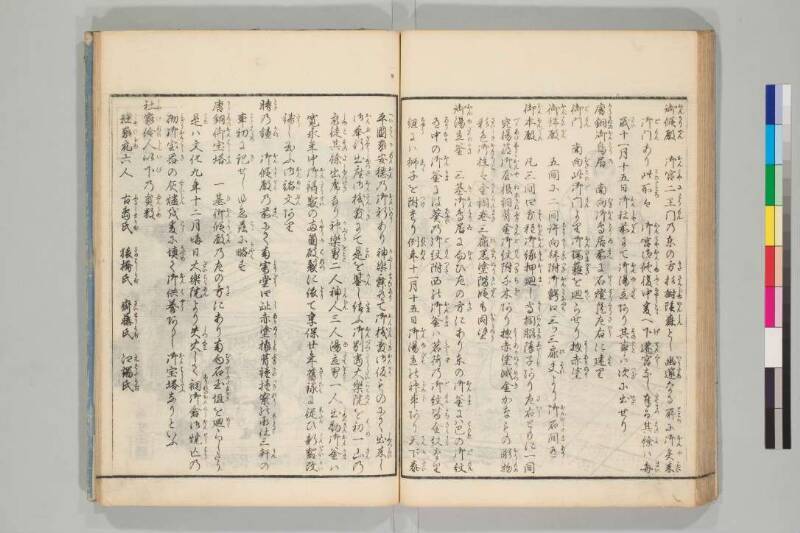
翻刻
【右丁】
御假殿(おんかりでん) 御宮(おんみや)二王門(にわうもん)の東の方(かた)《振り仮名:杉𣗳|さんじゆ》陰森(いんしん)とし幽邃(いうすゐ)なる所(ところ)に御矢來(おんやらい)
御門(ごもん)あり此所(このところ)は 御宮(おんみや)御修復中(おんしゆふくちゆう)爰(こゝ)へ下遷宮(げせんぐう)なし奉(たてまつ)る其餘(そのよ)は每(まい)
歳(さい)十一月十五日 御社前(おんしやぜん)にて御湯立(おんゆだて)あり其事(そのこと)は次(つぎ)に出(いだ)せり
唐銅御鳥居(からかねのおんとりゐ) 南向( むき)御鳥居前(おんとりゐまへ)に石燈籠(いしどうろう)左右(さいう)に建(たて)り
御門(ごもん) 南向( むき)此(この)御門(ごもん)より御瑞籬(おんたまがき)を廽(めぐ)らせり揔赤塗(そうあかぬり)
御拜殿(おんはいでん) 五間に二間 許(ばかり)向拜附(こうはいつき)御鰐口(おんわにぐち)三ッ三扉( ひ)夫(それ)より御石間(おんいしのま)有(あり)
御本殿(おんほんでん) 凡 三間四方程( はうほど)御縁(おんえん)押廽(おしまは)し高欄脇(かうらんわき)障子(しやうじ)あり左右(さいう)ともに一間
宛(づゝ)揚蔀(あげしとみ)御屋根(おんやね)銅葺(あかゞねぶき)金御紋附千木(きんごもんつきちぎ)あり揔赤塗(そうあかぬり)滅金(めつき)かなもの彫物(ほりもの)
彩色(さいしき)御柱(おんはしら)は金襴巻(きんらんまき)三扉( ひ)黒塗(くろぬり)階段(かいだん)も同塗(おなしぬり)
御湯立釜(おんゆだてのかま) 三基( き)御鳥居(おんとりゐ)に向(むか)ひ左の方(かた)にあり東の御釜(おんかま)には巴(ともゑ)の御紋(ごもん)
有(あり)中(なか)の御釜(おんかま)には葵(あふひ)の御紋附(ごもんつき)西の御釜(おんかま)は茗荷(みやうが)の御紋(ごもん)皆(みな)金紋(きんもん)なり
紐(ちゆう)には獅子(しゝ)を附(つけ)たり例年(れいねん)十一月十五日 御湯立(おんゆだて)の神事(じんじ)あり天下泰(てんかたい)
【左丁】
平(へい)國家安穩(こくかあんおん)の御祈(おんいのり)あり神樂舞(かぐらまひ)有(あり)て御桟敷(おんさんしき)御仮(おんかり)ものにて出來(しゆつらい)し
御奉行(おんぶぎやう)《振り仮名:出𫝶|しゆつざ》御桟敷(おんさんじき)にて是(これ)を鑒(かん)し給(たま)ふ御別當(おんべつたう)大樂院(だいらくゐん)を初(はじめ)一山( さん)の
衆徒(しゆと)其餘(そのよ)出席(しゆつせき)なり神樂(かぐら)男(をとこ)二人 神人(しんじん)三人 湯立(ゆだて)男(をとこ)一人 出勤(しゆつきん)御釜(おんかま)は
寛永年中 御鑄製(おんたうせい)の両箇(りやうか)破裂(はれつ)に依(より)て享保廿年《振り仮名:𦾔録|きうろく》に従(したが)ひ新製(しんせい)改(かい)
鑄(たう)し玉ふ御銘文(おんめいぶん)あり
《振り仮名:時の鐘|とき かね》 御假殿(おんかりでん)の前(まへ)にて南寄( より)堂(だう)四趾( し)赤塗(あかぬり)橡葺(とちぶき)鐘撞寮(かねつきれう)の承仕(しようし)三軒( けん)の
事初(ことはしめ)に記(き)せしゆゑ兹(こゝ)に略(りやく)す
唐銅御宝塔(からかねのおんはうたふ) 一基( き)御假殿(おんかりでん)の左の方(かた)にあり南向( むき)石玉垣(いしのたまがき)を廽(めぐ)らしたり
是(これ)は文化九年十二月晦日 大樂院(だいらくゐん)より失火(しつくわ)して銅御倉(あかゞねのおんくら)御焼亾(おんせうばう)の
砌(みぎり)御法器(おんはうき)の灰燼(くわいじん)を爰(こゝ)に填(うづめ)て御供養(おんくやう)ありし御宝塔(おんはうたふ)なりといふ
社家伶人以下(しやけれいじんいげ)の貟数(ゐんじゆ)
社家衆(しやけしゆ)六人 古島氏(ふるしまうぢ) 猿橋氏(さるはしうぢ) 齋藤氏(さいとううぢ) 江端氏(えばたうぢ)
現代語訳
【右丁】
御仮殿(おんかりでん) 御宮(二王門の東の方、杉の木が鬱蒼と茂り、薄暗く奥深い所に御矢来と御門がある。この場所は御宮の修復中に、ここへ下遷宮を行う。その他は毎年十一月十五日に御社前にて御湯立てがあり、その事については次に記載している。
唐銅御鳥居 南向き。御鳥居前に石燈籠が左右に建てられている。
御門 南向き。この御門から御瑞籬を巡らせており、全て赤塗りである。
御拝殿 五間×二間ほど。向拝付き。御鰐口三つ、三扉。それより御石間がある。
御本殿 およそ三間四方ほど。御縁が押し廻し、高欄脇障子があり、左右共に一間ずつ揚蔀。御屋根は銅葺き、金御紋付き千木あり。全て赤塗り、滅金、金物、彫物、彩色。御柱は金襴巻き。三扉黒塗り。階段も同じ塗り。
御湯立釜 三基。御鳥居に向かい左の方にある。東の御釜には巴の御紋があり、中の御釜には葵の御紋付き、西の御釜は茗荷の御紋で、皆金紋である。紐には獅子を付けている。例年十一月十五日に御湯立ての神事があり、天下泰平、
【左丁】
国家安穏の御祈りがあり、神楽舞があって、御桟敷を仮設で設営し、御奉行が出座して御桟敷にてこれを観覧される。御別当大楽院をはじめ一山の衆徒その他が出席する。神楽男二人、神人三人、湯立て男一人が出勤する。御釜は寛永年中に御鋳製の両箇が破裂したため、享保二十年に旧録に従い新製改鋳された。御銘文がある。
時の鐘 御仮殿の前にて南寄り。堂四尺、赤塗り、橡葺き。鐘撞寮の承仕については三軒の事初めに記載したため、ここでは省略する。
唐銅御宝塔 一基。御仮殿の左の方にあり、南向き。石玉垣を巡らしている。これは文化九年十二月晦日、大楽院より失火して銅御倉が御焼亡した際、御法器の灰燼をここに埋めて御供養した御宝塔であるという。
社家伶人以下の員数
社家衆六人 古島氏 猿橋氏 斎藤氏 江端氏
英語訳
【Right Page】
Temporary Sacred Hall (On-karidén) - The sacred shrine (located to the east of the Niō-mon gate, in a place where cedar trees grow densely and darkly, creating a deep and secluded atmosphere, there are sacred enclosures and gates. This place is used when the main shrine undergoes repairs and temporary relocation is performed. Otherwise, every year on November 15th, the sacred hot water ritual takes place in front of the shrine, which is described next.
Bronze Sacred Torii Gate - Facing south. Stone lanterns are erected on both left and right sides in front of the sacred torii gate.
Sacred Gate - Facing south. From this sacred gate, sacred fencing is installed all around, all painted in red.
Sacred Worship Hall - Approximately 5 by 2 ken in size, with an attached forward worship area. Three sacred alligator-mouth bells, three doors. Beyond this is the sacred stone chamber.
Sacred Main Hall - Approximately 3 ken square. Sacred veranda surrounds it, with high railings and side screens, with one ken of raised bamboo blinds on both left and right sides. The sacred roof is copper-tiled with golden sacred crests and chigi (forked roof finials). All painted red with gold leaf, metal fittings, carvings, and coloring. The sacred pillars are wrapped in gold brocade. Three doors painted black. The stairs are painted in the same manner.
Sacred Hot Water Ritual Cauldrons - Three units. Located to the left facing the sacred torii gate. The eastern sacred cauldron bears the tomoe sacred crest, the middle sacred cauldron has the hollyhock sacred crest, and the western sacred cauldron has the Japanese ginger sacred crest, all in gold crests. Lions are attached to the cords. Every year on November 15th, there is a sacred hot water ritual for prayers for peace under heaven and
【Left Page】
national tranquility. There is kagura dance, and temporary sacred viewing stands are constructed where the magistrate sits and observes. The head priest Dairaku-in and all the monks of the mountain and others attend. Two kagura men, three shrine attendants, and one hot water ritual man are on duty. The sacred cauldrons were recast in Kyōhō 20 according to old records because the two that were cast during the Kan'ei era had cracked. There are sacred inscriptions.
Time Bell - In front of the temporary sacred hall, toward the south. The hall is 4 shaku, painted red, with oak bark roofing. The bell-ringing quarters and attendants were recorded in the beginning of the three buildings section, so they are omitted here.
Bronze Sacred Pagoda - One unit. Located to the left of the temporary sacred hall, facing south. Stone sacred fencing surrounds it. This is said to be a sacred pagoda built to hold memorial services after burying the ashes of sacred ritual implements when the bronze sacred storehouse was destroyed by fire that started from Dairaku-in on the last day of December in Bunka 9.
Number of Shrine Families, Court Musicians and Below
Six shrine family members: Furushima clan, Saruhashi clan, Saitō clan, Ebata clan