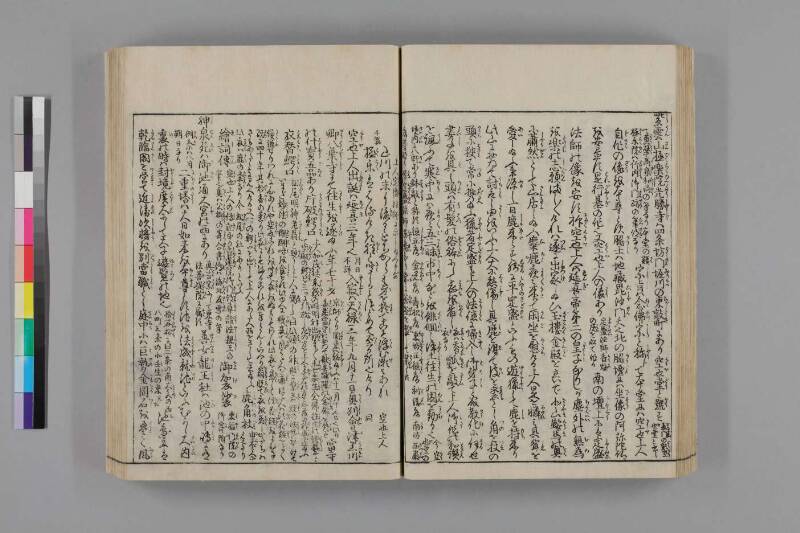
翻刻
紫雲山極楽院光勝寺は四条坊門堀川の東敲町にあり空也堂と號す
表門の額空
也堂と書し
て黄檗髙泉和尚の筆なり本堂の額
極楽院は竹内御門跡の筆跡なり
宗旨は念佛宗と称じて本堂には空也上人
自作の像を本尊とす脇士は地藏毘沙門天也北の脇壇には坐像の阿弥陀仏
を安置す是行基の作也又空也上人の像あり
定盛法師香炉
の灰を以て作る
南の壇上には定盛
法師の像を安す抑空也上人は延喜帝第二の皇子なりしが塵外の無為
を楽の志心損まし〳〵けれは遂に出家し給ひ玉樓金殿を立いで北山鞍馬の奥
に蕭然として山居し給ふ麋鹿夜々来りて閑坐を慰ける上人是を憐み其聲を
愛し給ふ事深し一日鹿来らす然に平定盛といふもの遊猟して鹿を持来り
此山におゐて討取し由をいふ上人大に愁傷し其屍を得て皮を裘とし角を杖の
頭に挟て常に携給ふ猟者定盛も上人の法徳に帰入し御弟子に教化に任せ
妻子を具し頭は有髪の俗躰にして衣を着し終
衣は天台は
衣なり
瓢を敲て上人御作の和讃
を諷ふて寒中には夜々五三昧市中などを俳徊し浄土往生の因を勤也
今空
也堂の
境内に八軒あり鉢敲と称す德正庵金光房寿松房東坊正德房利清道南坊西嚴
坊等なり皆定盛法師茴裔なり常に茶釜を製して業とす
上人定盛法師に示し給へり哥の
山川の末に流るゝとちからも身を捨てこそ浮む瀬もあれ 空也上人
千載
極楽ははるけき程と聞しかとつとめて至る所也けり 同
空也上人出誕は延喜三年也
月日
不詳
御入寂は天禄三午十九月十一日奥州會津黒川
郷八葉寺にて往生を遂給ふ年七十才
京師より関東へ趣給ふは十一月十三日也此日
毎歳当寺におゐて歓喜踊躍の人念仏を修す
當寺
の什寶五品あり片破鰐口一口
皮四弓ヨ
上人加茂社へ参籠の時明神出現まし〳〵末世衆生念佛往生の證拠にと
て宝殿の鰐口を二つに引放し左の方を上人に与右の方を加茂の神庭に止給ふ
衣替鰐口
松尾明神老翁と現し上人に謁して曰此頃の神供に貼般若經の法■をうけて
いまだ妙法の醍醐味を食せず此ゆへに痩衰て風はたへを通す上人は法花經をよく
読縄せりわれに心あれや空也これを聞て衣をぬきてわれ此衣を着して法花經をよむ事
既に四十年其妙音の薫り此衣にそまるこれを奉らんといへり翁悦て衣を着しかたちは
此衣は鹿の裘なり今松尾の社にありといふ
繪詞傳
空世上人の傳記なり青蓮院御門跡尊證法親王の
筆也奥は公郷の寄合書繪は海北友雪の筆
御袈裟
東福門院の
御寄附なり
神泉苑は御池通大宮の西にあり
真言宗にして東寺
法菩提院に属す
善女龍王社は池の中嶋に有
例祭は八月
朔日なり
二重塔は大日如来を本尊とす池を法成就池といふむかし大内
裏の時は封境廣大にして天子遊覧の地也
拾芥抄に曰二条の南丈宮の西
八町三条の北壬生の北壬生の東云云
池辺には
乾臨閣を営て近衛次將を別當職とし庭中には巨勢金岡心を尽く風
現代語訳
## 紫雲山極楽院光勝寺(空也堂)
紫雲山極楽院光勝寺は、四条坊門堀川の東、敲町(たたきちょう)にある。空也堂と号する。表門の額「空也堂」の文字は、黄檗宗の高泉和尚の筆によるものである。本堂の額「極楽院」は竹内御門跡の筆跡である。
宗旨は念仏宗と称し、本堂には空也上人自らが作った像を本尊とする。脇侍は地蔵・毘沙門天である。北の脇壇には坐像の阿弥陀仏を安置する。これは行基の作である。また、空也上人の像もある。定盛法師が香炉の灰をもって作ったものである。
南の壇上には定盛法師の像を安置する。
そもそも空也上人は延喜帝(醍醐天皇)の第二皇子であったが、俗世を離れた無為の境地を楽しむ志がますます深まったため、ついに出家され、玉楼金殿を後にして、北山鞍馬の奥に静かに山居された。麋鹿(しか)が夜々やってきて、閑静な坐禅を慰めてくれた。上人はこれを憐れみ、その声を深く愛された。ある日、鹿が来なくなった。ところが、平定盛という者が狩猟して鹿を持ってきて、この山で仕留めた旨を告げた。上人は大いに悲しまれ、その屍を受け取り、皮を裘(かわごろも)とし、角を杖の頭に挟んで常に携えられた。猟師の定盛も上人の法の徳に帰依し、御弟子として教化に任じ、妻子を連れて、頭は有髪の俗体にして衣を着し(衣は天台の衣である)、瓢(ひさご)を叩きながら上人御作の和讃を諷(うた)い、寒中には夜々、五三昧・市中などを徘徊して、浄土往生の因を勤めた。
今、空也堂の境内には八軒あり、「鉢叩き」と称する。徳正庵・金光房・寿松房・東坊・正徳房・利清道・南坊・西厳坊などである。皆、定盛法師の後裔である。常に茶釜を製造することを生業とする。
---
**上人が定盛法師に示された歌:**
> 山川の末に流るゝとちからも 身を捨てこそ浮む瀬もあれ 空也上人
**千載(集より):**
> 極楽ははるけき程と聞しかと つとめて至る所也けり 同
---
空也上人の御誕生は延喜三年(903年)である。月日は不詳。御入寂は天禄三年(972年)、午十一月十一日、奥州会津黒川郷八葉寺にて往生を遂げられた。享年七十歳。
京師より関東へ向かわれたのは十一月十三日である。この日、毎年当寺において、歓喜踊躍の人念仏(踊り念仏)を修する。
---
### 当寺の什宝(じゅうほう)五品
**片破れ鰐口(かたわれわにぐち)一口**
〔皮・四弓ヨ〕 上人が賀茂社へ参籠された時、明神が出現され、末世衆生の念仏往生の証拠として、宝殿の鰐口を二つに引き裂き、左の方を上人に与え、右の方を賀茂の神庭に留められた。
**衣替え鰐口(ころもがえわにぐち)**
松尾明神が老翁として現れ、上人に謁して言われた。「このごろの神供に貼られた般若経の法■(法会)を受けているが、いまだ妙法の醍醐味を食していない。このために痩せ衰えて、風は着物を通り抜けるようだ。上人は法華経をよく読誦されているとのこと。私に慈悲の心はないか。」空也はこれを聞いて、「衣を脱いで、私はこの衣を着して法華経を読むこと既に四十年。その妙音の薫りがこの衣に染み込んでいる。これを奉りましょう」と言った。翁は喜んで衣を着た。この衣は鹿の裘である。今、松尾の社にあるという。
**絵詞伝**
空也上人の伝記である。青蓮院御門跡・尊証法親王の筆である。奥書は公卿の寄合書き(合作)、絵は海北友雪の筆。
**御袈裟**
東福門院の御寄附である。
---
## 神泉苑
神泉苑は、御池通大宮の西にある。真言宗にして東寺・法菩提院に属する。善女龍王社は池の中嶋にある。例祭は八月朔日(一日)である。
二重塔は大日如来を本尊とする。池を「法成就池」という。昔、大内裏の時代は封境が広大にして、天子遊覧の地であった。
『拾芥抄』に曰く、「二条の南・丈宮の西、八町、三条の北・壬生の北・壬生の東……」
池辺には乾臨閣(けんりんかく)を営み、近衛次将を別当職とし、庭中には巨勢金岡が心を尽くして風景を……(次頁へ続く)
英語訳
## Shiunzan Gokurakuin Kōshōji (Kūya-dō)
Shiunzan Gokurakuin Kōshōji is located in Tatakichō, to the east of Horikawa on Shijō-Bōmon street. It is known by the name Kūya-dō (Kūya Hall). The inscription "Kūya-dō" on the plaque above the main gate is written by the Ōbaku Zen monk Kōsen. The plaque reading "Gokurakuin" on the main hall is in the hand of the Takeuchi monzeki (abbot of imperial lineage).
The sect is called the Nembutsu sect (念仏宗). The principal object of worship in the main hall is a statue carved by Saint Kūya himself. The flanking attendants are Jizō (Kṣitigarbha) and Bishamonten (Vaiśravaṇa). On the north side altar, a seated Amida Buddha is enshrined — a work attributed to Gyōki. There is also a statue of Saint Kūya, made by the monk Jōsei from the ash of an incense burner.
On the south altar, a statue of the monk Jōsei is enshrined.
Saint Kūya was the second prince of Emperor Engi (Emperor Daigo). His aspiration to dwell in a state of non-action beyond the worldly realm grew ever deeper, and he finally took religious vows, leaving behind his palace of jewels and gold, to live quietly in reclusion deep in the mountains of Kurama in the northern hills. Deer would come every night to comfort his tranquil meditation. The saint cherished them deeply and was greatly moved by their cries. One day, the deer did not come. Soon, a man named Taira no Jōsei arrived, bringing a deer he had hunted, saying he had killed it in these very mountains. The saint was deeply grieved. He took the carcass, made a fur garment from its hide, and inserted its antlers into the head of his walking staff, which he always carried with him. The hunter Jōsei was converted by the saint's spiritual virtue, became his disciple, and together with his wife and children — wearing lay clothing with unshaven head (the garment being of the Tendai style) — he would strike a gourd and sing the wasan (devotional hymns) composed by the saint. During the cold midwinter, night after night, he wandered through the go-sanmai (cremation grounds) and the city streets, cultivating the causes of rebirth in the Pure Land.
Today, within the precincts of Kūya-dō there are eight establishments known as "hachi-tataki" (bowl-strikers). They are: Tokushō-an, Konkō-bō, Jushō-bō, Tōbō, Shōtoku-bō, Riseido, Nanbō, and Seigan-bō. All are descendants of the monk Jōsei. They are engaged in the craft of making tea kettles.
---
**Poem presented by the saint to the monk Jōsei:**
> *Yamakawa no sue ni nagaruru tochikara mo / mi wo sutete koso ukamu se mo are*
> (Even as water flows to the end of mountain rivers, / only by abandoning oneself can one find a ford to float upon.)
> — Saint Kūya
**From the Senzaishū (anthology):**
> *Gokuraku wa harukeki hodo to kikishika to / tsutomete itaru tokoro nari keri*
> (I had heard that Paradise was a far distant place, / yet it is a place one reaches through diligent practice.)
> — Same author
---
Saint Kūya was born in the third year of Engi (903). The exact month and day are unknown. He passed away on the eleventh day of the eleventh month of the third year of Tenroku (972), at Hachiyō-ji in Kurokawa-gō, Aizu, Ōshū (present-day Fukushima Prefecture). He was seventy years of age.
He departed from the capital toward the eastern provinces on the thirteenth day of the eleventh month. On this day each year, a "joyful leaping nembutsu" ceremony is performed at this temple.
---
### Five Treasures of This Temple
**The Broken Wani-guchi (Clapper Bell) — one piece**
When the saint went on retreat at the Kamo Shrine, the deity of the shrine appeared and, as proof of the teaching that all sentient beings of the latter age could attain rebirth in the Pure Land through the nembutsu, split the wani-guchi (bronze clapper bell) of the treasure hall in two. The left half was given to the saint; the right half remained at the Kamo Shrine.
**The Robe-Exchanged Wani-guchi**
The deity of Matsuo Shrine appeared in the form of an old man and came to see the saint, saying: "Of late, I have received the Hannya-kyō (Prajñāpāramitā Sūtra) services offered as divine provisions, but have not yet tasted the profound essence of the wondrous dharma. Because of this I have grown thin and weak, and the wind passes through my robes. I hear that the saint reads the Lotus Sūtra most excellently — do you not have compassion for me?" Upon hearing this, Kūya said: "I shall remove this robe. I have worn this garment while reciting the Lotus Sūtra for forty years. Its wondrous fragrance has permeated these robes. I will offer them to you." The old man was delighted and put on the robe. This robe is the deer-hide garment. It is said to be at the Matsuo Shrine to this day.
**The Illustrated Biography (E-kotoba-den)**
This is the biography of Saint Kūya. It is written by Sonnō Hosshin-nō, the monzeki (imperial-lineage abbot) of Shōren-in. The postscript is a collaborative work by court nobles; the illustrations are by Kaihō Yūsetsu.
**The Kesa (Priestly Robe)**
A gift donated by Tōfukumonin (consort of Emperor Go-Mizunoo).
---
## Shinsen-en (神泉苑 — Sacred Spring Garden)
Shinsen-en is located to the west of Ōmiya on Oike-dōri street. It belongs to the Shingon sect, under the administration of Tō-ji Hōbodai-in. The Zennyo Ryūō (Virtuous Dragon King) Shrine is on the island in the pond. The annual festival is held on the first day of the eighth month.
The two-storied pagoda enshrines the Great Sun Buddha (Dainichi Nyorai) as its principal deity. The pond is called Hōjōju-ike (Pond of Dharma's Fulfillment). In ancient times, during the era of the Great Imperial Palace, the grounds were vast in extent and served as a place of imperial recreation.
The Shūkaishō records: "South of Nijō, west of Jōgū, eight chō; north of Sanjō, north of Mibu, east of Mibu..."
Along the shore of the pond, the Kenrin-kaku pavilion was constructed, with the Middle Captain of the Inner Palace Guards serving as its administrator. In the garden, Kose no Kanaoka applied all his skill to paint the scenery of... *(continues on the next page)*