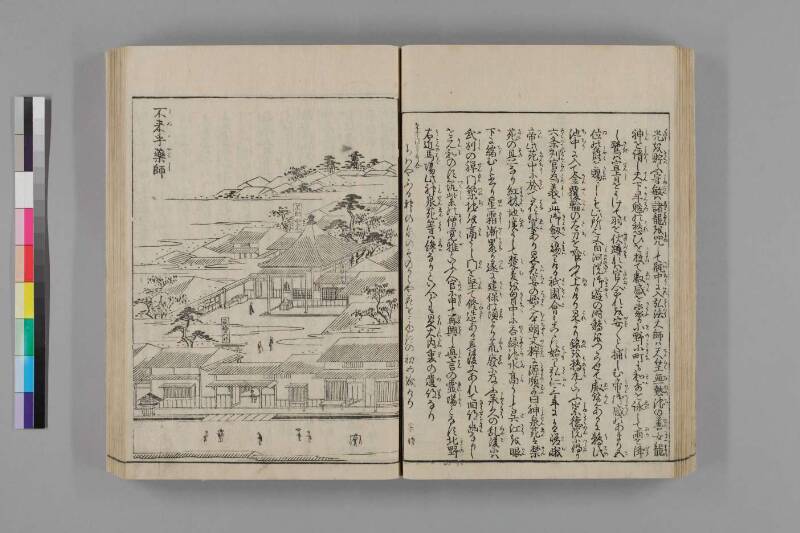
翻刻
光を貯ふ守敏は諸龍を咒して瓶中に入弘法大師は天竺無熱池の善女龍
神を請し天下早魃の愁ひを扶て叡感を蒙る小野山町も和哥を詠して雨を降
し鷺は宣旨をうけて羽を伏蹲れは官人これを安〳〵と捕しむ帝御感のあまり五
位の爵を賜りしも此所也又白河院御遊の時鵜をつかはせて叡覧あるに鵜此
池中に入て金覆輪の太刀を喰ふて上りけりけり是より銘を鵜丸といふ崇德院に傳り
六条判官為義に此御劔を賜りける祇園会もこゝに始り弘化三年には嵯峨
帝此苑中に於て花の宴あり是花宴の始也本朝文粋に源順に曰神泉苑は禁
苑の其市なり紅林地広うして楚■を■中に呑緑池水髙うして呉江を眼
下に縮むと出り星霜漸累か遂に建保の頃より荒廃に及ふ承久の乱後には
武州の禅門築地を髙うし門を堅て修造ある其後又あれて旧跡幽なりし
を元和の頃筑紫の僧覚雅といふ人官に申て再興し真言の霊場となす北野
右近馬場此神泉苑等は纔なりといへども是大内裏の遺跡なり
年中行事歌合
ちはやとふる神の泉いそのかみや花をみゆきの初め成けり 宗時
不来乎藥師
現代語訳
守敏は諸龍を呪文によって瓶の中に封じ込め、弘法大師は天竺の無熱池の善女龍神を招請し、天下の旱魃の憂いを取り除いて、帝のお心に深くかなった。小野篁も和歌を詠んで雨を降らせた。鷺は宣旨を受けて羽を伏せてうずくまったので、官人がこれをやすやすと捕らえた。帝が御感激のあまり五位の位を賜ったのもこの場所である。また、白河院が御遊覧の折に鵜を使わせて叡覧あらせられたところ、鵜がこの池の中に入って金覆輪の太刀をくわえて上がってきた。これより銘を「鵜丸」という。崇徳院に伝わり、六条判官為義にこの御剣を賜った。祇園会もここに始まり、弘化三年には嵯峨帝がこの苑の中において花の宴を催された。これが花宴の始まりである。本朝文粋に源順が「神泉苑は禁苑の市(さかり)なり。紅林は地広うして楚■を■中に呑み、緑池は水高うして呉江を眼下に縮む」と述べているとおりである。星霜が次第に重なり、ついに建保の頃より荒廃に及んだ。承久の乱の後には武州の禅門が築地を高くし、門を堅くして修造した。その後また荒れて旧跡も幽かになっていたのを、元和の頃に筑紫の僧・覚雅という人が官に申し出て再興し、真言の霊場とした。北野の右近馬場、この神泉苑などはわずかなものとはいえ、これらは大内裏の遺跡である。
【年中行事歌合より】
ちはやぶる神の泉いそのかみや 花をみゆきの初めなりけり (宗時)
英語訳
Shubin confined all the dragons by means of incantations, sealing them inside a jar. Kōbō Daishi (Kūkai) summoned the Zennyo Ryūō (the benevolent female dragon deity) from the Anavatapta Lake in India, relieving the realm of the suffering of drought and earning the deep admiration of the Emperor. Ono no Takamura also composed a waka poem and brought down rain. A heron, upon receiving an imperial decree, lowered its wings and crouched, whereupon officials were able to capture it with great ease. It was here that the Emperor, moved beyond measure, bestowed upon the heron the rank of the Fifth Court Rank. Furthermore, during a pleasure excursion by the Retired Emperor Shirakawa, cormorant fishing was performed for the imperial viewing, and the cormorant dove into the pond and emerged carrying a sword with a gold-rimmed fitting in its beak. From this event, the sword came to be named "Umaru" (Cormorant). It was passed down to Emperor Sutoku and then bestowed upon Rokujō Hangan Tameyoshi. The Gion Festival also originated here, and in the third year of Kōka (1846), Emperor Saga held a flower-viewing banquet within this garden — this was the origin of the flower-viewing banquet (hana no en). In the Honchō Monzui (Anthology of Japanese Literature), Minamoto no Shitagō wrote of the Shinsen-en: "The Shinsen-en is the flourishing heart of the imperial gardens. The crimson groves spread wide, swallowing the forests of Chu within them; the green pond's waters rise high, compressing the rivers of Wu beneath one's gaze." As the years accumulated, the garden fell into ruin around the Kenpo era. After the Jōkyū Rebellion, the Zen master of Bushū raised the earthen walls high and reinforced the gates in order to restore it. Thereafter it fell into neglect again and the old site became obscure, until during the Genna era a monk from Tsukushi named Kakuga petitioned the authorities and revived it, establishing it as a sacred site of the Shingon sect. Though what remains of the Right Near Guard's riding grounds at Kitano and this Shinsen-en may be meager, they are nonetheless remnants of the great imperial palace complex.
[From the Nenjū Gyōji Uta-awase (Annual Events Poetry Contest):]
Chihayaburu / kami no izumi Isonokamiya / hana wo miyuki no / hajime narikeri
(The sacred spring of the mighty gods — at Isonokami — the imperial procession to view the blossoms begins here)
— Munетоki