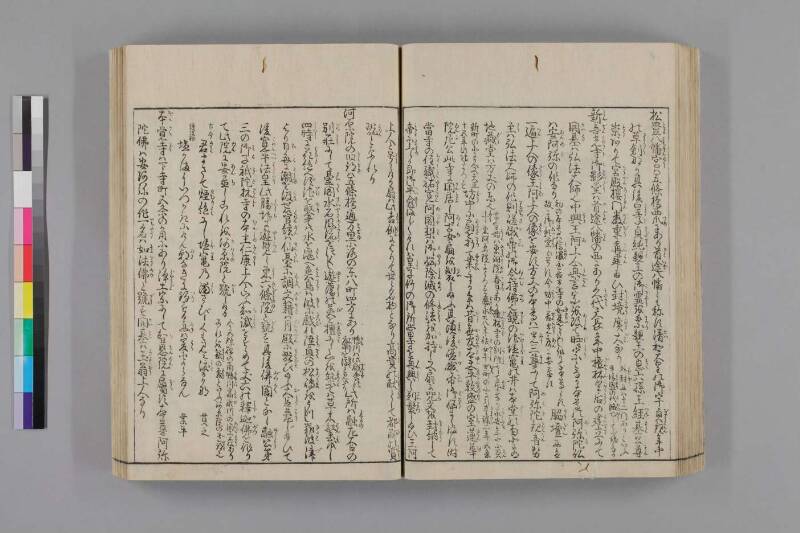
翻刻
松豊八幡宮は五條橋西爪にあり首途八幡とも称す清和天皇の御宇貞観年中
の草創なり其後皇子貞純親王の御霊を祭親王の息六孫王經基公尊
崇ありて宮殿樓門嚴重に再建し給ひ封境広大なり
外封には十二門ありといふ
平清盛の代滅亡して少地となる
新善光寺御影堂は首途八幡の西にあり久代天長年中檀林皇后の建立にて
開基は弘法大師也中興王阿上人真言宗を改て時宗となる本尊の阿弥陀仏
は安可弥の作なり
初の本尊は信濃国善光寺の如来をうつし作りて本尊とす
故に御影堂と号す今坊中善光庵に安置す
一遍上人の像王阿上人の像を安す方丈の本尊は一光三尊にして阿弥陀観音
至は弘法大師の作則従峨帝の御念持佛也鏡の塩竃の井は本堂の南北に有
地蔵堂は方丈の東也
當寺始は東洞院春日にあり檀林寺の別所にして尼寺なり承安年中に炎
上し東河原院にうつす應永廿八年佐女牛室町の北に引享禄二年五条
新町の北にかへ又天正
十五年此地にうつす
坊中に扇を折て業とする事は昔毎度無官太夫平敦盛の室蓮華
院尼公此寺に閑居し阿古女扇を製し給ふ其頃後嵯峨帝御悩まします時
當寺の住職祐寛阿闍梨御悩除滅の修法を加持し又扇に咒文を封納して
帝に上らる即平愈まし〳〵けれは皇子竹の御所當寺を再興し剃髪し給ひ王阿
上人と号しける扇は此吉例によりて世々名物となり髙貴の献として都鄙の賞
翫となれり
河原院の旧跡は五條橋通万里小路の東八町四方にあり
鴨川は此殿舎の
庭中を流と見へたり
此所は融左大臣の
別荘にして臺閣水石風説をつくし遊蕩の美を擅にし山を築にては草木繁繁をし
四時に花絶へず池を発す■ては水を湛へ魚は波に戯れ陸奥の松嶋をうつし難波津
より日毎に潮を汲せ管絃は仙臺に調文籍は月殿に翫び給ふ大臣薨じ給ひて
後寛平法皇此勝地に遊覧し東六條院と號す其後佛閣となし融公第
三の御子祇林寺の本主仁康上人といふ知識をすゝめて丈六の釋迦仏を作り
て此院に安置しこれを河原院と號しける
今五條橋の南鴨川高瀬川の間に森あり
これを籬の森といふ河原院の遺跡也
古今
君まさて煙絶にし塩竃の濁さびしくも見へ渡るかな 貫之
続後拾
塩かまにいつかきにけん跡なきに釣する舟は爰によらなん 業平
本覚寺は下寺町五条の角にあり浄土宗にして智恩院に属す本尊阿弥
陀佛は安阿弥の作一名は如法佛と號す開基は玉翁上人なり
現代語訳
## 松豊八幡宮(首途八幡宮)
松豊八幡宮は五條橋の西詰にあり、首途八幡とも呼ばれる。清和天皇の御代、貞観年中(859〜877年)に創建された。その後、皇子・貞純親王の御霊を祀り、親王の子である六孫王・源経基公が深く崇敬されて、宮殿・楼門を厳重に再建され、境内は広大であった。
> 外封には十二門があったという。
> 平清盛の代に(勢力が)滅亡して狭い土地となった。
---
## 新善光寺御影堂
新善光寺御影堂は首途八幡の西にある。久しい昔、天長年中(824〜834年)に檀林皇后が建立され、開基は弘法大師である。中興の祖・王阿上人が真言宗を改めて時宗とした。本尊の阿弥陀仏は安阿弥の作である。
> 初めの本尊は信濃国善光寺の如来を模して作り、本尊とした。
> それゆえ御影堂と号する。現在は坊中の善光庵に安置されている。
一遍上人の像・王阿上人の像を安置する。方丈の本尊は一光三尊であり、阿弥陀・観音・〔勢至〕は弘法大師の作で、すなわち嵯峨天皇の御念持仏である。「鏡の塩竃の井」は本堂の南北にある。地蔵堂は方丈の東にある。
当寺の始まりは東洞院春日にあり、檀林寺の別所として尼寺であった。承安年中(1171〜1175年)に火災で焼け、東河原院に移された。応永二十八年(1421年)に佐女牛室町の北に移り、享禄二年(1529年)に五条新町の北に移り、また天正十五年(1587年)に現在の地に移された。
> 坊中で扇を折ることを生業とする由来は次の通りである。昔、無官太夫・平敦盛の室である蓮華院尼公がこの寺に閑居し、「阿古女扇」を製作された。その頃、後嵯峨天皇が御病気の際、当寺の住職・祐寛阿闍梨が御病気平癒の修法を行い、また扇に呪文を封じ込めて帝に献上した。即座に平癒されたので、皇子の竹の御所がこの寺を再興し、剃髪して王阿上人と号した。扇はこの吉例によって代々の名物となり、高貴な方への献上品として、都鄙を問わず珍重されるようになった。
---
## 河原院の旧跡
河原院の旧跡は五條橋通り・万里小路の東、八町四方にある。
> 鴨川はこの殿舎の庭中を流れていたと見える。
> この場所は融左大臣の別荘であって、台閣・水石の風趣を尽くし、遊び楽しむ美を思う存分に発揮した。山を築いては草木を繁らせて四季折々に花が絶えず、池を掘っては水を湛え、魚は波に戯れ、陸奥の松島を模し、難波津から毎日潮を汲ませ、管絃は仙台(仙界)に調べ、文籍は月の御殿で楽しまれた。大臣が薨去された後、寛平法皇(宇多上皇)がこの勝地を遊覧され「東六條院」と号した。その後、仏閣となり、融公第三の御子・祇林寺の本主・仁康上人という知識(善知識)が勧めて、丈六の釈迦仏を作り、この院に安置して「河原院」と号した。
> 今の五條橋の南、鴨川と高瀬川の間に森があり、
> これを「籬の森」という。河原院の遺跡である。
**古今和歌集より**
> 君まさで 煙絶えにし 塩竃の 浦さびしくも 見えわたるかな (貫之)
**続後拾遺和歌集より**
> 塩かまに いつか来にけん 跡なきに 釣する舟は ここによらなん (業平)
---
## 本覚寺
本覚寺は下寺町・五条の角にある。浄土宗であり、知恩院に属する。本尊の阿弥陀仏は安阿弥の作で、一名を「如法仏」と号する。開基は玉翁上人である。
英語訳
## Matsutoyo Hachiman Shrine (Kadode Hachiman Shrine)
Matsutoyo Hachiman Shrine is located at the western end of Gojō Bridge and is also called Kadode Hachiman ("Departure Hachiman"). It was founded during the Jōgan era (859–877) of Emperor Seiwa's reign. Later, the spirit of Imperial Prince Sadazumi was enshrined there, and the Prince's son, Rokusonnō Minamoto no Tsunemoto, held the shrine in great reverence, thoroughly rebuilding the palace and gate tower, and the precinct became vast.
> It is said that there were twelve gates in the outer precinct.
> During the time of Taira no Kiyomori, the power of the shrine declined and the grounds became much smaller.
---
## Shin-Zenkōji Miedō (Portrait Hall of New Zenkōji Temple)
The Shin-Zenkōji Miedō is located to the west of Kadode Hachiman. Long ago, during the Tenchō era (824–834), it was founded by Empress Danrin, with Kōbō Daishi (Kūkai) as its founding priest. The reviving patriarch, Saint Ōa, converted the temple from the Shingon sect to the Ji sect. The principal image of Amida Buddha was made by An'ami.
> The original principal image was a copy of the Nyorai of Zenkōji Temple in Shinano Province and served as the main object of worship.
> For this reason it is called the Miedō (Portrait Hall). It is currently enshrined in Zenkō-an within the temple complex.
Statues of Saint Ippen and Saint Ōa are enshrined here. The principal image of the abbot's quarters is the "Ikkō Sanzon" (one-halo trinity), consisting of Amida, Kannon, and Seishi, which are works of Kōbō Daishi and were the personal devotional objects of Emperor Saga. The "Mirror's Shiogama Well" is situated on both the north and south sides of the main hall. The Jizō Hall is to the east of the abbot's quarters.
The temple originally stood at Higashinotōin Kasuga, as a sub-temple of Danrinji, functioning as a nunnery. During the Jōan era (1171–1175), it was destroyed by fire and relocated to the Higashi Kawara-in site. In the 28th year of Ōei (1421), it moved to the north of Samenushi Muromachi; in the 2nd year of Kyōroku (1529), it moved to the north of Gojō Shinmachi; and in the 15th year of Tenshō (1587), it was relocated to its present site.
> The reason why making fans became a livelihood within the temple complex is as follows: Long ago, the Nun of Renge-in, wife of the Mukanno Tayū Taira no Atsumori, resided quietly in this temple and crafted "Akome fans." Around that time, when the Retired Emperor Gosaga fell ill, the temple's resident priest, Ajari Yūkan, performed ritual prayers for recovery and presented to the Emperor a fan inscribed with sacred incantations. The Emperor immediately recovered, and so the Imperial son, the Lady of Take-no-Gosho, restored the temple, took holy orders, and became known as Saint Ōa. Fans, following this auspicious precedent, became a renowned specialty of the temple across generations, treasured as prestigious gifts and prized by people both in the capital and the provinces.
---
## Site of the Kawara-in Palace
The former site of the Kawara-in Palace is located eight chō square to the east of Gojō Bridge Avenue and Madenokōji Road.
> It appears that the Kamo River once flowed through the garden of this palace.
> This place was the villa of Minister of the Left Minamoto no Tōru, who perfected every elegance of pavilions, water features, and rocks, indulging freely in pleasurable pursuits. Mountains were built with lush vegetation so that flowers bloomed in every season; ponds were dug and filled with water where fish played in the waves; the scenery of Matsushima in Mutsu Province was recreated; seawater was transported daily from Naniwa Bay; music rang out as if in a celestial realm; and books were enjoyed as if in a palace on the moon. After the Minister's passing, Retired Emperor Kanpyō (Emperor Uda) visited and toured this splendid site, naming it "Higashi Rokujō-in." It was later converted into a Buddhist temple, and a man of spiritual guidance named Saint Jinkō, the head of Girinji Temple and the third son of Lord Tōru, encouraged the carving of a jōroku Śākyamuni Buddha, which was enshrined in the hall and gave the site the name "Kawara-in."
> To the south of the present Gojō Bridge, between the Kamo River and the Takase River, there is a grove.
> This is called "Magaki no Mori" (the Grove of the Fence), and it is a remnant of the Kawara-in.
**From the Kokinshū (Anthology of Ancient and Modern Poems):**
> *Kimi masade / kemuri taenishi / shiogama no / ura sabishiku mo / mie wataru kana* — Tsurayuki
> (Now that you are gone, the smoke has ceased at Shiogama; how desolately the bay stretches before me)
**From the Shokugo-shūi-shū:**
> *Shiogama ni / itsuka ki ni ken / ato naki ni / tsuri suru fune wa / koko ni yoranan* — Narihira
> (When did I come to Shiogama? There is no trace left; let the fishing boats moor here)
---
## Hongakuji Temple
Hongakuji Temple is located at the corner of Shimoteramachi and Gojō. It belongs to the Jōdo sect and is affiliated with Chion-in. The principal image of Amida Buddha is a work of An'ami and is also called "Nyhohōbutsu" (the Buddha of the True Law). Its founding patron was Saint Gyokuō.