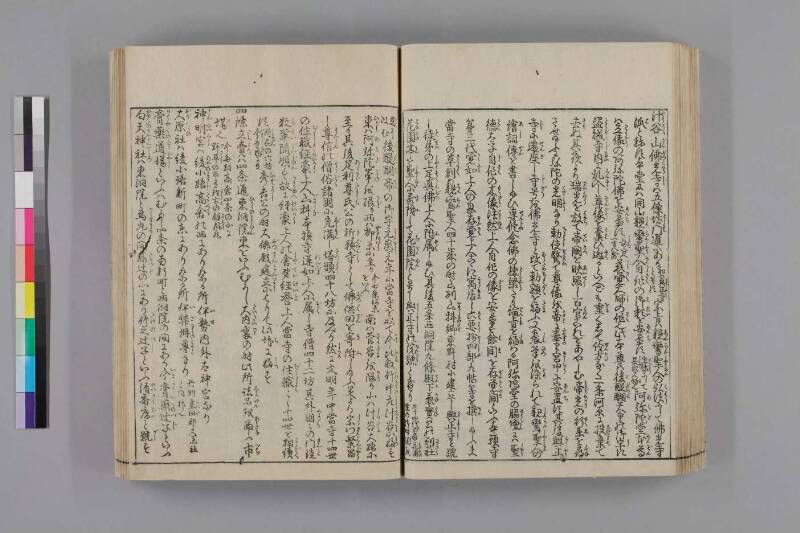
翻刻
汁谷山佛光寺は五條坊門通にあり
初は興正寺
と号す
宗旨は親鸞聖人の弘法にして仏にして佛光寺
派と称す本堂には開山親鸞聖人自作の御影を安置す
諸法にして佛光寺は親鸞聖人の弘法にして佛光寺
は立像の阿弥陀仏を安置す
坐像にして
長弐尺餘也予
阿弥陀堂本尊
は立像の阿弥陀佛を安置す
長三尺
一寸八歩
慈覚大師の作也此本尊は御醍醐天皇の御宇の
盗賊寺内に乱入し尊像を奪ひ逃るといへども重くして詮方なく二条河原に投棄て
去ぬ其夜より瑞光を放て帝闕を映照し百官これをあやしむ帝先の行来を尋
させ給ふに弥陀の光明なり勅使驚て尊像を帝に奉り宮中に安置す其後興正
寺に遷座し寺号を佛光寺と改て勅額を賜ふ又宸筆を染られて親鸞聖人の
繪詞傳を書し給ひ専修念佛の棟梁たる倫旨を賜はる阿弥陀堂の脇壇には聖
德太子自作の木像法然上人自作の像を安置す餘間を存覚間といふ本願寺
第三代覧如上人の息存覚上人こゝに寓居し六要抄四部九帖等を撰し給ふま
當寺の草創は親鸞聖人四十歳の時山州山科郷東野村に建立し興正寺と號
し徒弟の上足眞佛上人に附属し給ひ其後五条西洞院九條殿下兼實公の別荘
花園亭を聖人に寄附して花園院と号し興正寺の院號となせり
九十四代の帝花園
院の御時園を
恩に
改む
後醍醐帝の御宇元應元年に当寺を以て今比叡竹中庄汁谷に移す
東は阿弥陀峯を限り西は柳原に至り
今七条河原
をいふ
南は菅谷を限り北は汁谷大路に
至り其後足利尊氏公の祈願寺として佛供田を寄附し給ふ是より宗門繁昌
し尊信の僧俗諸國に充満し塔頭四十八坊に及べり然に文明年中當寺十四世
の住職經家上人山科本願寺運如上人に属し寺僧四十二坊其外國々の門徒
数輩隋順す故に経豪上人の舎弟經誉上人當寺の住職とし十四世を相續
す
所在の六坊
今寺内に有
秀吉公の時大佛殿建立によりて此地に移す
四條立賣は四条通東洞院東をいふむかし大内裏の時此所諸品を商ふ市
場也
今毎朝高倉四条の北に
野草の市有往古の餘風歟
神明宮は綾小路高倉の西にあり祭る所伊勢内外太神宮なり
大原社は綾小路新町の東にあり祭る所伊弉冉尊なり
丹州桑田郡大原社
と同神也
膏薬道場といふはむかし四条の南新町と西洞院の間にあり今膏藥辻子といふ
包天神社は東洞院と烏丸の間髙辻の北にあり竹之辻子といふ清香庵と號す
現代語訳
## 汁谷山佛光寺
汁谷山佛光寺は五條坊門通にある。
(初めは興正寺と号した。)
宗旨は親鸞聖人の弘法によるもので、佛光寺派と称す。本堂には開山・親鸞聖人が自ら作られた御影(肖像)を安置している。
佛光寺の阿弥陀堂本尊には立像の阿弥陀仏を安置する。
(坐像にして、長さ二尺余り。)
(立像の阿弥陀佛を安置。長さ三尺一寸八分。慈覚大師の作である。)
この本尊は醍醐天皇の御代に、盗賊が寺内に乱入して尊像を奪い逃げようとしたが、重くて運べず、二条河原に投げ捨てて去った。その夜から瑞光(めでたい光)を放ち、帝の御所を照らしたので、百官がこれを怪しんだ。帝が先の来歴を尋ねさせたところ、阿弥陀仏の光明であることがわかった。勅使が驚いて尊像を帝に奉り、宮中に安置した。その後、興正寺に遷座し、寺号を佛光寺と改め、勅額を賜った。また宸筆(天皇直筆)によって親鸞聖人の絵詞伝を書かせられ、専修念仏の棟梁たる綸旨を賜った。阿弥陀堂の脇壇には聖徳太子が自ら作った木像と、法然上人が自ら作った像を安置する。余間を存覚間といい、本願寺第三代覚如上人の息子・存覚上人がここに寓居し、「六要抄」・「四部九帖」等を撰述された。
当寺の草創は親鸞聖人四十歳の時、山城国山科郷東野村に建立し、興正寺と号した。弟子の上足・真仏上人に附属(後継)させ、その後、五条西洞院、九条殿下兼実公の別荘・花園亭を聖人に寄附し、花園院と号して興正寺の院号とした。
(九十四代の帝・花園院の御代に「園」を「恩」に改めた。)
後醍醐天皇の御代、元応元年(1319年)に当寺を今比叡・竹中庄汁谷に移した。東は阿弥陀峯を限り、西は柳原(今の七条河原をいう)に至り、南は菅谷を限り、北は汁谷大路に至る。その後、足利尊氏公の祈願寺として仏供田を寄附された。これより宗門が繁昌し、帰依する僧俗が諸国に充満し、塔頭は四十八坊に及んだ。しかし文明年中(1469〜1487年)に当寺十四世の住職・経豪上人が、山科本願寺の蓮如上人に属し、寺僧四十二坊のほか各国の門徒数輩が随順した。故に経豪上人の舎弟・経誉上人が当寺の住職として十四世を相続した。
所在の六坊は今も寺内にある。
秀吉公の時、大仏殿建立によってこの地に移した。
---
## 四條立賣(しじょうたちうり)
四条立賣は四条通東洞院の東をいう。むかし大内裏の時、この所で諸品を商う市場であった。
(今は毎朝、高倉・四条の北に野草の市がある。往古の遺風であろうか。)
---
## 神明宮
神明宮は綾小路高倉の西にある。祭る所は伊勢内外太神宮(内宮・外宮)である。
---
## 大原社
大原社は綾小路新町の東にある。祭る所は伊弉冉尊(イザナミノミコト)である。
(丹州桑田郡大原社と同神である。)
---
## 膏薬道場(こうやくどうじょう)
膏薬道場というのは、むかし四条の南、新町と西洞院の間にあった。今は膏薬辻子(こうやくずし)という。
---
## 包天神社(つつみてんじんしゃ)
包天神社は東洞院と烏丸の間、高辻の北にある。竹之辻子といい、清香庵と号す。
英語訳
## Shiruyatani-zan Bukkōji Temple
Shiruyatani-zan Bukkōji Temple is located on Gojō Bōmon-dōri Street.
(It was originally named Kōshōji.)
The temple belongs to the Jōdo Shinshū tradition as propagated by Saint Shinran, and is called the Bukkōji-ha (Bukkōji sect). The main hall enshrines a portrait (御影, *omiei*) of Shinran, the founder, which he is said to have made himself.
The principal image (*honzon*) of Amida Hall is a standing statue of Amida Buddha.
(There is also a seated statue, measuring over two *shaku* in height.)
(The standing Amida Buddha statue measures three *shaku*, one *sun*, and eight *bu* in height, and is a work of Jikaku Daishi.)
This principal image has the following legend: During the reign of Emperor Daigo, thieves broke into the temple and stole the sacred image. However, it was too heavy to carry away, so they abandoned it at Nijō Riverbed. From that very night, the statue emitted an auspicious light (*zuikō*) that illuminated the Imperial Palace, causing all court officials to marvel at the phenomenon. The Emperor inquired into the origin of the light and it was determined to be the radiance of Amida Buddha. An imperial envoy, in astonishment, presented the sacred statue to the Emperor, and it was enshrined within the Palace. Thereafter, it was moved to Kōshōji Temple, the temple's name was changed to Bukkōji, and an imperial plaque was bestowed. Furthermore, the Emperor personally wrote the illustrated biography (*etoki-den*) of Saint Shinran in his own hand, and bestowed an imperial decree (*rinji*) designating the temple as the leading institution for the exclusive practice of *nembutsu* (recitation of Amida's name).
In the flanking altar of Amida Hall are enshrined a wooden statue made by Prince Shōtoku himself and a statue made by Saint Hōnen himself. The side chamber is called the "Zonkaku Room," as Zonkaku Shōnin—son of Kakunyo Shōnin, the third abbot of Honganji—resided here and compiled works including the *Rokuyōshō* and *Shibu Kujō*.
The temple was founded when Saint Shinran was forty years old, established in Higashino Village, Yamashina Township, Yamashiro Province, and named Kōshōji. It was entrusted to his leading disciple, Shinbutsu Shōnin. Later, the villa called Hanazono-tei at Gojō Nishi-no-Tōin, belonging to Lord Kujō Kanezane, was donated to the Saint, who named it Hanazono-in, which became the cloister name of Kōshōji.
(During the reign of the ninety-fourth Emperor, Emperor Hanazono, "en" [園, garden] was changed to "on" [恩, grace].)
In the first year of Gen'ō (1319), during the reign of Emperor Go-Daigo, the temple was relocated to Shiruyatani in Takenaka-no-shō, present-day Imahibie. Its boundaries extended from Amida-ga-mine in the east to Yanagihara (present-day Shichijō Riverbed) in the west, from Sugetani in the south to Shiruyatani Ōji in the north. Later, Ashikaga Takauji donated rice fields (*bupponden*) for Buddhist offerings as this was his temple of prayer (*kiganji*). From this time the sect flourished, with devotees—monks and laypersons alike—spreading throughout the country, and the sub-temples (*tatchū*) numbering as many as forty-eight. However, during the Bunmei era (1469–1487), the fourteenth abbot Kyōgō Shōnin became affiliated with Rennyo Shōnin of Yamashina Honganji, and forty-two sub-temple monks along with many followers from various provinces followed suit. Therefore, Kyōgo Shōnin's younger brother, Kyōyo Shōnin, succeeded as the fourteenth-generation abbot.
The six sub-temples of the area remain within the temple precinct today.
During the time of Lord Toyotomi Hideyoshi, the temple was moved to its current location due to the construction of the Great Buddha Hall (Daibutsuden).
---
## Shijō Tachiumri (Fourth Avenue Market)
Shijō Tachiumri refers to the area east of Higashi-no-Tōin on Shijō-dōri (Fourth Avenue). In former times, when the Great Imperial Palace (*Daidairi*) was here, this area served as a marketplace where various goods were traded.
(Even today, every morning to the north of Takakura on Shijō, there is a market for wild herbs—perhaps a remnant of the customs of old.)
---
## Shinmei-gū Shrine
Shinmei-gū Shrine is located to the west of Takakura on Ayanokōji Street. The deities enshrined here are the Inner and Outer Shrines of Ise (*Naikū* and *Gekū*).
---
## Ōhara-sha Shrine
Ōhara-sha Shrine is located to the east of Shinmachi on Ayanokōji Street. The deity enshrined is Izanami-no-Mikoto.
(It enshrines the same deity as Ōhara-sha Shrine in Kuwata District, Tanba Province.)
---
## Kōyaku Dōjō (Plaster Hall)
The place called Kōyaku Dōjō was formerly located between Shinmachi and Nishi-no-Tōin, south of Shijō Avenue. It is now known as Kōyaku-zushi (Kōyaku Lane).
---
## Tsutsumi Tenjin Shrine
Tsutsumi Tenjin Shrine is located to the north of Takatsūji, between Higashi-no-Tōin and Karasuma Streets. The area is called Takeno-zushi (Bamboo Lane), and the shrine is also known as Seikō-an.