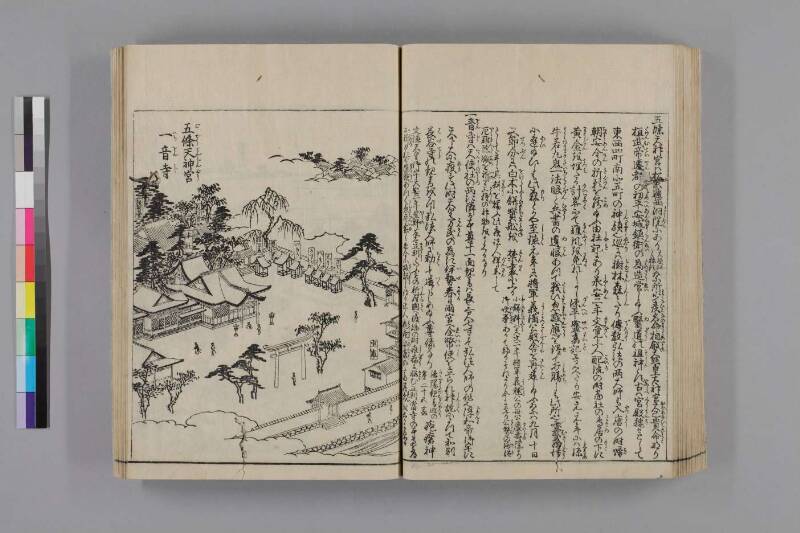
翻刻
五條天神宮は松原通西洞院にあり
天使社
と称す
祭所少彦名命相殿天照太神宮大已貴命なり
桓武帝遷都の初平安城鎮衛の為造営し給ふ醫道の祖神とす古は宮殿魏々として
東西四町南北五町の神領也巡には樹林森々たり傳教弘法の两大師も入唐の時帰
朝安全の祈願を籠給ふ由社記にあり承安二年文覚上人配流の時當社の鳥居の下に
黄金を埋たる計畧にて難風を免れしよし源平盛衰記に見へたる安元元年には源
牛若丸鬼一法眼と兵書の遺恨あつて戦ひ忽感應を得て打勝しも此所也武蔵坊
に逢給ひしも此森とかやは至德元年には將軍義満は殿舎を再建し給ふ祭は九月十日
又節分には白朮小餅寶船を禁裏に上る
小餅料は天文二年将軍義輝公の母公慶寿院より
御吹挙ありて賜るそれより今に至り公務の沙汰
として年々其料を賜ふ此夜諸人群集して
厄難除滅を祈り三種の神物をうくるなり
一音寺は天使社の西に隣る本尊十一面観音は長さ三尺七寸にて弘法大師の作也淳和帝御宇に
天下大小疫す此時天皇万民の為に伊勢春日两宮へ金幣使を立てられ神託によつて和州
長谷寺の観音をうつし弘法大師に勅して造らしめ給ふ尊像なり此
洛陽観音巡の
第二十五番
疱瘡神
文徳天皇御宇大安二年星野原正利といふこもの新羅国へ渡海の時疱病に悩正利當寺の本尊を■
に祈ければ應験あつく忽平愈し安全に帰朝し侍る諸人疱瘡康康のため其■をこゝに祭る
宝庫
ぎをん
天まん
八まん
かすが
いなり
两太神宮
猿田彦
役行者
五條天神宮
本社
一音寺
観音堂
現代語訳
**五條天神宮**(松原通西洞院にある。天使社とも称される)
祭神は少彦名命(すくなひこなのみこと)で、相殿に天照太神宮・大已貴命(おおなむちのみこと)を祀る。
桓武天皇が平安京に遷都された当初、都の鎮護のために造営された社であり、医道の祖神として崇められている。古くは宮殿が壮大に立ち並び、東西四町・南北五町の神領を有し、境内には樹林が鬱蒼と茂っていた。伝教大師・弘法大師の両大師も入唐の際に、帰朝の安全を祈願されたことが社記に記されている。承安二年(1172年)、文覚上人が配流となった時、当社の鳥居の下に黄金を埋めるという策略によって難風を免れたことが『源平盛衰記』に見える。安元元年(1175年)には、源牛若丸が鬼一法眼と兵書をめぐる遺恨から戦い、たちまち神の感応を得て打ち勝ったのもこの場所である。武蔵坊弁慶と出会われたのもこの森であるという。至徳元年(1384年)には、将軍足利義満が殿舎を再建された。祭礼は九月十日に行われる。
また節分には、白朮(おけら)・小餅・宝船を禁裏(御所)に献上する。
小餅の料(費用)は、天文二年(1533年)に将軍足利義輝公の母君・慶寿院より御支援をいただいて賜ったものであり、それ以来今日に至るまで、公務として毎年その料を賜っている。この夜、多くの人々が群集して厄難除滅を祈り、三種の神物(白朮・小餅・宝船)を受けるのである。
---
**一音寺**(天使社の西に隣接する)
本尊は十一面観音で、長さ三尺七寸、弘法大師の作である。淳和天皇の御代に天下に大小の疫病が流行した。この時、天皇が万民のために伊勢・春日の両宮へ金幣使を立てられ、神託によって大和国長谷寺の観音を移し、弘法大師に勅して造らせた尊像である。
洛陽観音巡礼の第二十五番札所。疱瘡神(ほうそうがみ)としても知られる。
文徳天皇の御代、大安二年(848年)に、星野原正利という者が新羅国へ渡海した際に疱瘡(天然痘)を患い、正利が当寺の本尊に熱心に祈ったところ、霊験著しく、たちまち平癒して安全に帰朝した。以来、人々は疱瘡平癒のためにその【神】をここに祀っている。
---
(図中の記載)
宝庫/祇園/天満/八幡/春日/稲荷/両太神宮/猿田彦/役行者/五條天神宮・本社/一音寺/観音堂
英語訳
**Gojō Tenjin-gū Shrine** (Located on Matsubara-dōri at Nishitōin; also known as Tenshi-sha)
The enshrined deity is Sukunahikona no Mikoto, with Amaterasu Ōmikami and Ōnamuchi no Mikoto enshrined in the same hall (aiden).
This shrine was established at the time of Emperor Kanmu's relocation of the capital to Heiankyō (Kyoto), as a guardian shrine of the new city, and is venerated as the ancestral deity of medicine. In former times, the shrine buildings were magnificent and imposing, and the shrine held a domain of four chō (city blocks) from east to west and five chō from north to south, with dense groves of trees surrounding the grounds. According to the shrine records, both Great Masters Dengyō Daishi and Kōbō Daishi offered prayers here for a safe voyage when they traveled to Tang China and upon their return. According to the Genpei Seisuiki (Chronicle of the Rise and Fall of the Minamoto and Taira), in the second year of Jōan (1172), when the monk Mongaku was sent into exile, he buried gold beneath the torii gate of this shrine as a stratagem to avoid a perilous storm. In the first year of Angen (1175), the young Minamoto no Ushiwakamaru (later known as Yoshitsune) fought with Kiichi Hōgen over a grievance concerning a military treatise, and it was here that he instantly received divine inspiration and won the battle. It is also said that it was in this grove that he encountered Musashibō Benkei. In the first year of Itoku (1384), Shogun Ashikaga Yoshimitsu rebuilt the shrine structures. The festival is held on the tenth day of the ninth month.
On the occasion of Setsubun, atractylis (okera herb), small rice cakes (komochi), and treasure ship talismans (takarabune) are presented to the Imperial Palace (Kinri).
The provision for the small rice cakes was granted through the patronage of Keijuin, the mother of Shogun Ashikaga Yoshiteru, in the second year of Tenbun (1533). From that time until the present day, the cost of these offerings has been provided annually as an official public duty. On this night, crowds of people gather to pray for the removal of misfortune and disasters, and receive the three sacred offerings (okera, rice cakes, and treasure ships).
---
**Ichion-ji Temple** (Adjacent to the west of Tenshi-sha)
The principal image (honzon) is an eleven-faced Kannon (Ekādaśamukha Avalokiteśvara), measuring three shaku and seven sun in height, and is said to have been created by Kōbō Daishi. During the reign of Emperor Junna, epidemics of various kinds spread throughout the land. The Emperor, for the sake of all people, dispatched golden-coin envoys (kinpei-shi) to both the Ise and Kasuga shrines, and in accordance with a divine oracle, the Kannon image from Hasedera Temple in Yamato Province (present-day Nara Prefecture) was replicated, and Emperor commanded Kōbō Daishi to create this venerable image.
This temple is the twenty-fifth station on the Rakuyō Kannon Pilgrimage. It is also known as the deity of smallpox (Hōsō-gami).
In the second year of Taian (848), during the reign of Emperor Montoku, a man named Hoshinohara Masatoshi, while crossing the sea to the kingdom of Silla (on the Korean peninsula), fell ill with smallpox (hōsō). Masatoshi prayed fervently to the principal image of this temple, and the miraculous response was profound—he recovered suddenly and returned home safely. Thereafter, people began to enshrine the [deity] here for the cure of smallpox.
---
*(Labels in the accompanying illustration)*
Treasury (Hōko) / Gion / Tenjin (Tenman) / Hachiman / Kasuga / Inari / Both TaiJingū / Sarutahiko / En no Gyōja / Gojō Tenjin-gū (Main Shrine) / Ichion-ji / Kannon Hall