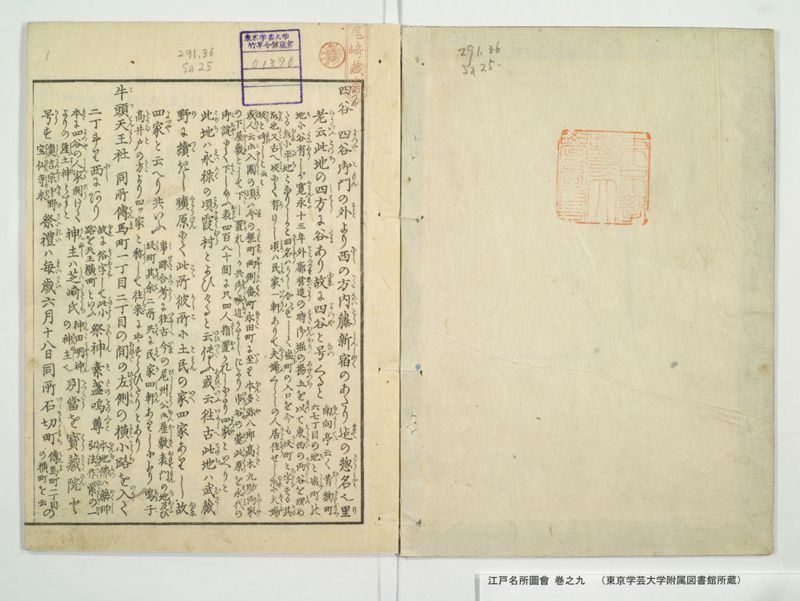
翻刻
【見返し】
【赤印】東京學藝大學圖書
291,36
Sa25
【左丁】
【上部 赤四角印】尾崎藏書
【赤丸印】しみづさい【中央文字不明】
【四角印】東京学芸大学 竹早分館蔵書 01390
【本文】
四谷(よつや) 四谷御門(よつやこもん)の外(そと)より西(にし)の方(かた)内藤新宿(ないとうしんしゆく)のあたり迠(まて)の惣名(さうみやう)也 里(り)
老(らう)云(いふ)此地(このち)の四方(しはう)に谷(たに)あり故(ゆゑ)に四谷(よつや)と号(なつ)くると《割書:南向亭(なんかうてい)云く昔(むかし)麹町(かうしまち)|六七丁目の地(ち)と塩(しほ)町の》
《割書:地(ち)に谷(たに)有(あり)しが寛永(くわんえい)十三年 外廓(そとくるわ)営造(ゑいさう)の時(とき)御堀(おんほり)の揚土(あけつち)を以(もつ)て東西(とうさい)の両谷(りやうこく)を埋(うつ)め|たる故(ゆゑ)に平地(へいち)となりしかと旧名(きうみやう)はうしなはずして塩(しほ)町の入口を今も坂(さか)町と字(あさな)する其(その)|故(ゆゑ)也 又(また)古(いにし)へ坂(さか)にて有(あ)りし頃(ころ)は民家(みんか)一軒(いつけん)ありて夫婦(ふうふ)くらしの人 居住(きよちやう)せし故(ゆゑ)に夫婦(ふうふ)|坂(さか)と呼(よひ)しと云々|或人(ある人)云 御入国(こにうこく)の頃(ころ)は今(いま)の糀町(こうしまち)両側(りやうかは)番(はん)町 永田(なかた)町に至(いた)り本多弥(ほんたや)八郎 高木(たかき)九助 両家(りやうけ)|の下屋敷(しもやしき)として下(くた)し置(おか)れしか共 御城(おんしろ)近(ちか)かりしにより市谷(いちかや)の臺(たい)此原(このはら)を永代(えいたい)の|御諚(こちやう)にて下(くた)し給ふ表(おもて)四百八十間に只四人 指置(さしおか)かれしにより四家(よつや)といへりと》
此地(このち)は永禄(えいろく)の頃(ころ)霞村(かすみむら)とよひけると云傳(いひつた)ふ或(あるひは)云(いふ)往古(いにしへ)此地(このち)は武蔵(むさし)
野(の)に続(つゝ)きし曠原(くわうけん)にて此所彼所(こゝかしこ)に土民(とみん)の家(いへ)四家ありし故(ゆゑ)
四家(よつや)と云へり共いふ《割書:事跡合考(しせきかつかう)に往古(いにしへ)今(いま)の尾州公(びしうこう)御屋敷(おんやしき)表門(おもてもん)の地(ち)及(およ)ひ|坂(さか)町其余(そのよ)二所 共(とも)に民家(みんか)四軒(しけん)ありしにより鳴子(なるこ)》
《割書:高井戸(たかゐと)の方(かた)より四ッ家と称(しよう)して往来(わうらい)にやすらひたりとあり》
牛頭天王社(こつてんわう ) 同所 伝馬(てんま)町一丁目二丁目の間(あいた)の左側(ひたりかは)の横小路(よここうち)を入(いり)て
二丁斗り西(にし)にあり《割書:故(ゆゑ)に俗(そく)字(あさな)して此(この)小(こう)|路(ち)を天王横町といふ》祭神(さいしん)素盏嗚尊(そさのをのみこと)《割書:本地佛(ほんちふつ)は薬師(やくし)|弘法作(こうはふさく)紫(むらさき)の一(ひと)》
《割書:本(もと)に四谷(よつや)の人家(しんか)開(ひら)けて|よりの産土神(うふすな)とすと》神主(かんぬし)は芝崎氏(しはさきうち)《割書:神田明神(かんたみやうしん)|の神主(かんぬし)也》別当(へつたう)を宝蔵院(はうさうゐん)と
号(かう)す《割書:真言宗(しんこんしう)中野(なかの)|宝仙寺末(はうせんしのまつ)》祭礼(さいれい)は毎歳(まいさい)六月十八日同所 石切町(いしきりまち)《割書:伝馬(てんま)町一丁目|の横町を云》の
現代語訳
【見返し】
【赤印】東京学芸大学図書
291,36
Sa25
【左丁】
【上部 赤四角印】尾崎蔵書
【赤丸印】しみずさい【中央文字不明】
【四角印】東京学芸大学 竹早分館蔵書 01390
【本文】
四谷(よつや) 四谷御門の外より西の方、内藤新宿のあたりまでの総称である。
古老の話では、この地の四方に谷があったため四谷と呼ぶという。《南向亭によれば、昔は麹町六七丁目の地と塩町の地に谷があったが、寛永十三年(1636年)の外郭築造の時、お堀の掘削土で東西の両谷を埋めたため平地となったが、旧名は失わず、塩町の入口を今も坂町と呼ぶのもその名残である。また古くは坂であった頃、民家が一軒あって夫婦で暮らしていたため夫婦坂と呼んだという。或る人の話では、家康公の入国の頃、今の麹町両側、番町、永田町に至る地域は本多弥八郎、高木九助両家の下屋敷として与えられていたが、御城に近いため市谷の台地、この原を永代の御諚で下賜され、表四百八十間にわずか四人が配置されたため四家(よつや)と言ったという。》
この地は永禄の頃(1558-1570年)に霞村と呼ばれていたと伝えられる。或いは、往古この地は武蔵野に続く広原で、ここかしこに土民の家が四軒あったため四家と言ったともいう。《事跡合考によれば、往古今の尾州公御屋敷表門の地及び坂町その他二所に、民家四軒があったため、鳴子、高井戸の方より四ッ家と称して往来に休息したとある。》
牛頭天王社 同所伝馬町一丁目二丁目の間の左側の横小路を入って二町ほど西にある。《そのため俗に、この小路を天王横町という。》祭神は素盞嗚尊。《本地仏は薬師如来、弘法大師作の紫檀の一木造。四谷の人家が開けてよりの産土神とする。》神主は芝崎氏《神田明神の神主である》。別当を宝蔵院と号する。《真言宗、中野宝仙寺末寺。》祭礼は毎年六月十八日。同所石切町《伝馬町一丁目の横町をいう》の
英語訳
【Endpaper】
【Red Stamp】Tokyo Gakugei University Library
291,36
Sa25
【Left Page】
【Upper Red Square Stamp】Ozaki Collection
【Red Circle Stamp】Shimizu Sai【Central character unclear】
【Square Stamp】Tokyo Gakugei University Takehaya Branch Library 01390
【Main Text】
Yotsuya - The general name for the area from outside Yotsuya Gate westward to the vicinity of Naito-Shinjuku.
According to elders, this place is called Yotsuya because there were valleys (tani) in all four directions (shiho). 《According to Nankotei, in ancient times there were valleys in the areas of Kojimachi 6th and 7th districts and Shiomachi, but during the construction of the outer fortifications in Kan'ei 13 (1636), both eastern and western valleys were filled with earth excavated from the moats, making it flat land. However, the old name was not lost, and the entrance to Shiomachi is still called Sakamachi for this reason. Also, when it was still a slope in ancient times, there was one house where a married couple lived, so it was called Meoto-zaka (Couple's Slope). According to one person, during the time of [Tokugawa Ieyasu's] entry into the country, the areas on both sides of present-day Kojimachi, extending to Bancho and Nagatacho, were granted as lower residences to the Honda Yahachiro and Takagi Kyusuke families. However, because they were close to the castle, the Ichigaya plateau and this plain were granted by eternal decree, and with only four people stationed along the 480-ken frontage, it was called Yotsuya (Four Houses).》
This area is said to have been called Kasumi Village around the Eiroku period (1558-1570). Alternatively, it is said that in ancient times this area was an open plain connected to Musashino, with four houses of local people scattered here and there, hence called Yotsuya (Four Houses). 《According to the Shiseki Gokko, in ancient times there were four houses at the present site of the front gate of the Bishu Lord's residence and at Sakamachi and two other places, and travelers would rest there, calling it "Yotsuya" when coming from Naruko and Takaido.》
Gozu Tenno Shrine - Located about two cho west after entering the side street on the left between Tenmacho 1st and 2nd districts of the same area. 《Therefore, this small street is commonly called Tenno-yokocho.》 The enshrined deity is Susanoo-no-Mikoto. 《The honji-butsu (corresponding Buddhist deity) is Yakushi Nyorai, a single-wood purple sandalwood statue made by Kobo Daishi. It has been the tutelary deity since Yotsuya's residential area developed.》 The head priest is from the Shibasaki family 《who are also head priests of Kanda Myojin》. The temple administrator is called Hozoin. 《Shingon sect, branch temple of Hosenji in Nakano.》 The festival is held annually on June 18th. Ishikirimachi in the same area 《refers to the side street of Tenmacho 1st district》