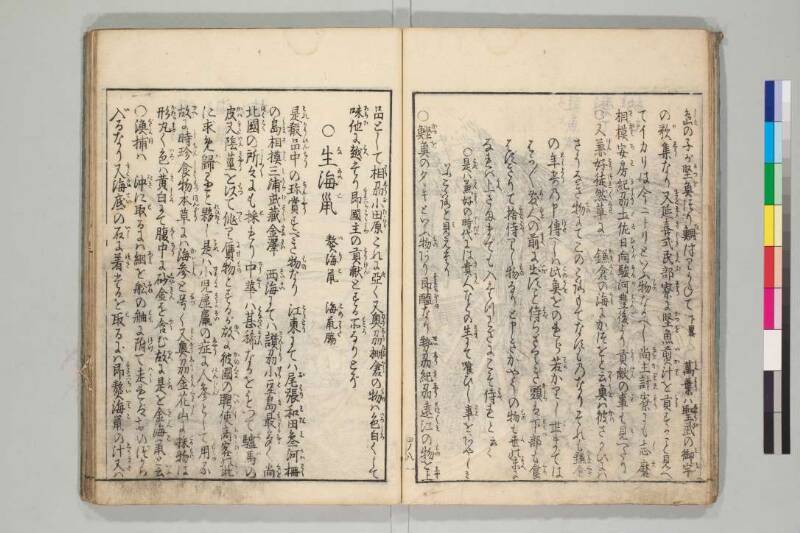
翻刻
【右丁】
島(しま)の子が堅魚(かつを)つり鯛(たい)つりかねて《割書:下略》 万葉(まんよう)は聖武(しやうむ)の御宇(みよ)
の歌集(かしう)なり又(また)延喜式(ゑんきしき)民部寮(みんぶれう)に堅魚(かつを)煎汁(いかり)を貢(こう)すること見へ
てイカリは今ニトリといふ物(もの)なるべし尚(なを)主計寮(かずゑれう)にも志磨(しま)
相模(さがみ)安房(あわ)紀州(きしう)土佐(とさ)日向(ひうが)駿河(するが)豊後(ぶんご)より貢献(こうけん)の事(こと)も見(み)へたり
○又 兼好(けんこう)徒然草(つれ〳〵くさ)に 鎌倉(かまくら)の海(うみ)にかつをと云(いう)魚(うを)は彼(かの)さかひには
さうなき物にてこのころもてなすものなりそれも鎌倉(かまくら)
の年寄(としより)の申 伝(つた)へしは此魚(このうを)をのれら若(わか)かりし世(よ)までは
はか〴〵敷(しく)人(ひと)の前(まへ)に出(いだ)ずこと侍(はべ)らざりき頭(かしら)は下部(しもべ)も食(くら)
はずきりて捨(すて)侍(はべ)りし物(もの)なりと申きかやうの物(もの)も世(よ)の末(すへ)に
なれば上さままでも入たつわざにこそ侍(はべ)れと云々
○是(これ)は兼好(けんこう)の時代(じだい)には貴人(きにん)などの生(なま)にて喰ひし事(こと)をあやしみ
いふこゝろと見(み)えたり
○鰹魚(かつを)のタヽキといふ物(もの)なり即(すなはち)醢(ひしほ)なり勢州(せいしうう)紀州(きしう)遠江(とほ〳〵み)の物(もの)を上(しやう)
【左丁】
品として相州(さうしう)小田原(おたはら)これに亜(つ)く又 奥州(おうしう)棚倉(たなくら)の物(もの)は色(いろ)白(しろ)くして
味(あち)他(た)に越(こへ)たり即(すなはち)国主(こくしゆ)の貢献(こうけん)とする所(ところ)なりとぞ
○生海鼠(なまこ) 《割書:熬海鼠(いりこ) 海鼠腸(このわた)》
是(これ)殽品中(かうひんちう)の珍賞(ちんしやう)すべき物(もの)なり 江東(こうとう)にては尾張(おはり)和田(わだ)参河(みかは)柵(さく)
の島(しま)相模(さかみ)三浦(みうら)武蔵(むさし)金沢(かなさは) 西海(さいかい)にては讃州(さんしう)小豆島(せうとしま)最(もつとも)多(おゝ)く尚(なを)
北国(ほくこく)の所々(しよ〳〵)にも採(と)れり中華(ちうくわ)は甚(はなはだ)稀(まれ)なるをもつて驢馬(ろは)の
皮(かは)又(また)陰茎(いんきやう)を以(もつ)て作(つく)り贋物(にせもの)とするが故(ゆへ)に彼国(かのくに)の聘使(へいし)商客(あきひと)の此(こゝ)
に求め帰(かへ)ること夥(おひたゝ)し是(これ)は小児(せうに)虚羸(きよるい)の症(しやう)に人参(にんじん)として用(もちゆ)る
故(ゆへ)に時珍(じちん)食物本草(しよくもつほんざう)には海参(かいじん)と号(なづ)く又(また)奥州(おうしう)金花山(きんくわさん)に採物(とるもの)は
形(かたち)丸(まる)く色(いろ)は黄白(きしろ)にて腹中(ふくちう)に砂金(しやきん)を含(ふく)む故(ゆへ)に是(これ)を金海鼠(きんこ)と云(いふ)
○漁捕(ぎよほ)は 沖(おき)に取(と)るには網(あみ)を舩(ふね)の舳(とも)に附(つけ)て走(はし)ればおのづから
入(い)るなり又(また)海底(かいてい)の石(いし)に着(つき)たるを取(と)るには即(すなはち)熬海鼠(いりこ)の汁(しる)又(また)は
現代語訳
【右丁】
「島の子が鰹釣り鯛釣りかねて《割書:下略》」万葉は聖武天皇の御代の歌集である。また延喜式民部寮に鰹の煎汁を貢ぐことが見えて、イカリは今のニトリという物であろう。なお主計寮にも志摩・相模・安房・紀州・土佐・日向・駿河・豊後より貢献のことも見えている。
○また兼好の徒然草に「鎌倉の海に鰹という魚は、あの地方には稀有な物で、この頃もてなす物である。それも鎌倉の年寄りが申し伝えるには、この魚を我々が若かった世までは、まともな人の前に出すことはなかった。頭は下僕も食べず、切って捨てていた物であったと申した。このような物も世の末になれば上様までも召し上がるようになるものであると云々。
○これは兼好の時代には貴人などが生で食べることを不思議に思って言った心と見える。
○鰹魚のタタキという物である。即ち塩辛である。勢州・紀州・遠江の物を上品として、相州小田原がこれに次ぐ。また奥州棚倉の物は色が白くて味が他に勝る。即ち国主の貢献とする所である。
【左丁】
○生海鼠《割書:煎海鼠 海鼠腸》
これは肴の中の珍重すべき物である。江東では尾張和田、参河柵の島、相模三浦、武蔵金沢。西海では讃州小豆島が最も多く、なお北国の各所でも採れる。中華では甚だ稀であるため、驢馬の皮や陰茎を以って作り偽物とするので、彼の国の使節や商人がここに求めて帰ることが多い。これは小児虚羸の症に人参として用いるため、時珍の『食物本草』には海参と号する。また奥州金花山で採れる物は形が丸く色は黄白で、腹中に砂金を含むため、これを金海鼠という。
○漁捕は沖で取るには網を船の艫に付けて走ればおのずから入る。また海底の石に付いたのを取るには即ち煎海鼠の汁または
英語訳
[Right page]
"The island children trying to catch bonito and sea bream but failing [annotation: abbreviated below]" - The Man'yōshū is a poetry collection from the reign of Emperor Shōmu. Also in the Engi-shiki's Ministry of Popular Affairs, it is recorded that bonito broth was offered as tribute, and "ikari" is probably what is now called "nitori." Furthermore, in the Ministry of the Treasury, tributes from Shima, Sagami, Awa, Kishu, Tosa, Hyuga, Suruga, and Bungo are also recorded.
○Also, in Kenko's Tsurezuregusa: "The fish called katsuō in the sea of Kamakura is a rare thing in that region, which is treated as special nowadays. Even the elderly of Kamakura have passed down that until we were young, this fish was never properly served before respectable people. Even servants would not eat the head, but would cut it off and throw it away. Such things, as the world comes to an end, even the upper classes come to partake of," etc.
○This shows that in Kenko's time, he found it strange that nobles and such would eat it raw.
○This is the thing called katsuō no tataki. It is a type of salted fish paste. Products from Seishu, Kishu, and Totomi are considered top quality, with Sagami Odawara ranking second. Also, products from Oshu Tanagura are white in color and superior in taste to others. This is what the provincial lord offers as tribute.
[Left page]
○Sea cucumber [annotation: dried sea cucumber, sea cucumber intestines]
This is something to be treasured among delicacies. In the eastern seas: Owari Wada, Mikawa Saku Island, Sagami Miura, Musashi Kanazawa. In the western seas: Sanshu Shodoshima has the most, and they are also harvested in various places in the northern provinces. In China they are extremely rare, so they make counterfeits using donkey skin or male genitalia. Therefore, envoys and merchants from that country seek them here and return with great quantities. Since these are used like ginseng for treating children's weakness and emaciation, Shizhen's "Food Materia Medica" calls them "sea ginseng." Also, those harvested at Mount Kinka in Oshu are round in shape and yellowish-white in color, containing gold dust in their belly, so these are called "golden sea cucumbers."
○For fishing: to catch them in the open sea, attach a net to the stern of the boat and run, and they will naturally enter. To catch those attached to rocks on the sea floor, use the juice of dried sea cucumber or