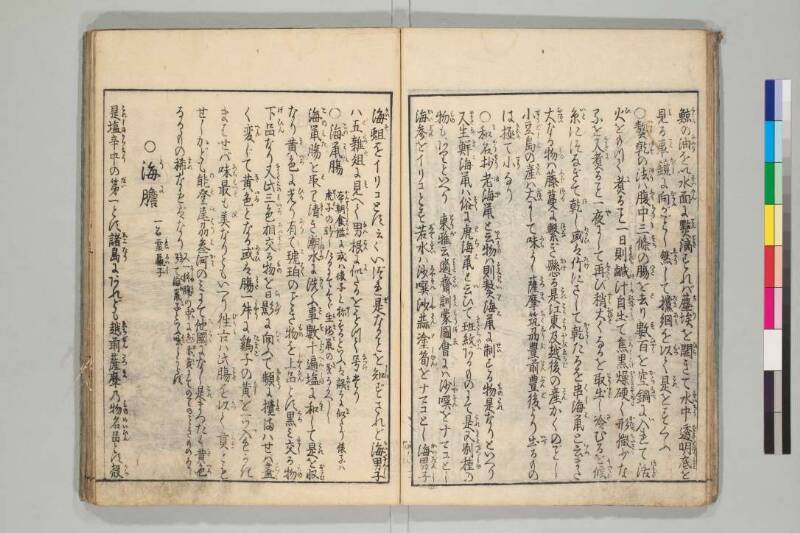
翻刻
【右丁】
鯨(くじら)の油(あふら)を以 水面(すいめん)に点滴(てんてき)すれば塵埃(ちり)を開(ひら)きて水中(すいちう)透明(すきとほり)底(そこ)
見(み)る事(こと)鏡(かゞみ)に向(むかふ)がごとし然(しかう)して攩網(たまあみ)を以(もつ)て是(これ)をすくふ
○熬乾(いりほす)の法(ほう)は腹中(ふくちう)三条(みすち)の腸(はた)を去(さ)り数百(すひやく)を空鍋(からなべ)に入(い)れて活(つよき)
火(ひ)をもつて煮(に)ること一日 則(すなはち)鹹汁(しほしる)自(おのづから)出(い)で焦黒(くろくこげ)燥(かわきて)硬(かた)く形(かたち)微少(ちいさく)な
るを又(また)煮(に)ること一夜( や)にして再(ふたゝ)び稍(やゝ)大(おほき)くなるを取出(とりいだ)し冷(さ)むるを候(うかゝひ)
糸(いと)につなぎて乾(ほ)し或(あるひ)は竹(たけ)にさして乾(かわかし)たるを串海鼠(くしこ)と云(いふ)また
大(おほい)なる物(もの)は藤蔓(ふじつる)に繋(つな)ぎ懸(かけ)る是(これ)江東(こうとう)及(および)越後(ゑちご)の産(さん)かくのごとし
小豆島(せうどしま)の産(さん)は大(おほい)にして味(あち)よし薩摩(さつま)筑州(ちくしう)豊前(ぶぜん)豊後(ぶんご)より出(いづ)るもの
は極(きはめ)て小(せう)なり
○和名抄(わめいせう)老海鼠(ほや)と云(いふ)物(もの)は則(すなはち)熬海鼠(いりこ)に制(せい)する物(もの)是(これ)なりといへり
又(また)生鮮海鼠(なまこ)は俗(ぞく)に虎海鼠(とらこ)と云(い)ひて班紋(まだらのふ)#1あるものにて是(これ)又(また)別種(べつしゆ)の
物(もの)もありといへり東雅(とうが)云 適斎訓蒙図会(てきさいきんもうづゑ)には沙噀(しやそん)をナマコとし
海参(かいじん)をイリコとす若水(じやくすい)は沙噀(しやそん)沙蒜(しやさん)塗筍(としゆん)をナマコとし海男子(かいだんし)
【左丁】
海蛆(かいそ)をイリコとす云々いづれ是(ぜ)なることを知(しら)ずされど海男子(かいなんし)#2
は五雑俎(ござつそ)に見(み)へて男根(なんこん)に似(に)たるをもつて号(なづけ)たり
○海鼠腸(このわた) 《割書:本朝食鑑(ほんてうしよくかん)に或は俵子と称(せう)するといふは誤(あやま)るに似(に)たり俵子は|虎子(とらこ)転(てん)したるにてたゞ生海鼠(なまこ)の義(き)なるべし》
海鼠腸(このわた)を取(と)り清(きよ)き潮水(しほみづ)に洗(あら)ふ事(こと)数十遍(すじつへん)塩(しほ)に和(くわ)して是(これ)を収(おさむ)
なり黄色(きいろ)に光(ひか)り有(あり)て琥珀(こはく)のごとき物(もの)を上品(じやうひん)とす黒(くろ)み交(まし)る物(もの)
下品(げひん)なり又(また)此(この)三色(みいろ)相交(あいまじ)る物(もの)を日影(ひかげ)に向(むか)ふて頻(しきり)に撹(かき)まはせば尽(こと〳〵)
く変(へんじて)黄色(きいろ)となる或(あるひ)は腸(わた)一舛( しやう)に鶏子(たまご)の黄(きみ)を一ツ入(い)れかき
まはせば味(あぢ)最(もつと)も美(び)なりともいへり往古(むかし)は此 腸(わた)を以(もつ)て貢(みつぎ)とも
せしかども能登(のと)尾州(おはり)参河(みかわ)のみにて他国(たこく)になし是(これ)まつたく黄色(きいろ)
なるもの稀(まれ)なればなり《割書:又 一種(いつしゆ)腸(わた)の中(なか)に色(いろ)赤黄(あかき)にてのりのごときものあり|号(なつけ)て海鼠子(このこ)といふ味(あぢ)よからず》
○海胆(うに) 《割書:一名 霊羸子(れいろいし)|》
是(これ)塩辛(しほから)中(ちう)の第一(だい )とす諸島(しよたう)にあれども越前(ゑちぜん)薩摩(さつま)の物(もの)名品(めいひん)とす殻(から)
現代語訳
【右丁】
鯨の油を水面に点滴すると塵を取り除いて水中が透明になり、底が鏡を見るように見える。そして玉網でこれを掬う。
○乾燥させる方法は、腹中の三条の腸を取り除き、数百個を空の鍋に入れて強火で一日煮る。すると塩気のある汁が自然に出て、焦げて黒くなり乾燥して硬く、形が小さくなる。これをさらに一夜煮ると再び少し大きくなるので取り出し、冷めるのを待って糸に繋いで干し、あるいは竹に刺して乾かしたものを串海鼠という。また大きなものは藤蔓に繋いで掛ける。これが関東および越後の産品の作り方である。小豆島の産品は大きくて味が良い。薩摩・筑州・豊前・豊後から出るものは極めて小さい。
○和名抄で老海鼠(ほや)という物は、すなわち煎海鼠に加工する物がこれであるという。また生の海鼠は俗に虎海鼠といって斑紋があるもので、これもまた別種の物もあるという。東雅によれば、適斎訓蒙図会では沙噀をナマコとし、海参をイリコとする。若水は沙噀・沙蒜・塗筍をナマコとし、海男子
【左丁】
海蛆をイリコとするという。どちらが正しいかわからないが、海男子は五雑俎に見えて男根に似ているのでそう名付けられた。
○海鼠腸(このわた)《割書:本朝食鑑で俵子と称するというのは誤りのようだ。俵子は虎子が転じたもので、ただ生海鼠の意味であろう》
海鼠腸を取り、清い潮水で数十回洗い、塩に和えて保存する。黄色に光って琥珀のような物を上品とする。黒みが混じる物は下品である。またこの三色が混じる物を日陰で頻繁にかき回せばすべて黄色になる。あるいは腸一升に鶏卵の黄身を一つ入れてかき回せば味が最も美味になるともいう。昔はこの腸を貢物ともしたが、能登・尾州・参河のみで他国にはない。これは完全に黄色なものが稀だからである。《割書:また一種、腸の中に色が赤黄色で海苔のような物があり、海鼠子と呼ぶが味は良くない》
○海胆(うに)《割書:一名 霊羸子》
これは塩辛の中の第一とする。諸島にあるが、越前・薩摩の物を名品とする。殻
英語訳
[Right page]
When whale oil is dropped onto the water surface, it removes dust and makes the water transparent, allowing one to see the bottom as if looking into a mirror. Then they scoop them up with a dip net.
○The method of drying: Remove the three strips of intestines from the belly, put several hundred in an empty pot and boil over strong fire for one day. Then salty juice naturally comes out, and they become charred black, dried, hard, and small in form. Boil this again for one night until they become somewhat larger again, then take them out and wait for them to cool. String them with thread to dry, or stick them on bamboo to dry - this is called kushiko (skewered sea cucumber). Large ones are tied with wisteria vines and hung. This is how they are produced in Kanto and Echigo regions. The products from Shodoshima are large and taste good. Those from Satsuma, Chikushū, Buzen, and Bungo are extremely small.
○In the Wamyōshō, the thing called old sea cucumber (hoya) is said to be what is processed into dried sea cucumber. Also, fresh sea cucumber is commonly called tiger sea cucumber (torako) and has spotted patterns, and there are said to be other varieties as well. According to Tōga, in the Tekisai Kinmō Zukai, shasun is called namako and kaijin is called iriko. Jakusui calls shasun, shasan, and toshun namako, and kaidanshi
[Left page]
and kaiso iriko. It's unclear which is correct, but kaidanshi appears in Gozatsuso and is so named because it resembles male genitalia.
○Sea cucumber intestines (konowata) {{Small text: The reference to "tawarako" in Honchō Shokkan seems to be an error. Tawarako is a corruption of torako and simply means fresh sea cucumber}}
Take the sea cucumber intestines, wash them dozens of times in clean seawater, mix with salt and preserve. Those that shine yellow like amber are considered top quality. Those mixed with black are inferior quality. If you frequently stir the three-colored mixture in the shade, it all turns yellow. Or if you add one egg yolk to one cup of intestines and stir, the taste becomes most delicious. In ancient times, these intestines were even used as tribute, but only from Noto, Owari, and Mikawa - not from other provinces. This is because completely yellow ones are rare. {{Small text: There is also one type that has reddish-yellow colored material like seaweed in the intestines, called konoko, but it doesn't taste good}}
○Sea urchin (uni) {{Small text: Also called reirōshi}}
This is considered the finest among salted foods. Though found on various islands, those from Echizen and Satsuma are considered premium products. The shell