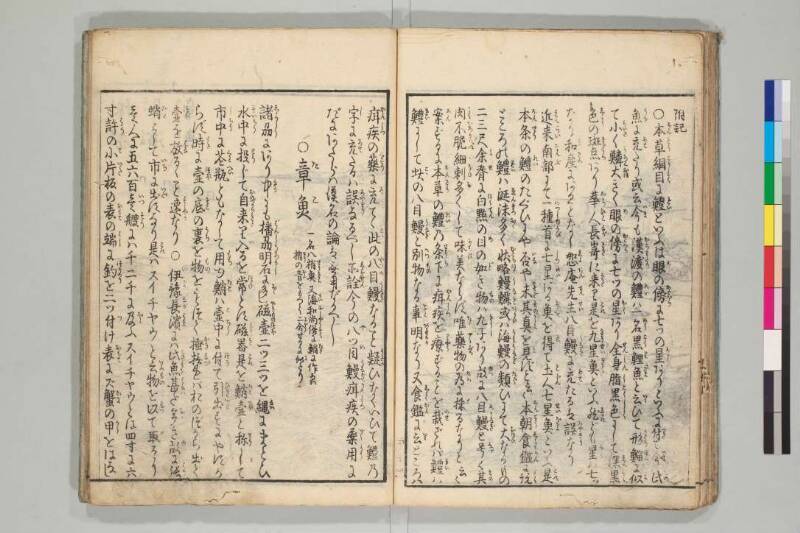
翻刻
【右丁】
附記
○本草綱目(ほんそうこうもく)に鱧(れい)といふは眼(め)の傍(かたはら)に七つの星(ほし)ありといふに付(つき)て今(いま)此(この)
魚(うを)に充(あて)たり或云 今(いま)も漢渡(からわたり)の鱧(れい)は一名( めう)黒鯉魚(こくりぎよ)と云(いゝ)ひて形(かたち)鯔(ほら)に似(に)
て小(ちいさ)く鱗(うろこ)大(おほ)きく眼(め)の傍(かたはら)に七つの星(ほし)あり全身(せんしん)脂黒色(しこくしよく)にして深黒(しんこく)
色(しよく)の斑点(まだら)あり華人(からひと)長崎(ながさき)に来(きた)り是(これ)を九星魚(きうせいぎよ)といふ然(しかれ)ども星(ほし)は七つ
なり和産(わさん)にあることなし恕庵先生(しよあんせんせい)八目鰻( うなき)に充(あて)たるは誤(あやまり)なり
近来(きんらい)南部(なんぶ)にて一種(いつしゆ)首(くび)に七星(しつせい)ある魚(うを)を得(ゑ)て土人(とじん)七星魚( せいぎよ)といふ是(これ)
本条(ほんせう)の鱧(れい)のたぐひにや否(いな)や未(いまだ)其真(そのしん)を見(み)ずと云々 本朝食鑑(ほんてうしよくかん)に説(とく)
ところの鱧(れい)は涎沫(ゑんまつ)多(おゝ)く状(かたち)略(ほゞ)鰻鱺(うなぎ)或(あるひ)は海鰻(うみうなぎ)の類(たぐ)ひにて大(おほひ)なるもの
二三尺余( よ)脊(せ)に白点(はくてん)の目(め)の如(ごと)き物(もの)は九子(きうし)あり故(ゆへ)に八目鰻( めうなぎ)と号(なづ)く其(その)
肉(にく)不脆(かろからず)細刺(こほね)多(おゝ)くして味(あぢ)美(び)ならず唯(たゞ)薬物(やくぶつ)の為(ため)に採(と)るなりと云々
案(あん)ずるに本草(ほんさう)の鱧(れい)の条下(てうか)に疳疾(かんしつ)療(りやう)ずることを栽(のせ)#1ざれば鱧(れい)は
鱧(れい)にして此(こゝ)の八目鰻( うなぎ)と別物(へつもの)なる事(こと)明(あきらか)なり又 食鑑(しよくかん)に云(いふ)ところは
【左丁】
疳疾(かんしつ)の薬(くすり)に充(あ)てゝ此(こゝ)の八目鰻(やつめうなぎ)なること疑(うたか)ひなくいひて鱧の
字(し)に充(あて)たるは誤(あやまり)なるべし所詮(しよせん)今の《振り仮名:八ツ目鰻|や めうなぎ》疳疾(かんしつ)の薬用(やくよう)に
だにあたらは漢名の論は無用なるへし
○章魚(たこ)《割書:一名は梢魚(せうきよ)又 海和尚(かいおしやう)俗(そく)に鮹(たこ)に作るは| 梢(せう)の音(おん)をもつて二合(にがう)せるに似(に)たり》
諸州(しよしう)にあり中(なか)にも播州(ばんしう)明石(あかし)に多(おゝ)し磁壺(やきものつほ)二ツ三ツを縄(なは)にまとひ
水中(すいちう)に投(とう)じて自(おのづから)来(きた)り入(い)るを常(つね)とす磁器(じき)是(これ)を鮹壺(たこつほ)と称(せう)して
市中(しちう)に花瓶(くわへい)ともなして用(もち)ゆ鮹(たこ)は壺中(こちう)に付(つき)て引出(ひきいた)すにやすか
らず時(とき)に壺(つぼ)の底(そこ)の裏(うら)を物(もの)をもつて掻撫(かきなづ)ればおのづから出て
壺(つぼ)を放(はな)るゝこと速(すみやか)なり○伊予(いよ)長浜(ながはま)には此魚(このうを)甚(はなは)だ多(おゝ)き故(ゆへ)に張(はり)
蛸(たこ)として市(いち)に出(いだ)すなり是(これ)はスイチヤウと云(いふ)物(もの)を以(もつ)て取(と)るに
壱人に五六百 壱艘(いつそう)には千二千に及(およ)ふスイチヤウとは四寸に六
寸許( はかり)の小片板(こいた)の表(おもて)の端(はし)に釣(つりはり)を二ツ付(つ)け表(おもて)に《振り仮名:ズ蟹| かに》の甲(かう)をはなし
現代語訳
【右丁】
附記
○『本草綱目』に「鱧」というのは眼の傍らに七つの星があるというので、今この魚に当てたが、ある人が言うには、今も中国から渡来する鱧は一名「黒鯉魚」と言って、形はボラに似て小さく、鱗が大きく、眼の傍らに七つの星がある。全身は脂黒色で深黒色の斑点がある。中国人が長崎に来てこれを「九星魚」というが、しかし星は七つである。国産にはこのようなものはない。恕庵先生が八目鰻に当てたのは誤りである。
近頃、南部で一種の首に七星がある魚を得て、土地の人が「七星魚」というのは、これが本条の鱧の類であろうか。まだその真偽を見ていないという。『本朝食鑑』に説くところの鱧は粘液が多く、形はほぼ鰻や海鰻の類で、大きなものは二、三尺余り、背に白点の眼のようなものが九個ある。故に「八目鰻」と名づける。その肉は軟らかくなく、小骨が多くて味は美味しくない。ただ薬物のために採るのである、という。
考えるに、『本草』の鱧の条下に疳疾を治療することを載せていないので、鱧は鱧であって、ここの八目鰻とは別物であることが明らかである。また『食鑑』に言うところは
【左丁】
疳疾の薬に充てて、ここの八目鰻であることは疑いなく、「鱧」の字に充てたのは誤りであろう。結局、今の八目鰻が疳疾の薬用にさえ当たれば、漢名の議論は無用であろう。
○蛸(一名は梢魚、また海和尚。俗に「鮹」に作るのは、「梢」の音を用いて二合したものに似ている)
諸国にあり、中でも播州明石に多い。焼き物の壺二つ三つを縄にまとって水中に投じて、自然に来て入るのを常とする。この磁器をこれを「蛸壺」と称して、市中で花瓶ともなして用いる。蛸は壺中に付いて引き出すのは容易ではないが、時に壺の底の裏を物で掻き撫でれば、自然に出て壺を放すことが速やかである。○伊予長浜にはこの魚がきわめて多いので、干し蛸として市に出すのである。これは「スイチャウ」という物を以て取るのに、一人で五、六百、一艘では千二千に及ぶ。スイチャウとは四寸から六寸ほどの小片板の表の端に釣り針を二つ付け、表に蟹の甲羅を放し
英語訳
[Right page]
Supplementary Notes
○In the "Honzō Kōmoku" (Compendium of Materia Medica), what is called "rei" (snakehead fish) is said to have seven stars beside the eyes, so this fish was assigned to that category. However, someone says that even now, the rei that comes from China is also called "kokurigyo" (black carp fish), and its shape resembles a mullet but is smaller, with large scales and seven stars beside the eyes. The whole body is fatty black with deep black spots. When Chinese people come to Nagasaki, they call this "kyūseigyō" (nine-star fish), but there are actually seven stars. There is no such thing among domestic products. Master Joan's assignment to the lamprey was an error.
Recently, in Nanbu, they obtained a type of fish with seven stars on its neck, which the locals call "shichiseigyō" (seven-star fish). Whether this is a type of rei from this entry or not, the truth has not yet been determined. The rei described in the "Honchō Shokukan" (Japanese Food Mirror) has much mucus, and its form is roughly like that of eels or sea eels, with large specimens measuring over two to three shaku. It has nine white spots like eyes on its back, hence it is called "yatsume-unagi" (eight-eyed eel). Its meat is not tender, has many small bones, and the taste is not good. It is only harvested for medicinal purposes.
Considering that the entry for rei in the "Honzō" does not mention treating pediatric diseases, it is clear that rei is rei and is a different creature from the lamprey here. Also, what the "Shokukan" describes
[Left page]
is undoubtedly the lamprey here, used as medicine for pediatric diseases, and applying the character "rei" to it would be an error. In the end, as long as today's lamprey serves for medicinal use against pediatric diseases, discussion of Chinese names would be unnecessary.
○Octopus (also called shōgyo, or kaiosho. The common writing as "tako" seems to derive from combining the sound of "shō")
Found in various provinces, especially abundant in Akashi in Banshū. Two or three ceramic pots are tied to ropes and thrown into the water, where they naturally come and enter. These ceramics are called "tako-tsubo" (octopus pots) and are also used as flower vases in the city. When octopuses attach to the inside of pots, they are not easy to pull out, but if you scratch the inside of the pot bottom with something, they naturally come out and release the pot quickly. ○In Nagahama, Iyo, this fish is extremely abundant, so dried octopus is brought to market. This is caught using something called "suichau," with one person catching five to six hundred, and one boat reaching one to two thousand. Suichau consists of a small board about four to six sun long with two fishing hooks attached to the front end, and a crab shell placed on the surface