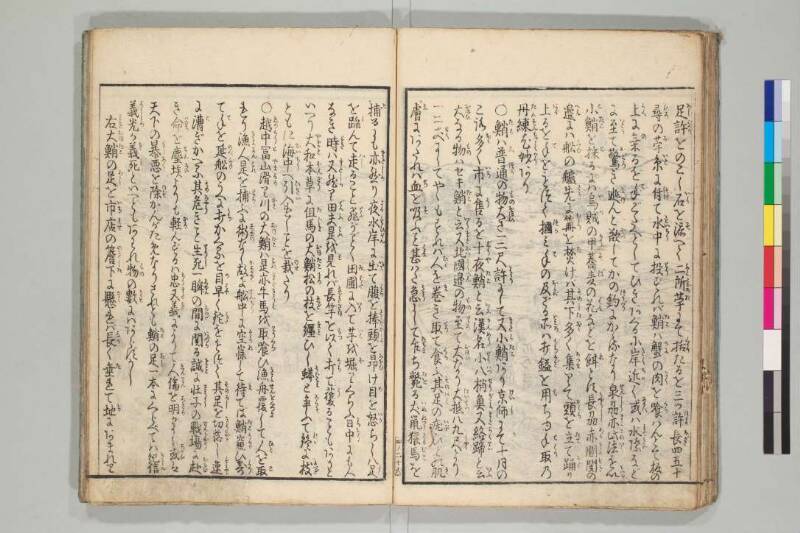
翻刻
【右丁】
足(あし)許(ばかり)をのこし石(いし)を添(そ)へて二所(ふたところ)苧(お)#1にて括(くゝり)たるを三つ許(はかり)長(ながさ)四五十
尋(ひろ)の苧糸(おいと)#1に付(つけ)て水中(すいちう)に投(とう)ずれば鮹(たこ)は蟹(かに)の肉(にく)を喰(くら)はんとて板の
上(うへ)に乗(の)るを手(て)ごたへとしてひきあぐるに岸(きし)近(ちか)く或(あるひ)は水際(みつきは)など
に至(いたり)て驚(おどろ)き逃(にげ)んと欲(ほつ)してかの釣(つりばり)にかゝるなり泉州(せんしう)亦(また)此法(このはう)を以(もつて)
小鮹(こたこ)を採(と)るには烏賊(いか)の甲(かう)蕎麦(そば)の花(はな)などを餌(ゑ)とす長州(ちやうしう)赤間関(あかまのせき)の
辺(へん)には船(ふね)の艫先(へさき)に篝(かゞり)を焚(た)けば其下(そのした)多(おゝ)く集(あつま)りて頭(かしら)を立(たて)て踊(おど)り
上(あが)るを手(て)をもつて掴(つか)み手(て)の及(およば)ざる所(ところ)は打鎰(うちかぎ)を用(も)ちゆ手取(てとり)の
丹練(たんれん)尤(もつとも)妙(めう)あり
○鮹(たこ)は普通(ふつう)の物(もの)大(おほひ)さ一二尺 許(はかり)にして又(また)小鮹(こたこ)あり京師(けいし)にて十月の
ころ多(おゝ)く市(いち)に售(う)るを十夜鮹(じうやたこ)と云(いふ)漢名(かんめう)小八梢魚(せうはつせうぎよ)又(また)絡蹄(らくてい)と云(いふ)
大(おほひ)なる物(もの)はセキ鮹(たこ)と云(いふ)又(また)北国辺(ほつこくへん)の物(もの)至(いたつ)て大(おほひ)なり大抵(たいてい)八九尺( しやく)より
一二丈( せう)にしてやゝもすれば人(ひと)を巻(ま)き取(とり)て食(くら)ふ其足(そのあし)の疣(いぼ)ひとの肌(き)
膚(ふ)にあたれば血(ち)を吸(す)ふこと甚(はな)はだ急(きう)にして乍(たちま)ち斃(たを)る犬(いぬ)鼠(ねつみ)猿(さる)馬(むま)を
【左丁】
捕(と)るにも亦(また)然(しか)り夜(よる)水岸(すひがん)に出(いで)て腹(はら)を捧(ささけ)頭(かしら)を昂(あをむ)け目(め)を怒(いか)らし八足( そく)
を蹈(ふ)んて走(はし)ること飛(とぶ)がごとく田圃(たばた)に入(いり)て芋(いも)を堀(ほ)りくらふ日中(につちう)にも人
なき時(とき)は又(また)然(しか)り田夫(でんふ)是(これ)を見(み)れば長竿(ながきさほ)を以(もつ)て打(うち)て獲(う)ることもありと
いへり大和本草(やまとほんざう)に但馬(たじま)の大鮹(おほたこ)松(まつ)の枝(ゑだ)を纏(まと)ひし蟒(うはばみ)と争(あらそ)ふて終(つい)に枝(ゑだ)
ともに海中(かいちう)へ引入(ひきい)れしことを載(のせ)#2たり
○越中富山(ゑつちうとやま)《振り仮名:滑り川|なめ かわ》の大鮹(おほたこ)は是亦(これまた)牛馬(きうば)を取喰(とりくら)ひ漁舟(きよせんを)覆(くつかへ)して人(ひと)を取(と)
れり漁人(きよにん)是(これ)を捕(とら)ふに術(じゆつ)なし故(かるがゆへ)に船中(せんちう)に空寐(そらね)して待(ま)てば鮹(たこ)窺(うかゞ)ひ寄(より)
て手(て)を延(のべ)船(ふね)のうへに打(うち)かくるを目早(めはや)く鉈(なた)をもつて其足(そのあし)を切落(きりおと)し速(すみやか)
に漕(こ)ぎかへる其(その)危(あやう)きこと生死(せうし)一瞬( しゆん)の間(あいだ)に関(あづか)る誠(まこと)に壮士(さうし)の戦場(せんじやう)に赴(おもむ)
き命(いのち)を塵埃(ちんあい)よりも軽(かろ)んずるは忠(ちう)又(また)義(ぎ)によりて人倫(しんりん)を明(あきら)かにし或(あるひ)は
天下の暴悪(はうあく)を除(のぞ)かんがためなりされども鮹(たこ)の足(あし)一本にくらべては紀信(きしん)
義光(よしみつ)か義死(ぎし)といへどもあわれ物(もの)の数(かす)にはあらずかし
右(みき)大鮹(おほたこ)の足(あし)を市店(いちみせ)の簷下(のきした)に懸(かく)れば長(なが)く垂(た)れて地(ち)にあまれり
現代語訳
【右丁】
足だけを残して石を添えて二か所を麻縄で括ったものを三つほど、長さ四五十尋(約73〜90メートル)の麻糸に付けて水中に投じると、タコは蟹の肉を食べようとして板の上に乗る。その手応えを感じて引き上げると、岸の近く、あるいは水際などに至ったところで、タコが驚いて逃げようとして、あの釣り針にかかるのである。泉州でもまたこの方法を用いており、小ダコを採るには烏賊の甲や蕎麦の花などを餌とする。長州赤間関(現在の山口県下関市)の辺りでは、船の艫(へさき)に篝火を焚くと、その下に多く集まって頭を立てて踊り上がるのを、手で掴み、手の届かないところは打鉤(かぎ)を用いる。手取りの熟練が最も効果的である。
○タコは普通のものは大きさが一二尺(約30〜60センチ)ほどで、また小ダコもある。京(都)では十月ごろに多く市に売られるものを「十夜ダコ」という。漢名は「小八梢魚」、また「絡蹄」ともいう。大きなものは「セキダコ」という。また北国辺りのものは極めて大きく、だいたい八九尺(約2.4〜2.7メートル)から一二丈(約3〜6メートル)にもなり、ともすると人を巻き取って食らう。その足の疣(いぼ)が人の肌に当たると、血を吸うことが甚だ急激で、たちまち斃(たお)れてしまう。犬、鼠、猿、馬を
【左丁】
捕るのにも同様である。夜、水辺に出て腹を持ち上げ、頭を仰向け、目を怒らせ、八本の足を踏んで走ること飛ぶがごとく、田畑に入って芋を掘り食らう。日中でも人がいない時は同様である。農夫はこれを見ると、長い竿をもって打って獲ることもあるという。『大和本草』には、但馬(現在の兵庫県北部)の大ダコが松の枝に纏いついた大蛇と争って、ついに枝ごと海中へ引き入れたことが記されている。
○越中富山(滑川)の大ダコもまた牛馬を取り食い、漁船を転覆させて人を取った。漁師たちはこれを捕まえる術がない。それゆえ、船中で寝たふりをして待つと、タコが窺い寄ってきて手を伸ばし、船の上に打ちかけるのを、素早く鉈をもってその足を切り落とし、速やかに漕ぎ帰る。その危険なこと、生死は一瞬の間に関わる。誠に壮士が戦場に赴き命を塵埃よりも軽んずるのは、忠義によって人倫を明らかにし、あるいは天下の暴悪を除くためである。しかしながら、タコの足一本に比べれば、紀信や義光の義死といえども、ああ、物の数にはならないことよ。
上記、大ダコの足を市の店の軒下に懸けると、長く垂れて地に余るほどである。
英語訳
[Right page]
The crabs (used as bait) are left with only their legs, and with stones attached, they are bound in two places with hemp cord. About three of these are attached to a hemp line of forty to fifty fathoms (approximately 73–90 meters) in length and cast into the water. The octopus, wishing to eat the crab meat, climbs onto the board. Feeling the resistance, one pulls the line up, and when it nears the shore or the water's edge, the octopus, startled and attempting to flee, becomes caught on the fishhook. In Senshu (Osaka area), this same method is used, and to catch small octopuses, cuttlefish shells and buckwheat flowers are used as bait. Around Akamagaseki (modern-day Shimonoseki, Yamaguchi Prefecture) in Chōshū, when a bonfire is lit at the bow of a boat, many octopuses gather beneath it and rise up dancing with heads erect; they are grabbed by hand, and a hooked tool is used for those out of reach. Skill in hand-catching is by far the most effective.
○The common octopus measures about one to two shaku (approximately 30–60 cm) in size, and there are also small octopuses. In Kyoto, those sold abundantly at markets around October are called "Jūya-dako" (Ten-Night Octopus). The Chinese name is "Shōhassōgyo" (小八梢魚), also called "Rakutei" (絡蹄). Large ones are called "Seki-dako." Octopuses from the northern regions are extremely large, generally ranging from eight or nine shaku (approximately 2.4–2.7 meters) to one or two jō (approximately 3–6 meters), and they sometimes wrap around and devour people. When the warts on their tentacles touch human skin, they suck blood so rapidly that death comes instantly. They also catch and eat dogs, rats, monkeys, and horses.
[Left page]
At night, they come out to the water's edge, lifting their bellies, raising their heads backward, glaring with their eyes, and running on their eight legs as swiftly as if flying. They enter fields and dig up and eat potatoes. Even during the day, when there are no people about, they do the same. It is said that farmers who spot them can sometimes catch them by striking with a long pole. In the "Yamato Honzō" (Great Harmony Materia Medica), it is recorded that a giant octopus from Tajima (northern Hyogo Prefecture) wrestled with a large snake coiled around a pine branch and ultimately dragged it, branch and all, into the sea.
○The giant octopus of Toyama in Etchū Province (Namerikawa) likewise captures and eats cattle and horses, capsizes fishing boats, and seizes people. Fishermen have no technique for catching it. Therefore, they lie in the boat feigning sleep and wait; when the octopus cautiously approaches, extending its arms and striking them onto the boat, they swiftly cut off its legs with a hatchet and row home rapidly. The danger is such that life and death hang in an instant. Truly, when a brave warrior goes into battle and holds his life lighter than dust, it is for loyalty and righteousness, to uphold human morality, or to rid the world of evil. Yet compared to a single leg of an octopus, even the righteous deaths of Ki Shin and Yoshimitsu are, alas, scarcely worth counting.
As noted above, when a giant octopus's leg is hung from the eaves of a market stall, it hangs down long enough to trail along the ground.