翻刻
【右丁】
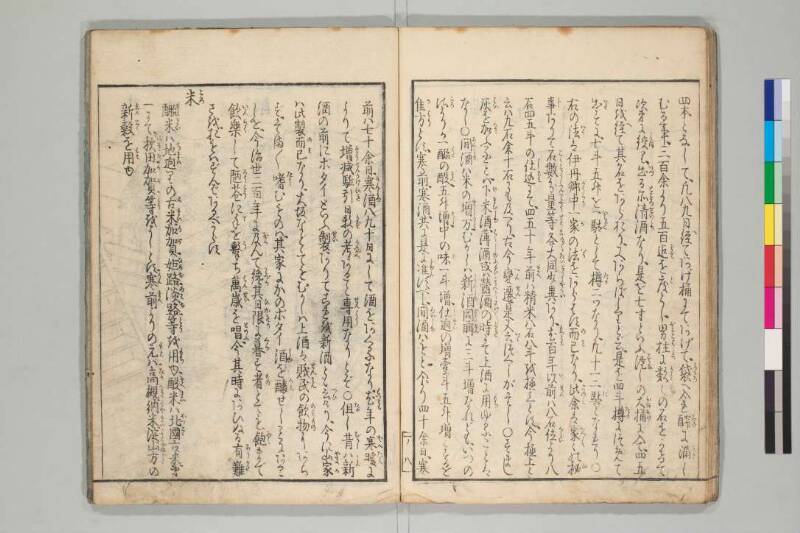
四本となして。凡八九日/経(へ)てあげ桶にてあげて。袋へ入れ醡(ふね)に満(みた)し
むる事。三百余より五百/迄(まで)を度(と)とし。男柱(おとこはしら)に数(かず)〳〵( 〳〵 )の石をかけて
次第に絞(しぼ)り。出(いづ)る所(ところ)清酒(せいしゆ)なり。是を七寸といふ澄(すま)しの大桶(おほおけ)に入て。四五
日を経(へ)て其名をあらおり。又あらばしりと云。是を四斗/樽(たる)につめて
出(いだ)すに。七斗五升を一駄(いちだ)として樽(たる)二ツになり。凡十一二/駄(だ)となれり○
右の法(はう)は伊丹/郷中(がうちう)一/家(か)の法(はう)をあらはす而已(のみ)なり。此(この)余(よ)は家々(いえ〳〵)の秘(ひ)
事(じ)ありて石数(こくすう)分量(ふんりやう)等(とう)各(おの〳〵)大同少異(たいとうしやうい)あり。尤(もつとも)百年/以前(いぜん)は八石/位(くらい)より八
石四五斗の仕込(しこみ)にて。四五十年/前(まえ)は精米八石八斗を極上とす。今極上と
云は九石余十石にも及へり。右今/変遷(へんせん)是又/云(いゝ)つくしがたし○すまし
灰(はい)を加(くわ)ふることは。下米酒(けまいしゆ)。薄酒(はくしゆ)或(あるひ)は醟酒(そんじさけ)の時(とき)にて上酒に用(もち)ゆることは
なし○間酒(あいしゆ)は米の増方(ましかた)むかしは新酒(しんしゆ)同前(とうせん)に三斗増なれども。いつの
比(ころ)よりか一/■(もと)の酘(そえ)。五升/増(まし)。中の味(み)一斗増。仕逈(しまい)の増壱斗五升増とするを
佳方(かはう)とす。寒前。寒酒。共に是に准(じゆん)ずべし。間酒(あいしゆ)はもと入 ̄レ より四十余日。寒
【左丁】
前は七十余日。寒酒(かんしゆ)八九十日にして酒をあくるなり。尤(もつとも)年の寒暖(かんたん)に
よりて増減(そうけん)駆引(かけひき)日/数(かず)の考(かんがへ)あること専用(せんよう)なりとぞ○但(たゞ)し昔(むかし)は新(しん)
酒の前にボタイといふ製(せい)ありてこれを新酒とも云(いひ)けり。今に山家(やまか)
は此製/而已(のみ)なり。大坂などゝてもむかしは上酒は賎民(せんみん)の飲物(のみもの)にあら
ず。たま〳〵嗜(たし)むものは。其家にかのボタイ酒(しゆ)を醸(かも)せしことにあり
しを。今治世二百年に及(およ)んて纔(わづか)其/日限(ひかきり)に暮(くら)す者(もの)とても。飽(あく)まで
飲楽(いんらく)して陋巷(ろうこう)に手(て)を撃(う)ち万歳(はんせい)を唱(とのふ)。今其時にあひぬる有難(ありがた)
さをおもはずんばあるべからす
米(こめ)
《振り仮名:■米|もとまい》は地逈(ちまは)りの古米(こまい)。加賀(かが)。姫路(ひめぢ)。淡路(あわぢ)。等(とう)を用(もち)ゆ。酘米(そへまい)は北国(ほつこく)古米。第
一にて秋田(あきた)。加賀(かが)。等(とう)をよしとす。寒前(かんまへ)よりの元(もと)は。高槻(たかつき)。納米(なやまい)。淀(よと)。山方(やまかた)の
新穀(しんこく)を用(もち)ゆ
#1
現代語訳
【右丁】
四本(よんほん)にまとめて、おおよそ八、九日が経ったところで、揚げ桶で汲み上げ、袋に入れて醡(ふね・搾り機)に満たす。その量は三百余りから五百(樽)までを目安とし、男柱(おとこばしら)に次々と石を掛けて、徐々に搾っていく。そこから出てくるものが清酒である。これを「七寸」と呼ばれる澄まし用の大桶に入れて、四、五日が経ったものを「あらおり」、また「あらばしり」とも呼ぶ。これを四斗樽に詰めて出荷するが、七斗五升を一駄(いちだ)として樽二つ分となり、おおよそ十一、二駄となる。
以上の方法は、伊丹郷中の一家の製法を示したものに過ぎない。その他は家々の秘事があり、石数・分量などはそれぞれ大同小異がある。もっとも、百年以前は八石ほどから八石四、五斗の仕込みで、四、五十年前は精米八石八斗を極上としていた。今では極上というものは九石余り、十石にも及ぶことがある。以上の変遷も、また語り尽くしがたい。
澄まし灰を加えることは、下米酒・薄酒、あるいは損じた酒の場合に行うものであって、上酒に用いることはない。
間酒(あいしゅ)は米の増し方について、昔は新酒と同様に三斗増しであったが、いつの頃からか、一本目の酘(そえ)で五升増し、中の酘(み)で一斗増し、仕舞いの増しで一斗五升増しとするのを良い方法とするようになった。寒前・寒酒ともにこれに準じるべきである。間酒はもと入れから四十余日、
【左丁】
寒前は七十余日、寒酒は八、九十日ほどで酒が上がる(完成する)。もっとも、その年の寒暖によって増減や駆け引き、日数の判断が重要であるとされている。
ただし、昔は新酒の前に「ボタイ」という製法があり、これを新酒とも呼んでいた。今でも山家(やまか)ではこの製法のみを行っている。大坂などでも昔は上酒は賎民の飲み物ではなかった。たまに嗜む者は、その家でかのボタイ酒を醸造していたものであった。ところが今や、治世二百年に及んで、わずかその日暮らしをする者でさえ、存分に飲み楽しみ、陋巷(ろうこう・貧しい街並み)で手を打ち「万歳(はんぜい)」を唱える。今この時代に生まれ合わせたことの有難さを、思わずにはいられないことである。
【米について】
もと米(元米)は地廻り(地元産)の古米を使い、加賀・姫路・淡路などのものを用いる。酘米(そえまい)は北国の古米を第一とし、秋田・加賀などを良しとする。寒前より以降の元(もと)には、高槻・納屋(なや)米・淀・山方の新穀を用いる。
英語訳
【Right Page】
The mash is consolidated into four batches, and after approximately eight to nine days, it is lifted out using a lifting bucket, placed into bags, and packed into the sake press (fune). The target volume ranges from over three hundred to five hundred (units). Stones are stacked one after another on the pressing post (otoko-bashira) to gradually press the mash. What emerges from this process is clear sake (seishu). This is placed into a large settling vat called the "shichi-sun" (seven-sun) vat, and after four or five days, the product is called "araori" or alternatively "arabashiri." This is packed into four-to (four-bushel) barrels for shipment. Seven to five shō constitutes one load (ichida), which equals two barrels, and altogether approximately eleven to twelve loads are produced.
The above method describes only the practice of a single household in Itami-gō. Other households have their own closely guarded secrets, and the quantities of koku and proportions differ slightly from house to house, though the broad approach is the same. It should be noted that over one hundred years ago, the brewing volume was around eight koku to eight koku and four or five to, and forty to fifty years ago, eight koku and eight to of polished rice was considered the finest grade. Today, what is called the finest grade may reach over nine koku or even ten koku. These changes, too, are difficult to fully articulate.
The addition of clarifying ash (sumashi-bai) is done only for lower-grade sake, thin sake, or spoiled sake, and is never used for premium sake (jōshu).
Regarding the proportioning of rice additions for ai-shu (mid-season sake): in former times, the increase was three to across the board, as with new sake (shinshu). But at some point, it became standard practice to add five shō at the first yeast starter addition, one to at the middle addition, and one to and five shō at the final addition—this is now considered the best method. The same should apply to kan-mae (pre-cold-season) and kan-shu (cold-season sake). Ai-shu takes over forty days from the starter addition,
【Left Page】
kan-mae takes over seventy days, and kan-shu takes eighty to ninety days before the sake is ready. It is especially important to adjust quantities, strategy, and the number of days based on the warmth or coldness of the given year.
However, it should be noted that in former times, before new sake (shinshu), there was a brewing method called "Botai," which was also referred to as new sake. Even today, rural sake brewers (yamaka) use only this method. In Osaka and elsewhere in former times, premium sake (jōshu) was not a drink for common people. Those who occasionally indulged had Botai sake brewed at their own households. But now, after two hundred years of peaceful rule, even those who live from day to day can drink to their hearts' content, clapping hands and calling out "banzai" (long live!) in the back alleys of town. One cannot help but feel profound gratitude to have been born in such an age.
【On Rice】
The base rice (moto-mai) uses locally sourced aged rice (furugome), with rice from Kaga, Himeji, and Awaji being preferred. For the addition rice (soe-mai), aged rice from the northern provinces is considered the finest, with rice from Akita and Kaga being especially prized. For the starter (moto) prepared from the pre-cold season onward, newly harvested grain from Takatsuki, Naya (warehouse) rice, Yodo, and mountain districts is used.