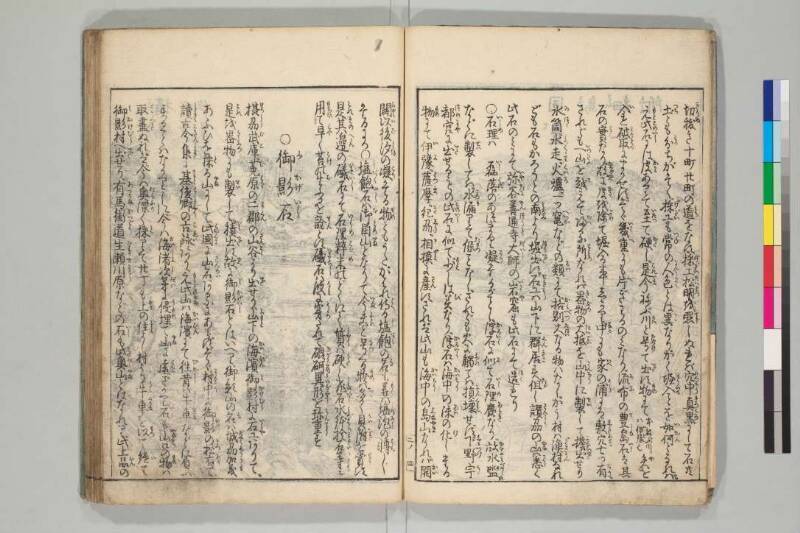
翻刻
【右丁】
切抜(きりぬ)き十町廿町の道(みち)をなす。採工(げざい)松明(たいまつ)を照(てら)しぬれば穴中(けつちう)真黒(まつくろ)にして石共
土とも分(わか)ちがたく。採工(げさい)も常(つね)の人色(にんしよく)とは異(こと)なり。かく堀入(ほりいる)ことを如何(いかん)となれば。
元(もと)此石(このいし)には皮(かわ)ありて至(いたつ)て硬(かた)し。是(これ)今(いま)ねぶ川(かは)と号(なづけ)て出(いだ)す物(もの)にて《割書:本ねぶ川|は伊予(いよ)也》矢を
入(いれ)破取(わりとる)にまかせず。たゞ幾重(いくへ)にも片(へ)ぎわるのみなり。流布(るふ)の豊島石(てしまいし)は其
石の実(み)なり。故(かるがゆへ)に皮(かわ)を除(よけ)て堀入る事しかり。中(なか)にも家(いへ)の浦(うら)には敷穴(しきあな)七ツ有(あり)。
されども一山(いつさん)を越(こ)えて帰(かへ)る所(ところ)なれば器物(きぶつ)の大抵(たいてい)を山中(さんちう)に製(せい)して担(になひ)出(いだ)せり
水筒(ゐつゝ)#1。水走(みつはしり)。火爐(くはろ)。一ツ竃(へつい)などの類(るい)にて。格別(かくべつ)大(おほい)なる物はなし。かう村は漁村(ぎよそん)なれ
ども石もかろうとの南(みなみ)より堀出(ほりいだ)す。石工(せきこう)は山下に群居(くんきよ)す。但(たゞ)し讃州(さんしう)の山(やま)は悉(こと〴〵)く
此石のみにて。弥谷(いやたに)善通寺(せんつうじ)大師(だいし)の岩窟(いわや)も此石にて造(つく)れり
○石理(いしめ)は 磊落(いしくず)のあつまり凝(こり)たるがごとし。浮石(かるいし)に似(に)て石理(いしめ)麤(あらき)なり。故(ゆへに)水盥(みづたらひ)
などに製(せい)しては。水(みつ)漏(も)りて保(たもつ)ことなし。されども火に触(ふれ)ては損壊(そんくわい)せず。下野(しもつけ)宇(う)
都宮(つのみや)に出(いた)せるもの此石(このいし)に似て。少(すこ)しは美(び)なり。浮石(かるいし)は海中(かいちう)の沫(あは)の化(け)したる
物(もの)にて伊予(いよ)。薩摩(さつま)。紀州(きしう)。相模(さがみ)に産(さん)すされば此山(このやま)も海中(かいちう)の島山(しまやま)なれば開(かい)
【左丁】
闢(ひやく)以後(いご)汐(しほ)の凝(こり)たる物(もの)ともうたがはれ侍(はへ)る塩飽(しあく)の名(な)も若(もし)は塩泡の転(てん)じ
たるにか○塩飽石(しあくいし)は御留山(おとめやま)となりて今(いま)夫(それ)と号(なづ)くる物(もの)は多(おゝ)く貝附(かいつき)を賞(さう)す
是(これ)其辺(そのへん)の礒石(いそいし)にて石理(いしめ)粋米(こゞめ)のごとくにて質(しやう)は硬(かた)く飛石(とひいし)水鉢(みづはち)捨石(すていし)等(とう)に
用(もちひ)て早(はや)く苔(こけ)の生(お)ふるを詮(せん)とす礒石(いそいし)は波(なみ)に穿(うが)たれて礧(ゆがみ)砢(くほみ)異形(いぎやう)を珎重(ちんてう)す
○御影石(みかげいし)
摂州(せつしう)武庫(むこ)。菟原(むはら)の二郡(にくん)の山谷(さんこく)より出(いだ)せり。山下(ふもと)の海浜(かいひん)御影村(みかけむら)に石工(いしや)ありて。
是(これ)を器物(きふつ)にも製(せい)して。積出(つみいだ)す故(ゆへ)に御影石(みかげいし)とはいへり。御影山の名(な)は城州(じやうしう)加茂(かも)
あふひ採(と)る山(やま)にして。此国(このくに)に山名(さんめい)あるにあらず。たゞ村中(そんちう)に御影(みかけ)の松(まつ)有(あり)て
続古今集(しよくこきんしう)#3に基俊卿(もととしきやう)の古詠(こゑい)あり。元(もと)此山(このやま)は海浜(かいひん)にて往昔(むかし)は牛車(うしくるま)などに負ふ
することはなかりしに。今は海渚(かいしよ)次第(しだい)に侵埋(うもれ)て山(やま)に遠(とを)ざかり。石も山口(やまくち)の物(もの)は
取尽(とりつき)ぬれば。今は奥深(おくふか)く採(と)りて廿丁も上(かみ)の住(すみ)よし村より牛車(うしくるま)を以(もつ)て継(つい)て
御影村(みかけむら)へ出(いだ)せり。有馬(ありま)街道(かいどう)生瀬川原(なませかわら)などの石(いし)も此(この)奥山(おくやま)とはなれり。此上/品(ひん)の
現代語訳
【右丁】
(坑道を)切り抜いて、十町・二十町(約1〜2キロメートル)もの道を作る。採掘工夫が松明を照らすと、坑中は真っ暗で、石と土の区別もつきにくい。採掘工夫も普段の人の顔色とは異なっている。このように深く掘り入ることについて言えば、元々この石には皮(外皮)があって非常に硬い。これが今「ねぶ川」と呼ばれて出回っているもので《割注:本来の「ねぶ川」は伊予のものである》、矢(くさび)を入れて割り取ることができない。ただ、何重にも剥ぎ割るしかない。一般に流通している豊島石はその石の中身(内部)である。それゆえ、皮(外皮)を除いて掘り入るのはそのためである。中でも家の浦には敷穴(採掘坑)が七つある。しかし、山を一つ越えて帰る場所であるので、器物の大部分を山中で製作して担ぎ出している。水筒・水走(水受け)・火炉・一つ竈などの類で、特別に大きな物はない。「かう村」は漁村であるが、石工たちも南側から石を掘り出す。石工は山の麓に集まって住んでいる。ただし、讃州(讃岐国)の山はことごとくこの石(豊島石)だけであり、弥谷・善通寺・大師の岩窟もこの石で作られている。
○石の目(性質)は、石屑が集まって固まったようである。軽石に似て石目が粗い。それゆえ、水盥(水桶)などに製作しても、水が漏れて保つことができない。しかし火に触れても損傷・崩壊しない。下野(しもつけ)の宇都宮で産出するものもこの石に似て、少しは上品である。軽石は海中の泡が変化したものであり、伊予・薩摩・紀州・相模で産出する。それゆえ、この山(豊島)も海中の島山であるから、
【左丁】
開闢(天地が開けた)以後、潮が凝り固まったものではないかとも疑われる。「塩飽」という名も、もしかすると「塩泡(しおあわ)」が転じたものではないか。○塩飽石は御留山(藩が採取を禁じた山)となっており、今それと呼ばれているものは多く「貝附(かいつき)」を賞用する。これはその辺りの磯石で、石目が精白米(白米の粒)のようで、質は硬く、飛石・水鉢・捨石などに用い、早く苔が生えることを良いこととする。磯石は波に穿たれて、ゆがみ・くぼみのある異形のものを珍重する。
○御影石
摂州(摂津国)武庫・菟原の二郡の山谷から産出する。山の麓の海浜、御影村に石工があり、これを器物にも製作して積み出すので、「御影石」という。御影山という名称は、山城国(城州)加茂でアオイを採る山の名であり、この国(摂津)に「御影山」という山名があるわけではない。ただ、村中に「御影の松」があって、「続古今集」に基俊卿の古詠がある。元々この山は海浜に位置しており、昔は牛車などで運ぶことはなかったが、今は海岸が次第に埋まって(陸地化して)山から遠ざかり、石も山口(山の入り口付近)のものは取り尽くされてしまったので、今は奥深く採掘して、二十町(約2キロメートル)も上の「住吉村」から牛車をもって順次(リレー式に)御影村へ運び出している。有馬街道の生瀬川原などの石も、この奥山のものとなっている。この上品の(石については次頁へ続く)
英語訳
[Right Page]
Tunnels are cut through for distances of ten to twenty chō (approximately one to two kilometers). When the miners illuminate the tunnels with torches, the interior becomes pitch black, making it difficult to distinguish stone from soil. Even the miners' complexions are different from those of ordinary people. As for why they must dig so deeply: originally this stone has an outer crust (skin) that is extremely hard. This is what is now called "nebu-kawa" and sold on the market《note: the original "nebu-kawa" is from Iyo Province》; it cannot be split by driving in wedges. One can only peel it apart layer by layer. The Teshima stone in common circulation is the inner core of this stone. Therefore, they dig in after removing the outer crust. Among the sites, "Ie no Ura" has seven mining pits. However, since one must cross an entire mountain to return, most of the objects are manufactured inside the mountain and then carried out. These include water vessels, water basins, braziers, single-burner stoves and the like; there are no particularly large items. "Kō Village" is a fishing village, but stone workers also dig from the southern side. The stoneworkers live in clusters at the foot of the mountain. It should be noted that all the mountains of Sanshū (Sanuki Province) consist entirely of this stone; the rocky caverns of Iyatani, Zentsuji, and the Daishi (Kōbō Daishi) are also made of this stone.
○ The grain (texture) of the stone is as if fragments of rock have gathered and congealed. It resembles pumice and has a coarse grain. Therefore, when fashioned into water basins, water seeps through and they cannot hold water. However, the stone does not deteriorate when exposed to fire. The stone produced in Utsunomiya in Shimotsuke Province resembles this stone and is somewhat finer in quality. Pumice is a transformation of sea foam, and is produced in Iyo, Satsuma, Kishū, and Sagami. Since this mountain (Teshima) is also an island in the sea,
[Left Page]
it is suspected that since the creation of the world, it may be something formed from the congealing of tidal waters. The name "Shiwaku" may perhaps be a corruption of "shio-awa" (salt foam/sea foam). ○ Shiwaku stone has become a "御留山" (a mountain from which quarrying is prohibited by domain authorities), and what is now called by that name is largely prized as "kaitsu-ki" (shell-encrusted stone). This is beach rock from the surrounding area; its grain resembles fine white rice, its quality is hard, and it is used for stepping stones, water basins, and irregular decorative stones in gardens. The moss that grows quickly on it is considered a virtue. Beach rocks pierced and hollowed out by waves into unusual and irregular shapes are particularly treasured.
○ Mikage Stone
It is produced from the mountain valleys of two districts in Sesshū (Settsu Province): Muko and Muhara. At the coastal village of Mikage at the foot of the mountain, there are stoneworkers who fashion it into various objects and ship it out; hence it is called "Mikage stone." The name "Mikage Mountain" belongs to the mountain in Kamo, Jōshū (Yamashiro Province) where hollyhock (aoi) is gathered; it is not actually a mountain name in this province (Settsu). However, within the village there is "Mikage no Matsu" (the Mikage Pine), and there is an ancient poem by Lord Mototoshi in the "Shoku Kokin-shū." Originally this mountain was at the coast, and in former times it was not possible to transport the stone by ox-cart. Now, however, the shoreline has gradually silted up and the mountain has grown more distant from the sea. Moreover, stone near the mountain entrance has been completely exhausted, so now the stone is quarried deep within, transported by ox-cart from Sumiyoshi Village, some twenty chō (approximately two kilometers) higher up, and relayed down to Mikage Village. The stones of Namase-kawara along the Arima Highway also come from this deep interior mountain area. As for the finest quality of this (stone, continued on the next page…)