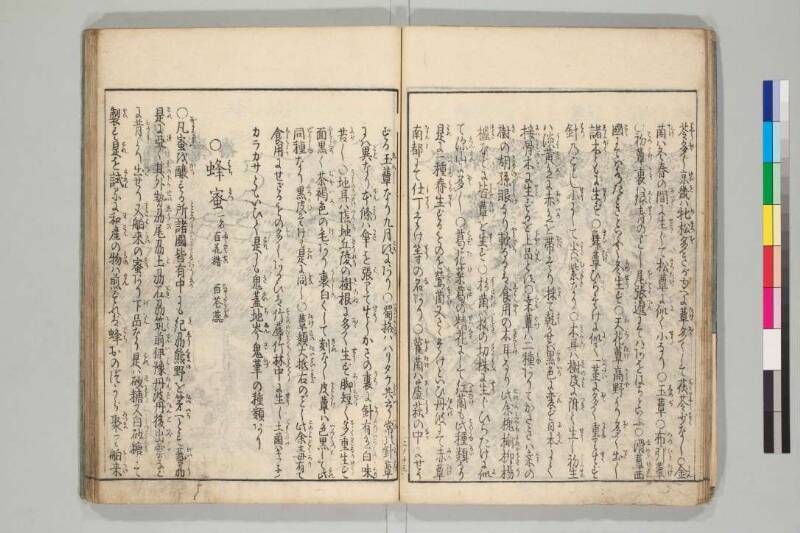
翻刻
【右丁】
苓(りやう)多(おゝ)し京畿(けいき)は牝松(めまつ)多(おゝ)きがゆへに蕈(たけ)多(おゝ)くして茯苓(ぶくりやう)少(すく)なし○金(きん)
菌(たけ)は冬春の間(あいだ)に生(せう)じて松蕈(まつたけ)に似(に)て小(せう)なり○玉蕈(しめぢ)○布引蕈(ぬのひきたけ)
○初蕈(はつたけ)裏(うら)は緑青(ろくせう)のごとし尾張辺(おはりへん)にてはあをはちといふ○滑蕈(なめたけ)西(さい)
国(こく)にては水たゝきといふて冬(ふゆ)生(せう)ず○天花蕈(ひらたけ)高野(かうや)より多(おゝ)く出(いだ)し
諸木(しよぼく)ともに生(せう)ず○舞蕈(まいたけ)ひらたけに似(に)て一茎(いつけい)に多(おゝ)く重(かさな)り生(せう)ず
針(はり)のごとし小(せう)にして尖(さき)は紫(むらさき)なり○木耳(きくらげ)は樹皮(きのかわ)に附(つき)て生(せう)し初生(しよせい)
は淡黄色(うすきいろ)に赤色(あかいろ)を帯(おび)たり採(とり)て乾(かわ)かせば黒色(くろいろ)に変(へん)ず日本(にほん)にて
接骨木(にはとこのき)に生(せう)ずるを上品(じやうひん)とす○桑蕈(くわたけ)は二/種(しゆ)ありてかたきは桑(くわ)の
樹(き)の胡孫眼(さるのこしかけ)なり軟(やわやか)なるは食用(しよくやう)の木耳(きくらげ)なり此余(このよ)槐(えんじゆ)楡(にれ)柳(やなぎ)楊(う)
櫨(つき)なとに皆(みな)蕈(たけ)を生(せう)ず○杉蕈(すきたけ)は杉(すき)の切株(きりかぶ)に生(せう)じひらたけに似(に)
て深山(しんさん)に多(おゝ)し○葛花菜(くずたけ)葛(くず)の精花(せいくわ)にして紅蕈(へにたけ)も此(この)種類(しゆるい)なり
是(これ)に一種(いつしゆ)春(はる)生(せう)ずるものを鶯菌(うくひすたけ)又さゝたけといひ丹波(たんば)にて赤蕈(あかたけ)
南都(なんと)にて仕丁(してう)たけ等(とう)の名(な)あり○ 雚菌(おきたけ)は蘆(あし)萩(はき)の中(なか)にせう
【左丁】
ずる玉蕈(しめし)なり九月/頃(ころ)にあり○蜀挌(いのこくたけ)はハリタケ共(とも)云(い)う常(つね)の針蕈(はりたけ)
には異(こと)なり本條(ほんてう)は傘(かさ)を張(は)りて生(せう)しかさの裏(うら)に針(はり)有(あり)色(いろ)白(しろく)味(あぢ)
苦(にが)し○地耳(うしのかはたけ)は陰地(いんち)丘陵(きうれう)の樹根(きのね)に多(おゝ)く生(せう)ず脚(あし)短(みぢか)く多(おゝく)重(かさなり)生(せう)ず
面(おもて)黒(くろ)く茶褐色(ちゃいろ)の毛(け)あり裏(うら)白(しろ)くして刻(きれ)なし皮蕈(かわたけ)は色(いろ)黒(くろく)して此(これ)
同種(どうしゆ)なり黒皮(くろかは)たけも是(これ)に同(おな)し○蕈類(たけるい)大抵(たいてい)右(みぎ)のごとし此(この)余(よ)毒(どく)有(あり)て
食用(しよくよう)にせざるもの多(おゝ)しあるひは竹蓐(すゝめのたまこ)竹林中(ちくりんちう)に生(せう)し土菌(どもくたけ)はキツネノ
カラカサともいひて是(これ)にも鬼蓋(きかい)地岑(ちしん)鬼茟(きひつ)の種類あり
○蜂蜜(はちみつ)《割書:一名|》百花精(ひやくくわせい) 百花蕊(ひやくくわずい)
○凡(およそ)蜜(みつ)を醸(かも)する所(ところ)諸国(しよこく)皆(みな)有(あり)中(なか)にも紀州(きしう)熊野(くまの)を第一(たいいち)とす芸州(けいしう)
是(これ)に亜(つ)ぐ其外(そのほか)勢州(せいしう)尾(び)州/土(と)州/石(せき)州/筑前(ちくぜん)伊予(いよ)丹波(たんば)丹後(たんご)出雲(いづも)など
に昔(むかし)より出(いだ)せり又(また)舶来(はくらい)の蜜(みつ)あり下品(げひん)なり是(これ)は砂糖(さとう)又/白砂糖(しろさとう)にて
製(せい)す是(これ)を試(こゝろみ)るに和産(わさん)の物(もの)は煎(せん)ずれば蜂(はち)おのづから聚(あつま)り舶来(はくらい)
現代語訳
茯苓は多い。京畿は雌松が多いので茸は多いが茯苓は少ない。○金茸は冬春の間に生じて松茸に似ているが小さい。○しめじ○布引茸○初茸は裏が緑青のようで、尾張辺りでは「あおはち」という。○なめたけは西国では「みずたたき」といって冬に生ずる。○ひらたけは高野からたくさん出荷され、諸木ともに生ずる。○まいたけはひらたけに似て一茎に多く重なって生ずる。針のように小さくて先は紫である。○木耳は樹皮に付いて生じ、初生は淡黄色に赤色を帯びている。採って乾かせば黒色に変わる。日本では接骨木に生ずるものを上品とする。○桑茸は二種あって、硬いのは桑の木のサルノコシカケであり、軟らかいのは食用の木耳である。この他、槐・楡・柳・楊・櫨などにも皆茸を生ずる。○杉茸は杉の切株に生じ、ひらたけに似て深山に多い。○葛茸は葛の精花であって、紅茸もこの種類である。これに一種、春に生ずるものを鶯茸また「ささたけ」といい、丹波では赤茸、南都では仕丁茸等の名がある。○沖茸は蘆や萩の中に生ずるしめじで、九月頃にある。○猪の子茸はハリタケとも云う。常の針茸とは異なり、本物は傘を張って生じ、傘の裏に針があり、色は白く味は苦い。○牛の皮茸は陰地丘陵の樹根に多く生ずる。脚は短く多く重なって生ずる。表は黒く茶褐色の毛があり、裏は白くて刻みなし。皮茸は色が黒くてこれと同種である。黒皮茸もこれと同じ。○茸類は大体右の通りである。この他毒があって食用にしないものが多い。あるいは雀の卵子は竹林中に生じ、土木茸はキツネノカラカサともいって、これにも鬼蓋・地岑・鬼茸の種類がある。
○蜂蜜《一名》百花精 百花蕊
○およそ蜜を醸造する所は諸国皆にあるが、中でも紀州熊野を第一とする。芸州がこれに次ぐ。その外、勢州・尾州・土州・石州・筑前・伊予・丹波・丹後・出雲などに昔より産出している。また舶来の蜜があるが下品である。これは砂糖又は白砂糖で製造する。これを試すに、和産の物は煎ずれば蜂が自然と集まり、舶来の物は
英語訳
Poria is abundant. The capital region has many female pines, so mushrooms are plentiful but poria is scarce. ○ Golden mushrooms grow between winter and spring, resembling matsutake but smaller. ○ Shimeji ○ Nunohikitake ○ Hatsutake has an underside like verdigris, called "aohachi" in the Owari region. ○ Nametake is called "mizutataki" in western provinces and grows in winter. ○ Oyster mushrooms are shipped in large quantities from Koya and grow on various trees. ○ Maitake resemble oyster mushrooms but grow in overlapping clusters on single stems. They are small like needles with purple tips. ○ Wood ear mushrooms attach to tree bark and when first grown are pale yellow tinged with red. When harvested and dried, they turn black. In Japan, those growing on elderberry trees are considered top quality. ○ Mulberry mushrooms are of two types: the hard ones are bracket fungi on mulberry trees, while the soft ones are edible wood ears. Besides these, locust, elm, willow, poplar, and wax trees all produce mushrooms. ○ Cedar mushrooms grow on cedar stumps, resemble oyster mushrooms, and are common in deep mountains. ○ Kudzu mushrooms are the essence flowers of kudzu, and red mushrooms are also of this type. There is one variety that grows in spring called warbler mushrooms or "sasatake," known as red mushrooms in Tamba and shitei mushrooms in Nara, among other names. ○ Reed mushrooms are shimeji that grow among reeds and bush clover, appearing around September. ○ Hedgehog mushrooms are also called haritake. Unlike ordinary needle mushrooms, the genuine ones grow with spread caps, having needles on the underside of the caps, white in color and bitter in taste. ○ Leather mushrooms grow abundantly on tree roots in shaded hilly areas. They have short stems and grow in overlapping clusters. The surface is black with tea-brown hair, the underside white without gills. Leather mushrooms are black in color and of the same species. Black leather mushrooms are also the same. ○ Mushroom varieties are generally as described above. Besides these, there are many with poison that are not used for food. For instance, bamboo mushrooms grow in bamboo groves, and earth mushrooms are also called fox umbrellas, which include varieties of ghost cap, earth peak, and ghost mushrooms.
○ Honey 《Also called》 Hundred Flowers Essence, Hundred Flowers Stamen
○ Generally, places that brew honey exist in all provinces, but among them Kumano in Kii Province is considered first. Aki Province comes second. Besides these, Ise, Owari, Tosa, Iwami, Chikuzen, Iyo, Tamba, Tango, Izumo and others have produced it since ancient times. There is also imported honey, but it is of inferior quality. This is manufactured with sugar or white sugar. To test this, when domestic products are boiled, bees naturally gather, while imported ones