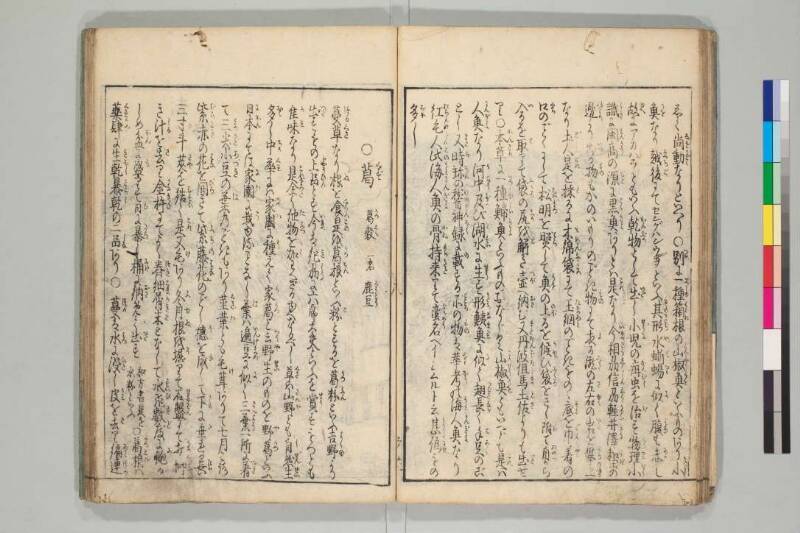
翻刻
【右丁】
して尚(なを)動(うごく)なりといへり○別(へつ)に一種(いつしゆ)箱根(はこね)の山椒魚(さんしやううを)といふものあり小(ちいさき)
魚(うを)なり越後(ゑちご)にてセングハンウヲといふ其形(そのかたち)水蜥蜴(いもり)に似(に)て腹(はら)も赤(あか)し
故(ゆへ)にアカハラともいふ乾物(かんぶつ)として出(いだ)し小児(せうに)の疳虫(かんむし)を治(ぢ)す物理小(ふつりせう)
識(しき)に閩高(みんかう)の源(もと)に黒魚(こくきよ)ありとは是(これ)なり今(いま)相州(さうしう)信州(しんしう)軽井沢(かるいさわ)和田(わだ)の
辺(ほとり)より出(いづ)る物(もの)もかのいもりのごとき物(もの)にて夜(よ)る滝(たき)の左右(さゆう)の岩(いわ)を攀上(よちのほる)
なり土人(どしん)是(これ)を採(と)るに木綿袋(もめんふくろ)にて玉網(たまあみ)のごときものゝ底(そこ)を巾着(きんちやく)の
口(くち)のごとくにして松明(たいまつ)を照(てら)して魚(うを)の上(のぼ)るを候(うかゞ)ひ袋(ふくろ)をさし附(つけ)て自(おのつ)から
入(い)るを取(と)りて袋(ふくろ)の尻(しり)を解(と)き壺(つぼ)へ納(おさ)む又(また)丹波(たんば)但馬(たじま)土佐(とさ)よりも出(いた)せ
り○本草(ほんさう)に一種(いつしゆ)䱱魚(ていきよ)といふものおなじく山椒魚(さんせううを)ともいへども是(これ)は
人魚(にんぎよ)なり河中(かちう)及(およ)び湖水(こすい)に生(せう)す形(かたち)鮧魚(なまず)に似(に)て翅(つばさ)長(なが)く手足(てあし)のご
とし又(また)時珎(ぢちん)の稽神録(けいしんろく)に載(の)する所(ところ)の物(もの)は華考(くわかう)の海人魚(うみにんぎよ)なり
紅毛人(おらんだじん)此(この)海人魚(うみにんぎよ)の骨(ほね)持来(もちきた)りて蛮名(ばんめう)ヘイシムルト云/甚(はなはだ)偽(にせ)もの
多(おほ)し
【左丁】
○葛(くず) 葛穀(かつこく) 《割書:一名》 鹿豆(ろくとう)
蔓草(つるくさ)なり根(ね)を食(くらふ)是(これ)を葛根(かつこん)といふ粉(こ)とするを葛粉(かつふん)といふ吉野(よしの)より
出(いだ)すもの上品(じやうひん)とす今(いま)は紀州(きしう)に六郎大夫といふを賞(せう)すもつとも
佳味(かみ)なり是(これ)全(まつた)く他物(たぶつ)を加(く)わへざるゆへなるべし草(くさ)は山野(さんや)とも自然生(しぜんせい)
多(おゝ)し中華(ちうくわ)には家園(には)に種(う)えて家葛(かかつ)と云(いう)野生(やせい)のものを野葛(やかつ)といふ
日本(にほん)にては家園(には)に栽(う)ゆることなし葉(は)は遍豆(いんけまめ)に似(に)て三葉(さんよう)一所に着(つき)
て三尖(みつかど)小豆(あづき)の葉(は)のごときもあり茎(くき)葉(は)とも毛茸(け)ありて七月ころ
紫赤(むらさき)の花(はな)を開(ひら)きて紫藤花(ふぢのはな)のごとし穂(ほ)を成(な)して下(した)に垂(た)れる長(たけ)
三寸斗/莢(さや)を結(むすび)て是(これ)又/毛(け)あり冬月根(ふゆね)を堀(ほ)りて石盤(せきばん)にて《振り仮名:打揤|うちくだ》
き汁(しる)を去(さ)り金杵(かなきね)にてよく舂(つき)細屑末(こまかきこ)となして水飛(すいひ)数度(すど)に飽(あ)か
しめ盆(ぼん)に盛(も)りて日(ひ)に暴(さら)し桶(おけ)に納(おさ)めて出(いだ)す《割書:和方書是を|水粉といふ》○葛根(かつこん)は
薬肆(くすりや)に生乾(きほし)暴乾(さらし)の二/品(しな)あり○蔓(つる)は水(みつ)に浸(ひた)し皮(かわ)を去(さ)り編連(あみつら)
現代語訳
【右丁】
死んでもなお動くという。別に一種、箱根の山椒魚というものがあり、小さな魚である。越後では「センクハンウオ」という。その形は水蜥蜴(いもり)に似て腹も赤いので、「アカハラ」ともいう。乾物として出荷し、小児の疳虫を治療する。『物理小識』に閩高の源に黒魚ありとあるのは、これのことである。今、相州・信州の軽井沢・和田の辺りより出るものも、あのいもりのような物で、夜になると滝の左右の岩を這い上がる。土地の人がこれを採るには、木綿袋で玉網のようなものの底を巾着の口のようにして、松明を照らして魚が上るのを窺い、袋を差し付けて自然に入るのを取り、袋の尻を解いて壺へ納める。また丹波・但馬・土佐からも出荷される。『本草』に一種、䱱魚(ていぎょ)というものがあり、同じく山椒魚ともいうけれども、これは人魚である。河中及び湖水に生息する。形は鮧魚(なまず)に似て、翅が長く手足のようである。また時珍の『稽神録』に載せる所の物は華高の海人魚である。オランダ人がこの海人魚の骨を持参して、蛮名を「ヘイシムルト」というが、甚だ偽物が多い。
【左丁】
○葛 葛穀(別名:鹿豆)
蔓草である。根を食べる。これを葛根という。粉にするものを葛粉という。吉野より出すものを上品とする。今は紀州の六郎大夫というものを賞賛する。最も美味である。これは全く他の物を加えないゆえであろう。草は山野ともに自然に多く生える。中国では家園に植えて家葛といい、野生のものを野葛という。日本では家園に栽培することはない。葉は隠元豆に似て三葉が一所に付いて三つ角、小豆の葉のようなものもある。茎・葉ともに毛があって、七月頃紫赤の花を開いて紫藤花のようである。穂を成して下に垂れる長さ三寸ばかり。莢を結んでこれまた毛がある。冬月に根を掘って石盤にて打ち砕き、汁を去り、金杵にてよく搗いて細かい屑末となし、水飛を数度に満足させ、盆に盛って日に晒し、桶に納めて出荷する(和方書ではこれを水粉という)。葛根は薬屋に生乾し・晒し乾しの二品がある。蔓は水に浸し皮を去り編み連ね...
英語訳
【Right Page】
It is said that even after death, they still move. There is another species called the Hakone salamander, which is a small fish. In Echigo, it is called "Senkuhanuo." Its form resembles a newt (imori) and its belly is also red, so it is also called "Akahara" (red belly). It is shipped as dried goods and treats intestinal worms in children. What the "Butsurishōshiki" refers to as the black fish from the source of Minkō is this creature. The ones that come from the areas around Karuizawa and Wada in Sagami and Shinano provinces are also newt-like creatures that crawl up the rocks on both sides of waterfalls at night. Local people catch them using cotton bags fashioned like dip nets with bottoms that close like drawstring purses. They shine torches, watch for the fish climbing up, insert the bag so the fish naturally enters, then untie the bottom of the bag and put them in jars. They are also shipped from Tanba, Tajima, and Tosa provinces. The "Honzō" mentions a species called teigyō (䱱魚), which is also called salamander, but this is a mermaid. It lives in rivers and lakes. Its form resembles a catfish with long wing-like appendages that look like hands and feet. Also, what is recorded in Shizhen's "Keishinroku" is the sea mermaid of Huakao. Dutch people brought bones of this sea mermaid, calling it by the foreign name "Heishimuruto," but there are very many fakes.
【Left Page】
○Kudzu - Kudzu grain (also called: deer bean)
It is a vine plant. The root is eaten and is called kudzu root. When made into powder, it is called kudzu powder. That which comes from Yoshino is considered top quality. Now, the one from Kishū called Rokurō Dayū is praised as having the finest flavor. This is probably because it contains absolutely no other substances. The plant grows naturally and abundantly in both mountains and fields. In China, they plant it in home gardens and call it "house kudzu," while wild-growing ones are called "wild kudzu." In Japan, it is not cultivated in home gardens. The leaves resemble kidney beans, with three leaves attached at one point forming three corners; some are like azuki bean leaves. Both stem and leaves have hair, and around July they open purple-red flowers like wisteria flowers. They form drooping clusters about three inches long. They produce pods that also have hair. In winter months, the roots are dug up and crushed on stone slabs, the juice removed, and they are well-pounded with metal pestles into fine powder. This undergoes repeated water processing, is placed in basins and dried in the sun, then stored in tubs for shipping (Japanese medical texts call this "water powder"). Kudzu root comes in two varieties at medicine shops: raw-dried and sun-dried. The vines are soaked in water, the bark removed, and woven together...