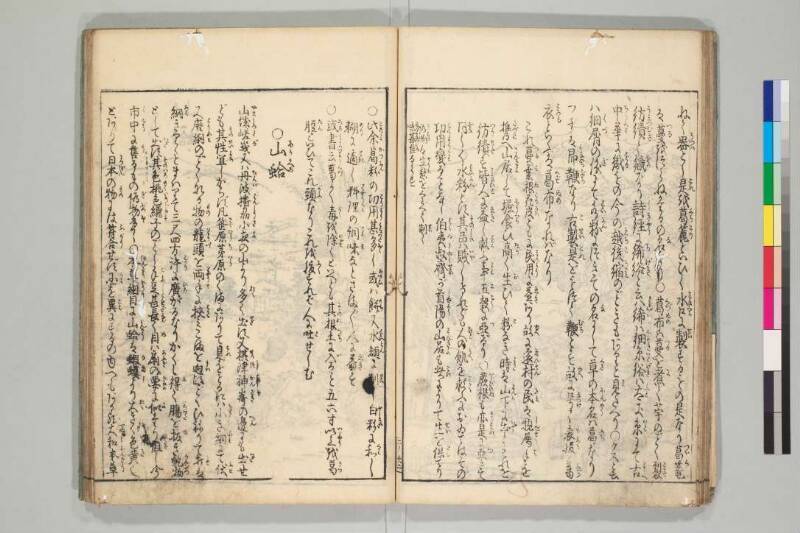
翻刻
【右丁】
ねて器(うつは)とし是(これ)を葛簏(ふちこり)といひて水口(みなくち)に製(せい)するもの是なり葛篭(つゞら)
は蔓(つる)をつらねたるの名(な)なり○葛布(くづぬの)は蔓(つる)を煮(に)て荢#1のごとく裂(さき)
紡績(うみつむぎ)て織(をる)なり詩経(しきやう)に絺綌(ちげき)と云は絺(ち)は細糸(ほそきいと)綌(げき)は太(ふと)き糸(いと)にて古(いにしへ)
中華(ちうくわ)に織(をる)もの今の越後縮(ゑちこちゝみ)のごときもありと見(み)たへり#2○クスと云
は細屑(くづ)の儀(ぎ)にて水粉(すいふん)につきての名(な)にして草(くさ)の本名(ほんめう)は葛(ふぢ)なり
フヂは即(すなはち)鞭(ぶち)なり古製(こせい)是(これ)をもつて鞭(むち)とす故(ゆへ)に号(なつけ)て喪服(もふく)を葛(ふぢ)
衣(ころも)といふは葛布(くずぬの)なればなり
これ蔓(つる)葉(は)根(ね)花(はな)皮(かは)ともに民用(みんよう)に益(ゑき)あり故(ゆへ)に遠村(ゑんそん)の民(たみ)は親属(しんぞく)手(て)を
携(たづさ)へ山居(さんきよ)して堀食(ほりくら)ひ高(たか)く生(お)ひて粉(こ)なき時(とき)は山下(さんか)に出(いで)てこれを
紡績(はうせき)す皆(みな)人(ひと)に益(ゑき)し救(すく)ふ事(こと)五穀(ここく)に亞(つ)げり○蕨根(はらびのね)も亦(また)是(これ)に亞(つ)きて
同(おな)しく水粉(すいふん)とす其品(そのしな)は賤(いや)しけれども人(ひと)の飢(うへ)を救(すく)ふにおゐてはその
功用(こうよう)変(かわ)ることなし伯夷(はくゐ)叔斉(しゆくせい)が首陽(しゆよう)の山居(さんきよ)も此(これ)によりて生(せい)を保(たも)てり
《割書:偽物(きぶつ)は生麩(せうふ)をくわへて制(せい)し|味(あぢ)甚(はなはだ)佳(か)ならす》
【左丁】
○此余(このよ)葛粉(かつふん)の功用(こうよう)甚(はなはだ)多(おゝ)し或(あるひ)は餅(もち)又/水麺(すいとん)に制(せい)し白粉(おしろい)に和(くわ)し
糊(のり)に適(てき)し料理(りやうり)の調味(てうみ)なとさま〴〵人に益(ゑき)す
○或(ある)書(しよ)云(いわく)葛(くづ)よく毒(どく)を除(のぞ)くといへども其(その)根(ね)土(つち)に入(い)ること五六寸/以上(いじやう)を葛(かつ)
脰(たん)といひてこれ頸(がふ)なりこれを腹(ふく)#3すれば人に吐(と)せしむ
○山蛤(あかかへる)
山城(やましろ)嵯峨(さが)又は丹波(たんば)播州(ばんしう)小夜(さよ)の山より多(おゝ)く出(いだ)す摂津(せつつ)神崎(かんさき)の辺(へん)にも出(いだ)せ
ども其性(そのせい)宜(よろ)しからず凡/笹原(さゝはら)茅原(ちはら)のくまにありて是(これ)をとるには小(ちいさ)き網(あみ)にて伏(ふせ)
又/唐網(とうあみ)のごとくなる物(もの)の竜頭(りうづ)を両手(りやうて)に挟(はさ)みこまを廻(まは)すごとくひねりて打(うて)は
網(あみ)きりゝとまはりて三尺四方/許(ばかり)に広(ひろ)がるなりかくし得(え)て膓(はらはた)を抜(ぬ)き乾物(かんぶつ)
として出(いだ)す其色(そのいろ)桃色(もゝいろ)繻子(じゆす)のごとし手足(てあし)甚(はなはだ)長(なが)く目(め)は扇(あふぎ)の要(かなめ)に似(に)たり但(たゞ)し今
市中(しちう)に售(う)るもの偽物(ぎぶつ)多(おゝ)し○本草(ほんさう)《振り仮名:綱目|かうも□#4》に山蛤(さんかう)は蝦蟆(かま)より大(おゝ)きく色(いろ)黄(き)也
とありて日本(につぽん)の物(もの)には符合(ふがう)せず国(くに)を異(こと)にするのゆへもある欤/大和本草(やまとほんさう)
現代語訳
【右丁】
編んで器とし、これを葛籠(つづらこ)といって水口で製造するものがこれである。葛籠は蔓を連ねたものの名前である。○葛布は蔓を煮て麻のように裂き、紡績して織るのである。詩経に絺綌というのは、絺は細い糸、綌は太い糸で、古代中国で織ったもので、今の越後縮のようなものもあったと見える。○クズというのは細屑の意味で、水粉に関しての名前であり、草の本名は葛(ふじ)である。フジはすなわち鞭のことで、古くはこれをもって鞭とした。故に喪服を葛衣というのは葛布だからである。
これは蔓、葉、根、花、皮すべてが民用に益があるので、遠い村の民は親族と手を携えて山に住んで掘って食べ、高く生えて粉にならない時は山の下に出てこれを紡績する。皆人に益をもたらし救うことは五穀に次ぐ。○蕨根もまたこれに次いで同じく水粉とする。その品質は劣るけれども、人の飢えを救うことにおいてはその功用は変わることがない。伯夷・叔斉の首陽山での山居生活もこれによって命を保ったのである。
《割書:偽物は生麩を加えて製造し、味は甚だよくない》
【左丁】
○この他、葛粉の功用は甚だ多い。ある時は餅、また水団(すいとん)に製し、白粉に和し、糊に適し、料理の調味などさまざまに人に益をもたらす。
○ある書によると、葛はよく毒を除くというが、その根が土に入ること五六寸以上を葛胆といって、これは首のことで、これを服用すれば人を嘔吐させる。
○山蛤(あかがえる)
山城の嵯峨、また丹波・播州小夜の山より多く産出する。摂津神崎の辺りにも産するが、その性質は良くない。大体笹原・茅原の隈にいて、これを取るには小さい網で、または唐網のような物の竜頭を両手に挟み、独楽を回すようにひねって打つと、網がきりりと回って三尺四方ほどに広がる。こうして捕まえて腸を抜き、乾物として出荷する。その色は桃色の繻子のようで、手足は甚だ長く、目は扇の要に似ている。ただし今市中で売られているものは偽物が多い。○本草綱目に山蛤は蝦蟆より大きく色は黄色であるとあって、日本のものには合致しない。国を異にするためでもあるのだろうか。大和本草では
英語訳
【Right page】
Woven into vessels, these are called kuzurako (kudzu baskets) and are manufactured in Minakuchi. Kuzurako gets its name from connecting vines together. ○ Kudzu cloth is made by boiling the vines and splitting them like hemp fibers, then spinning and weaving them. In the Book of Songs, chigeki refers to chi (fine thread) and geki (thick thread), which were woven in ancient China, and there appear to have been varieties similar to today's Echigo crepe. ○ The word kuzu means "fine scraps" and is a name related to water starch, while the original name of the plant is katsu (fuji). Fuji means "whip," and in ancient times this was used as a whip. Therefore, mourning clothes are called katsu-goromo (kudzu garments) because they are made of kudzu cloth.
Since the vines, leaves, roots, flowers, and bark all benefit the people, villagers in remote areas take their relatives by the hand to live in the mountains, digging and eating the roots. When the plants grow too high to be made into starch, they go down to the foot of the mountain to spin the fibers. The benefit and salvation this provides to people ranks second only to the five grains. ○ Bracken root also ranks next to this and is similarly made into water starch. Though its quality is inferior, its effectiveness in saving people from hunger is unchanged. The hermit life of Bo Yi and Shu Qi on Mount Shouyang was sustained by this.
《Marginal note: Counterfeits are made by adding wheat gluten, and the taste is quite poor》
【Left page】
○Besides this, the uses of kudzu starch are very numerous. Sometimes it is made into rice cakes or suitors (wheat dumplings), mixed with face powder, used as paste, or for seasoning in cooking—it benefits people in various ways.
○According to one book, while kudzu is good at removing poison, the part of the root that penetrates five or six inches or more into the soil is called katsu-tan, which refers to the neck, and consuming this will cause vomiting.
○Mountain frog (red frog)
Many are produced from Saga in Yamashiro, and also from Tanba and Sayo Mountain in Banshu. They are also found around Kanzaki in Settsu, but their quality is not good. Generally found in the recesses of bamboo grass fields and reed plains, they are caught using small nets, or tools like Chinese nets with dragon heads held in both hands and twisted like spinning a top. The net spins around and spreads to about three feet square. Caught this way, their intestines are removed and they are shipped as dried goods. Their color is like peach-colored silk, their limbs are very long, and their eyes resemble the pivot of a fan. However, many of those sold in the market today are counterfeits. ○ The Bencao Gangmu states that mountain frogs are larger than toads and yellow in color, which does not match Japanese specimens. This may be because they are from different countries. In the Yamato Honzo...