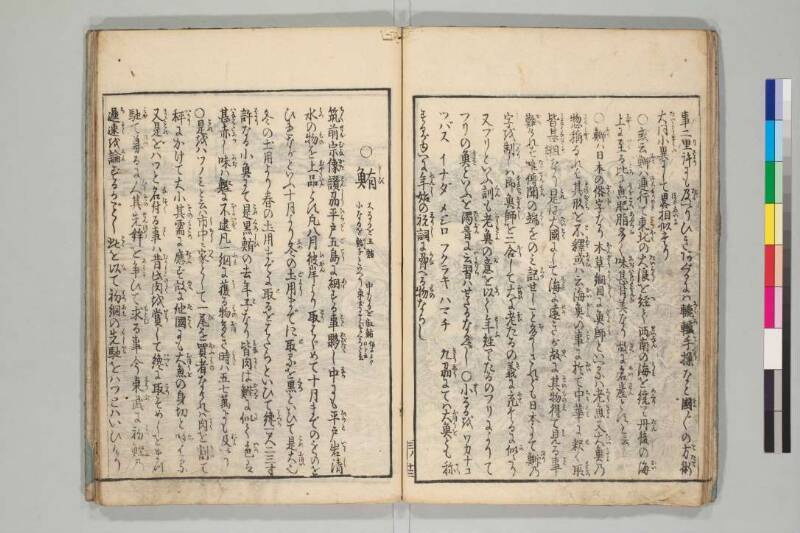
翻刻
【右丁】
事《振り仮名:二里| り》許(ばかり)にも及(およ)べりひきあぐるには轆轤(ろくろ)手操(てくり)なと国(くに)〴〵の方術(てたて)
大同小異(たいとうせうい)にして略(ほゞ)相似(あいに)たり
○或云 鰤(ふり)は連行(つらなりゆき)て東北(とうほく)の大浪(たいらう)を経(へ)て西南(せいなん)の海(うみ)を繞(めく)り丹後(たん )の海(かい)
上(しやう)に至(いた)る比(ころ)に魚(うを)肥(こへ)脂(あぶら)多(お)く味(あぢ)甚(はなはた)甘美(かんひ)なり故(ゆへ)に名産(めいさん)とすと云
○鰤(ふり)は日本の俗字(ぞくじ)なり本草綱目(ほんざうかうもく)に魚師(ぎよし)といへるは老魚(らうぎよ)又 大魚(たいきよ)の
惣称(さうしやう)なれば其形(そのかたち)を不釈(とかず)或(あるひ)は云 海魚(かいぎよ)の事(こと)に於(おい)て中華(ちうくわ)に釈(と)く所(ところ)
皆(みな)甚(はなはた)粗(そ|あらし)なり是(これ)は大国(たいこく)にして海(うみ)に遠(とほ)きが故(ゆへ)に其物(そのもの)得(え)て見(み)る事(こと)
難(かた)ければ唯(たゞ)伝聞(てんもん)の端(はし)をのみ記(しる)せしこと多(おゝ)しされども日本にて鰤(ぶり)の
字(し)を制(つくり)しは即(すなはち)魚師(ぎよし)を二合( かう)して大(おほひ)に老(おひ)たるの義(き)に充(あて)たるに似(に)たり
又ブリといふ訓(くん)も老魚(らうきよ)の意(ゐ)を以(もつ)て年経(としふ)りたるのフリによりて
フリの魚(うを)といふを濁音(たくおん)に云習(いゝなら)はせたるなるべし○小(せう)なるをワカナコ
ツバス イナダ メジロ フクラキ ハマチ 九州(きうしう)にては大魚(おほうを)とも称(せう)
するがゆへに年始(ねんし)の祝詞(しうし)に脋(かな)へる物(もの)ならし
【左丁】
◯鮪(しび) 《割書:大なるを王鮪 中なるを叔鮪《割書:俗にメク|ロト云》|小なるを《振り仮名:鮥子|めしろ》といへり東国にてはまくろと云》
筑前(ちくせん)宗像(むなかた)讃州(さんしう)平戸(ひらど)五島(ごとう)に網(あみ)する事(こと)夥(おびたゝ)し中(なか)にも平戸(ひらと)岩清(いわし)
水(みつ)の物(もの)を上品(じやうひん)とす凡八月 彼岸(ひがん)より取(とり)はじめて十月までのものを
ひれながといふ十月より冬(ふゆ)の土用(どよう)までに取(と)るを黒(くろ)といひて是(これ)大(おほひ)也
冬の土用より春の土用までに取(と)るをはたらといひて纔(わつか)一尺二三寸
許(ばかり)なる小魚にて是(これ)黒鮪(くろしび)の去年子( こ)なり皆(みな)肉(にく)は鰹(かつを)に似(に)て色(いろ)は
甚(はなはた)赤(あか)し味(あぢ)は鰹に不逮(およばず)凡 一網( あみ)に獲(う)る物(もの)多(おほ)き時(とき)は五七万にも及(およ)べり
○是(これ)をハツノミと云は市中(しちう)に家(いへ)として一尾( び)を買(かふ)者(もの)なけれは肉(にく)を割(きり)て
秤(はかり)にかけて大小 其需(そのもとめ)に応(おふ)ず故(ゆへ)に他国(たこく)にも大魚(おほうお)の身切と呼(よば)はる
又(また)是(これ)をハツと名付(なつく)る事(こと)は昔(むかし)此肉(このにく)を賞(せう)して纔(はづか)に取(とり)そめしをまつ
馳(はせ)て募(つの)るに人(ひと)其(その)先鋒(せんほう)を争(あらそ)ひて求(もとむ)る事今 東武(とうぶ)に初鰹(はつかつを)の
遅速(ちそく)を論(ろん)ずるかごとし此(こゝ)を以(も)て初網(はつあみ)の先馳(はしり)をハツとはいひけり
現代語訳
【右丁】
二里ほどにも及ぶほどである。引き上げるには轆轤(ろくろ)や手繰りなど、国々の方法は大同小異で、ほぼ似通っている。
○ある説によると、ブリは連なって行き、東北の大波を経て西南の海を巡り、丹後の海上に至る頃には、魚が肥えて脂が多く、味がたいへん甘美になる。そのため名産とするという。
○「鰤」は日本の俗字である。『本草綱目』に「魚師」といっているのは老魚、また大魚の総称なので、その形状については説明していない。あるいは、海魚のことについて中国で説明している所は皆たいへん粗雑である。これは大国でありながら海に遠いため、その物を実際に見ることが難しく、ただ伝聞の片端のみを記したことが多いからである。しかし日本で「鰤」の字を作ったのは、すなわち「魚師」を二つ合わせて、大いに老いたという意味に当てたのに似ている。
また「ブリ」という訓読みも、老魚の意味をもって年を経たもの(古いもの)の「フリ」によって、「フリ」の魚というのを濁音で言い習わしたものであろう。○小さいものをワカナ、ツバス、イナダ、メジロ、フクラギ、ハマチといい、九州では大魚とも称するため、年始の祝詞にふさわしい物らしい。
【左丁】
◯鮪(しび) 大きいものを王鮪、中くらいのものを叔鮪(俗にメクロという)、小さいものを鮥子(メジロ)という。東国ではマグロという。
筑前宗像、讃州、平戸、五島で網漁をすることがたいへん多い。中でも平戸・岩清水のものを上品とする。だいたい八月の彼岸から取り始めて十月までのものを「ひれなが」という。十月から冬の土用までに取るものを「黒」といって、これが大きい。冬の土用から春の土用までに取るものを「はたら」といって、わずか一尺二、三寸ほどの小魚で、これは黒鮪の去年の子である。皆、肉は鰹に似て色はたいへん赤い。味は鰹に及ばない。だいたい一網で獲るものが多い時は五、七万にも及ぶ。
○これを「ハツノミ」というのは、市中で家として一尾を買う者がないので、肉を切って秤にかけて、大小をその需要に応じるからである。そのため他国でも大魚の身切と呼ばれる。
また、これを「ハツ」と名付けることは、昔この肉を賞賛して、わずかに取り始めたものをまず馳せて募ると、人がその先陣を争って求めることが、今の江戸で初鰹の早い遅いを論ずるようなものである。ここをもって初網の走りを「ハツ」と言ったのである。
英語訳
【Right Page】
It extends to about two ri (approximately 8 kilometers). For hauling them up, methods such as pulleys and hand-reeling are used, and the techniques of each region are largely similar with minor differences.
○According to one theory, yellowtail travel in schools, passing through the great waves of the northeast and circling the southwestern seas. By the time they reach the waters off Tango, the fish have become fat with abundant oil and their taste is extremely sweet and delicious. Therefore, they are considered a specialty product.
○"鰤" (buri) is a Japanese vulgar character. What is called "gyoshi" (fish master) in the Honzo Komoku refers to old fish or is a general term for large fish, so it does not explain their form. Or rather, the explanations of sea fish given in China are all extremely crude. This is because, being a large country distant from the sea, it is difficult to actually see and examine these creatures, so mostly only fragments of hearsay have been recorded. However, when Japan created the character "鰤," it seems to have combined "魚" (fish) and "師" (master/old) to represent the meaning of something greatly aged.
Also, the reading "buri" likely comes from the meaning of old fish, deriving from "furi" (old/aged), calling it the "furi" fish, which became habitually pronounced with a voiced sound. ○The small ones are called wakana, tsubasu, inada, mejiro, fukuragi, and hamachi. In Kyushu, they are also called large fish, so they seem to be appropriate for New Year congratulations.
【Left Page】
◯Tuna (shibi) - Large ones are called king tuna, medium ones are called uncle tuna (commonly called mekuro), and small ones are called mejiro. In the eastern provinces, they are called maguro.
Net fishing is extremely abundant in Chikuzen Munakata, Sanshū, Hirado, and Gotō. Among these, those from Hirado and Iwashimizu are considered top quality. Generally, those caught from the autumn equinox in August until October are called "hirenaga." Those caught from October until winter's doyō period are called "kuro" and these are large. Those caught from winter's doyō until spring's doyō are called "hatara" and are small fish of only about one shaku two or three sun (36-39 cm), which are last year's offspring of black tuna. All have meat similar to bonito with a very red color. The taste does not match bonito. Sometimes a single net catches as many as fifty to seventy thousand.
○These are called "hatsunomi" because no household in the city buys a whole fish, so the meat is cut and weighed on scales to meet various demands according to size. Therefore, in other regions too, they are called "cut bodies of large fish."
Also, the reason for naming these "hatsu" (first) is that long ago, when this meat was first appreciated and people began catching it in small amounts, people would rush to compete for the first catch,争ひ争ing to be first to obtain it, just like how people in Edo today debate the early or late arrival of the first bonito of the season. Thus, the first catch of the initial nets came to be called "hatsu."