翻刻
【右丁】
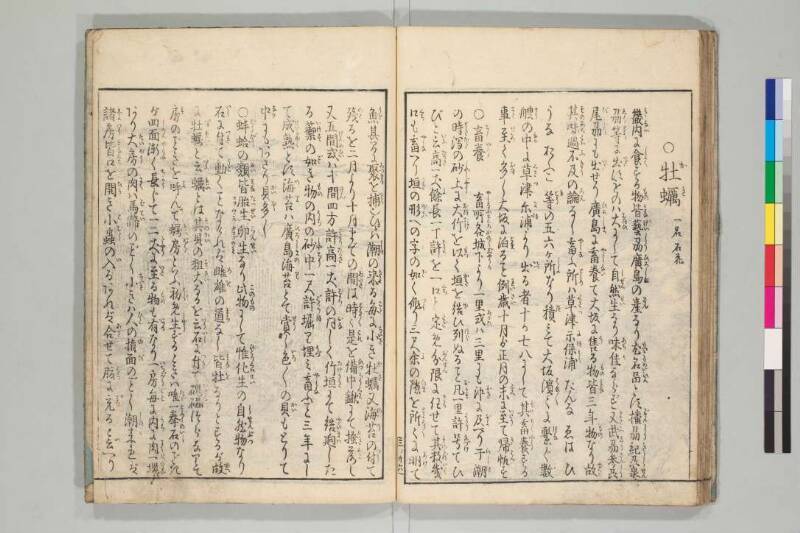
○牡蠣(かき)《割書:一名 石花|》
畿内(きない)に食(しよく)する物(もの)皆(みな)芸州(げいしゆう)広島(ひろしま)の産(さん)なり尤(もつとも)名品(めいひん)とす播州(ばんしう)紀州(きしう)泉(せん)
州(しう)等(とう)に出(いだ)すものは大(おほひ)にして自然生(しぜんせい)なり味(あち)佳(か)ならず又(また)武州(ふしう)参州(さんしう)
尾州(びしう)にも出(いだ)せり広島(ひろしま)に畜養(やしない)て大坂に售(う)る物(もの)皆(みな)三年物( もの)なり故(ゆへに)
其味(そのあち)過不及(くはふきう)の論(ろん)なし畜(やしな)ふ所(ところ)は草津(くさつ)示保浦(にほうら) たんな ゑは ひ
うな おふこ 等(とう)の《振り仮名:五六ヶ所| しよ》なり積(つ)みて大坂 浜々(はま〳〵)に繋(つな)ぐ数(す)
艘(そう)の中(なか)に草津(くさつ)尓浦(にほ)より出(いづ)る者十か七八にして其(その)畜養(ちくやう)する
事(こと)至(いたつ)て多(おほ)し大坂に泊(とま)ること例歳(れいさい)十月より正月の末(すへ)に至(いたり)て帰帆(きはん)す
○畜養(ちくやう) 畜所(やしなふところ)各(おの〳〵)城下(じやうか)より一里 或(あるひ)は三里にも沖(おき)に及(およ)べり干潮(ひしほ)
の時(とき)潟(かた)の砂上(しやじやう)に大竹(おほたけ)を以(もつ)て垣(かき)を結(ゆ)ひ列(つら)ぬること凡(およそ)一里 許(はかり)号(なづけ)てひ
びと云(いふ)高(たかさ)一丈 余(よ)長 一丁 許(ばかり)を一口( くち)と定(さだ)め分限(ぶんげん)に任(まか)せて其数(そのかず)幾(いく)
口(くち)も畜(やしな)へり垣(かき)の形(かたは)への字(し)の如(ごと)く作(つく)り三尺 余(よ)の隙(ひま)を所々(ところ〳〵)に明(あけ)て
【左丁】
魚(うを)其間に聚(あつまる)を捕(とる)也ひゞは潮(しほ)の来(きた)る毎(こと)に小(ちいさ)き牡蠣(かき)又 海苔(のり)の付(つき)て
残(のこ)るを二月より十月までの間(あいた)は時々(とき〳〵)是(これ)を備中鍬(ひつちうくわ)にて掻落(かきおと)し
又 五間( けん)或(あるい)は十間( けん)四方 許(ばかり)高(たかさ)一丈 許(ばかり)の同(おな)しく竹垣(たけかき)にて結廻(ゆひまは)した
る籞(いけす)の如(ごと)き物(もの)の内(うち)の砂中(しやちう)一尺 許(ばかり)堀(ほ)り埋(うづ)み畜(やしな)ふこと三年にし
て成熟(せいじゆく)とす海苔(のり)は広島海苔(ひろしまのり)とて賞(せう)し《振り仮名:色〳〵|いろ 》の貝(かい)もとりて
中(なか)にも《振り仮名:あさり貝| かい》多(おゝ)し
○ 蚌蛤(ばうがう)の類(るい)皆(みな)胎生(たいせい|コヲウミ)卵生(らんせい|タマゴウミ)なり此物(このもの)にして惟(ひとり)化生(くはせい)の自然物(しせんぶつ)なり
石(いし)に付(つき)て動(うご)くことなければ雌雄(めを)の道(みち)なし皆(みな)牡(を)なりとするが故(ゆへ)
に牡蠣(ぼれい)と云(いふ)蠣(れい)とは其貝(そのかい)の粗大(そたい)なるを云(いう)石(いし)に付(つき)て磈礧(かさなり)つらなりて
房(す)のごときを呼(よ)んで蠣房(れいぼう)といふ初(はじ)め生(しやう)ずるときは唯一(たゞ)拳石(こふしのいし)のごとき
が四面(しめん)漸(やうや)く長(ちよう)じて一二丈( じやう)に至(いた)る物(もの)も有(ある)なり一房毎(いちぼうごと)に内(うち)に肉(にく)一塊(いつくわい)
あり大房(たいぼう)の肉(にく)は馬蹄(ばてい)のごとし小(ちいさ)きは人(ひと)の指面(ゆび)のごとし潮(しほ)来(く)れば
諸房(しよはう)皆(みな)口(くち)を開(ひら)き小虫(こむし)の入(い)るあれば合(あわ)せて腹(はら)に充(みつ)ると云(い)へり
現代語訳
○牡蠣(別名:石花)
畿内で食べられる牡蠣は、すべて芸州広島の産物であり、最も名品とされている。播州、紀州、泉州などで産出されるものは大きく天然のものであるが、味は良くない。また武州、参州、尾州にも産出される。広島で養殖して大坂に売る牡蠣はすべて三年物であるため、その味については文句のつけようがない。養殖している場所は草津、仁保浦、たんな、えば、ひうな、おふこなど五、六か所である。積み荷として大坂の浜々に係留する数艘の船のうち、草津、仁保から出る者が十のうち七、八を占め、その養殖事業は非常に大規模である。大坂に停泊するのは例年十月から正月の末までで、その後帰帆する。
○養殖 養殖場所はそれぞれ城下から一里、あるいは三里も沖に及んでいる。干潮の時、干潟の砂上に大竹で垣を結び連ねること約一里ほど、これを「ひび」と呼ぶ。高さ一丈余り、長さ一丁ほどを一口と定め、財力に応じてその数いく口でも養殖している。垣の形は「へ」の字のように作り、三尺余りの隙間を所々に開けて、魚がその間に集まるのを捕るのである。ひびは潮が来るたびに小さな牡蠣や海苔が付着して残るため、二月から十月までの間は時々これを備中鍬で掻き落とす。
また五間、あるいは十間四方ほど、高さ一丈ほどの同じく竹垣で囲んだ生け簀のような物の内部の砂中に一尺ほど掘って埋め、三年間養殖して成熟させる。海苔は広島海苔として珍重され、いろいろな貝も取れて、中でもあさり貝が多い。
○蚌蛤の類はすべて胎生(子を産む)・卵生(卵を産む)であるが、この牡蠣だけは化生の自然物である。石に付着して動くことがないので雌雄の交わりがない。すべて牡(雄)であるため牡蠣(ぼれい)という。蠣とはその貝の粗大なものをいう。石に付着して重なり連なって房のようになるものを蠣房という。最初に生じる時はただ拳大の石のようであるが、四方に次第に成長して一、二丈に至るものもある。一房ごとに内部に肉が一塊ある。大房の肉は馬蹄のようで、小さいものは人の指ほどである。潮が来れば諸房がすべて口を開き、小虫が入ればそれを合わせて腹に満たすという。
英語訳
○Oysters (Alternative name: Stone Flower)
All oysters consumed in the Kinai region are products of Geishū Hiroshima and are considered the finest quality. Those produced in Banshū, Kishū, Senshū and other provinces are large and naturally occurring, but their taste is not good. They are also produced in Bushū, Sanshū, and Bishū. The oysters cultivated in Hiroshima and sold in Osaka are all three-year specimens, so their taste is beyond reproach. The cultivation sites are Kusatsu, Nihoura, Tanna, Eba, Hiuna, Ōfuko, and other five or six locations. Among the several boats that anchor at various beaches in Osaka with their cargo, seven or eight out of ten come from Kusatsu and Niho, indicating that their cultivation operation is extremely large-scale. They typically stay moored in Osaka from October to the end of the New Year annually, then return home.
○Cultivation: The cultivation sites extend one ri, or sometimes up to three ri offshore from the castle town. During low tide, bamboo fences called "hibi" are constructed on the tidal flats using large bamboo poles, extending about one ri in length. Each section is about one jō in height and one chō in length, defined as one "unit," and people cultivate as many units as their financial means allow. The fences are shaped like the character "へ" (he), with gaps of about three shaku left at various points to catch fish that gather there. Each time the tide comes in, small oysters and seaweed attach to the hibi and remain, so from February to October, these are periodically scraped off with Bitchū hoes.
Additionally, there are enclosures resembling fish ponds, about five to ten ken square and one jō high, also surrounded by bamboo fencing. Oysters are buried about one shaku deep in the sand within these enclosures and cultivated for three years until they mature. The seaweed is prized as Hiroshima nori, and various shellfish are also harvested, particularly asari clams.
○While all bivalves reproduce through viviparity (live birth) or oviparity (egg-laying), oysters alone are naturally occurring through spontaneous generation. Since they attach to rocks and cannot move, there is no mating between male and female. They are all considered male, hence the name "bokaki" (male oyster). "Rei" refers to the large, coarse shells. When they attach to rocks and cluster together in grape-like formations, they are called "reibō" (oyster clusters). When they first develop, they are merely like fist-sized stones, but they gradually grow in all directions, with some reaching one to two jō in length. Each cluster contains one piece of meat inside. The meat of large clusters resembles a horse's hoof, while smaller ones are about the size of a human finger. When the tide comes in, all the clusters open their mouths, and when small insects enter, they close and fill their bellies.