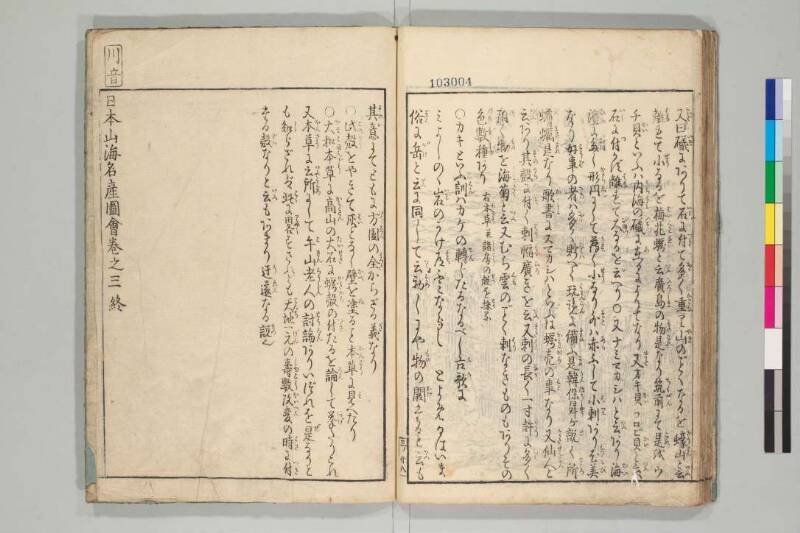
翻刻
【右丁】
又(また)曰 礒(いそ)にありて石(いし)に付(つき)て多(おゝ)く重(かさな)り山(やま)のごとくなるを蠔山(かうさん)と云(いふ)
離(はな)れて小(せう)なるを梅花蠣(ばいくわれい)と云(いふ)広島(ひろしま)の物(もの)是(これ)なり筑前(ちくぜん)にて是(これ)をウ
チ貝(かい)といふは内海(うちうみ)の礒(いそ)に在(あ)るによりてなり又(また)《振り仮名:オキ貝| かい》《振り仮名:コロビ貝| かい》と云(いふ)
石(いし)に付(つ)かず離(はな)れて大(おほい)なるを云(い)へり○又ナミマカシハと云(いふ)あり海(かい)
浜(ひん)に多(おほ)し形(かたち)円(ゑん)にして薄(うす)く小(せう)なり外(そと)は赤(あか)ふして小刺(はり)あり尤(もつとも)美(び)
なり好事(こうず)の者(もの)は多(おゝ)く貯(たくは)へて玩覧(くわんらん)に備(そな)ふ是(これ)韓保昇(かんほうしやう)が説(と)く所(ところ)
《振り仮名:■蠣|ふれい》#1是(これ)なり歌書(かしよ)にスマカシハといふは蠣売(かきがら)#2の事(こと)なり又(また)仙人(せんにん)と
云(いふ)あり其(その)殻(から)に付(つ)く刺(はり)幅(はゞ)広(ひろ)きを云(いふ)又(また)刺(はり)の長(なが)く一寸 許(ばかり)に多(おゝ)く
附(つ)く物(もの)を海菊(うみきく)と云(いふ)又《振り仮名:むら雲| くも》のごとく刺(はり)なきものもありその
色(いろ)数種(すしゆ)あり《割書:右 本草(ほんざう)《割書:并》諸房(しよはう)の説(せつ)を採(とる)る|》
○カキといふ訓(くん)はカケの転(てん)じたるなるべし古歌(こか)に
みよしのゝ岩(いわ)のかけ道(みち)ふみならし とよめるはいま
俗(ぞく)に岳(がけ)と云(いふ)に同して云初(いゝそめ)しにや物(もの)の闕(かけ)たると云(いふ)も
【左丁】
其意(そのい)にてともに方円(はうゑん)の全(まつた)からざる義(ぎ)なり
○此殻(このから)をやきて灰(はい)となし壁(かべ)を塗(ぬ)ること本草(ほんざう)に見(み)へたり
○大和本草(やまとほんざう)に高山(かうさん)の大石(たいせき)に蠣殻(かきから)の付(つき)たるを論(ろん)して挙(あげ)たりこれ
又 本草(ほんさう)に云(いふ)所(ところ)にして午山老人(こさんらうじん)#3の討論(とうろん)ありいづれを是(ぜ)なりと
も知(し)らざれば此(こゝ)に略(りやく)すされども天地(てんち)一元( げん)の寿数(しゆすう)改変(かいへん)の時(とき)に付(つき)
たる殻(から)なりと云(いふ)もあまり迂遠(うゑん)なる説(せつ)也
日本山海名産図会巻之三 終
現代語訳
また、磯にあって石に付着して多く重なり山のようになるものを蠔山(かきやま)という。
離れて小さいものを梅花蠣という。広島のものがこれである。筑前ではこれをウチ貝というのは、内海の磯にあることによる。また、オキ貝、コロビ貝という。
石に付かず離れて大きいものをいう。また、ナミマカシワというものがある。海浜に多い。形は円形で薄く小さい。外は赤くて小さな刺がある。もっとも美しい。
好事家は多く蓄えて観賞に備える。これは韓保昇が説いたところの扶蠣がこれである。歌書にスマカシワというのは蠣殻のことである。また、仙人というものがある。その殻に付く刺の幅が広いものをいう。また、刺が長く一寸ほどで多く付くものを海菊という。また、むら雲のように刺のないものもあり、その色は数種ある。【右は本草および諸書の説を採ったもの】
○「カキ」という訓読みは「カケ」が転じたものであろう。古歌に
「み吉野の岩のかけ道踏みならし」と詠んだのは、今
俗に「崖(がけ)」というのと同じで、言い始めたものか。物の「欠けた」というのも
その意味で、ともに方円が完全でない意味である。
○この殻を焼いて灰にして壁を塗ることは本草に見える。
○大和本草で高山の大石に蠣殻が付いたものを論じて挙げている。これも
本草にいうところで、午山老人の議論がある。いずれが正しいとも
分からないのでここでは省略するが、天地一元の長い年月、変化の時に付いた
殻だという説もあまりにも迂遠な説である。
日本山海名産図会巻之三 終
英語訳
Also, those that exist on rocky shores, attached to stones, piling up in great numbers like mountains are called "kaki mountains" (oyster mountains).
The small, separated ones are called "plum blossom oysters." These are what come from Hiroshima. In Chikuzen, these are called "Uchi-gai" (inner shells) because they exist on the rocky shores of inland seas. They are also called "Oki-gai" and "Korobi-gai."
This refers to large ones that are separate and not attached to stones. There is also something called "Namimakashiwa." They are abundant on seashores. Their shape is round, thin, and small. The outside is reddish with small spines. They are most beautiful.
Connoisseurs store many of them for viewing pleasure. This is what Kan Hōshō described as "furei." What is called "Sumakashiwa" in poetry books refers to oyster shells. There is also one called "sennin" (hermit). This refers to those with wide spines attached to the shell. Those with long spines about one inch long that attach in great numbers are called "sea chrysanthemums." There are also those without spines, like scattered clouds, and their colors come in several varieties. [The above adopts explanations from Honzō and various other texts]
○The reading "kaki" is probably a transformation of "kake." In an ancient poem,
"Treading the rocky cliff path of Miyoshino," what was composed is the same as what is now
commonly called "gake" (cliff), perhaps this is how it began to be said. The word "kaketa" (chipped/broken) also
has the same meaning - both refer to things that are not perfectly round or square.
○Burning these shells to make ash for plastering walls is mentioned in Honzō.
○In Yamato Honzō, there is a discussion of oyster shells attached to large stones on high mountains. This is also
what is mentioned in Honzō, and there is a debate by Kōzan Rōjin. Since it's unclear which is correct,
I omit it here, but the theory that these are shells attached during the time of primordial changes over the long lifespan of heaven and earth is too far-fetched an explanation.
End of Volume Three of the Illustrated Guide to Famous Products of Japan's Mountains and Seas