翻刻
【見開き 絵図】
【右丁】
【上段】
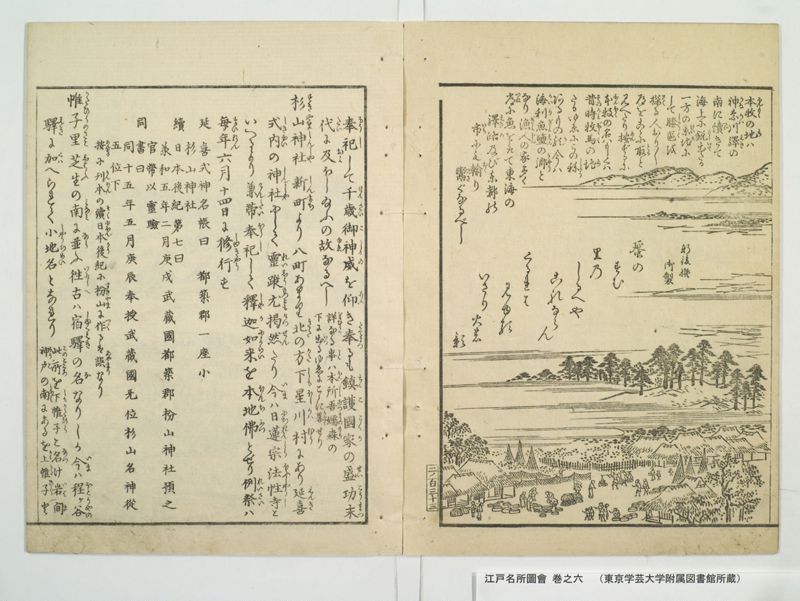
本牧(ほんもく)の地(ち)ハ
神奈川驛(かなかはえき)の
南に續(つゞ)きて
海上に鋭出(さしいて)たる
一方の景地(けいち)に
いて勝區(しようく)を
探(さく)る人おり〳〵
道をこゝに取(とる)と
見へたり按(あん)ずるに
本牧(ほんほく)の名はもしくは
昔時(そのかみ)牧馬(ぼくは)の地(ち)
たるゆゑにこの称(しよう)
あるもの欤(か)今は
海利(かいり)魚鹽(ぎよえん)の郷(きやう)と
なり漁人(ぎよじん)の家多く
常(つね)に魚を取て東海の
驛路(えきろ)及び東都の
市(いち)にも輸(おく)り
鬻(ひさ)ぐなるべし
【中段】
新後撰
御製
蜑の
すむ
里の
しるへや
これならん
くるれは
見ゆる
いさり
火の
影
【左丁】
奉祀(ほうし)して千歳(せんさい)御神威(こしんゐ)を仰(あふ)き奉(たてまつ)るも鎮護國家(ちんここくか)の盛功(せいこう)末(まつ)
代(たい)に及(およ)ほし給ふの故(ゆゑ)なるへし《割書:詳(つまひらか)なる事(こと)は本所吾嬬森(ほんしよあつまのもり)の|下に出(いつ)るゆゑにこゝに畧(りやく)せり》
杉山神社(すきやましんしや) 新町(しんまち)より八町あまり北(きた)の方(かた)下星川村(しもほしかはむら)にあり延喜(えんき)
式内(しきない)の神社(しんしや)にして靈蹤(れいしう)尤(もつとも)掲然(けつせん)たり今(いま)は日蓮宗(にちれんしう)法性寺(ほふしやうし)と
いへるより兼帯(けんたい)奉祀(ほうし)して釋迦如来(しやかによらい)を本地佛(ほんちふつ)とせり例祭(れいさい)は
毎年(まいねん)六月十四日に修行(しゆきやう)す
延喜式神名帳曰 都築郡一座小
杉山神社
續日本後紀第七曰
承和五年二月庚戌武蔵國都築郡枌山神社預之
官幣以靈驗
同書曰
同十五年五月庚辰奉授武蔵國⺛位杉山名神從
五位下
按(あんする)に刋本(かんほん)の續日本後紀(そくにほんかう )に枌山(すきやま)に作(つく)るは誤(あやまり)なり
帷子里(かたひらのさと)芝生(しはふ)の南(みなみ)に並(なら)ふ徃古(いにしへ)は宿驛(しゆくえき)の名(な)なりしか今(いま)は《振り仮名:程ヶ谷|ほとかやの》
驛(えき)に加(くは)へられて小地名(しやうちめい)となれり《割書:此所(このところ)を下帷子(しもかたひら)と名(なつ)け岩間(いはま) |神戸(かうと)の南にあるを上帷子(かみかたひら)と》
現代語訳
【見開き 絵図】
【右丁】
【上段】
本牧の地は神奈川宿の南に続いて、海上に突き出た景勝地である。勝景を求める人々がしばしば道をここに取ると見える。思うに本牧の名は、おそらく昔は馬の放牧地であったためにこの名称があるのであろう。今は海の恩恵による魚と塩の郷となり、漁師の家が多く、常に魚を取って東海道の宿場や江戸の市場にも運んで売っているのであろう。
【中段】
新後撰
御製
海女の住む里の目印であろうか
暮れると見える漁火の影
【左丁】
お祀りして千年もの間、御神威を仰ぎ奉るのも、国家鎮護の偉大な功績を後の世にまで及ぼし給うためであろう。《詳細なことは本所吾嬬森の条に出ているのでここでは省略する》
杉山神社 新町より八町余り北の方、下星川村にある。延喜式内の神社であって霊跡は最も明らかである。今は日蓮宗法性寺というところが兼帯してお祀りし、釈迦如来を本地仏としている。例祭は毎年六月十四日に執り行う。
延喜式神名帳に曰く 都筑郡一座小
杉山神社
続日本後紀第七に曰く
承和五年二月庚戌武蔵国都筑郡枌山神社、霊験により官幣に預かる
同書に曰く
同十五年五月庚辰武蔵国従五位下杉山名神に奉授す
按ずるに刊本の続日本後紀に枌山と作るのは誤りである。
帷子里 芝生の南に並ぶ。往古は宿駅の名であったが、今は程ヶ谷宿に加えられて小地名となっている。《この所を下帷子と名付け、岩間・神戸の南にあるのを上帷子という》
英語訳
【Double-page illustration】
【Right page】
【Upper section】
The area of Honmoku continues south from Kanagawa post station and is a scenic spot jutting out into the sea. People seeking beautiful views often seem to take the road here. I believe the name Honmoku perhaps comes from it being a horse pasture in ancient times. Now it has become a fishing and salt-producing village blessed by the sea, with many fishermen's houses, constantly catching fish and transporting them to sell at Eastern Sea Road post stations and Edo markets.
【Middle section】
Shin-Gosen
Imperial composition
Perhaps this is a guide to the village where sea divers live
The shadows of fishing fires visible at dusk
【Left page】
We have enshrined and revered the divine authority for a thousand years, which must be because the great achievement of protecting the nation extends its influence to future generations. 《Detailed information appears in the section on Azuma Forest in Honjo, so it is omitted here》
Sugiyama Shrine Located in Shimohoshikawa village, about eight chō north of Shinmachi. It is a shrine listed in the Engishiki and its sacred traces are most evident. Now it is jointly maintained by the Nichiren sect temple called Hōshōji, with Shakyamuni Buddha as the honjibutsu. The annual festival is held on June 14th every year.
The Engishiki Shinmeicho states: Tsuzuki District, one seat, minor
Sugiyama Shrine
Shoku Nihon Kōki, Volume 7 states:
Jōwa 5, 2nd month, kanoe-inu day: Sugi-yama Shrine of Tsuzuki District, Musashi Province, received imperial offerings due to spiritual efficacy
The same book states:
Year 15, 5th month, kanoe-tatsu day: Granted Junior Fifth Rank Lower to Sugiyama Myōjin of Musashi Province
Note that the printed version of Shoku Nihon Kōki writing it as "Sugi-yama" is an error.
Katabira-no-sato Located south of Shibafu. In ancient times it was the name of a post station, but now it has been incorporated into Hodogaya post station and become a minor place name. 《This place is called Shimo-katabira, while the area south of Iwama and Kōto is called Kami-katabira》