翻刻
【右丁 絵図】
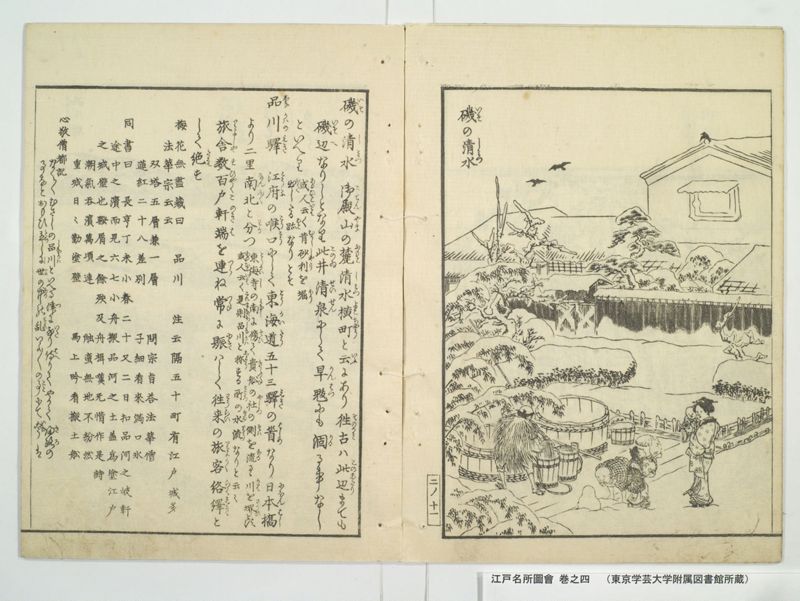
《振り仮名:磯の清水|いそ しみつ》
【左丁】
《振り仮名:磯の清水|いそ しみつ》 御殿山(こてんやま)の麓(ふもと)清水横町(しみつよこちやう)と云(いふ)にあり往古(そのかみ)は此辺(このあたり)まても
磯辺(いそへ)なりしとなり此井(このゐ)清泉(せいせん)にして旱魃(かんはつ)にも涸(かる)る事なし
といへり《割書:或人(あるひと)云(いは)く昔(むかし)砂利(しやり)を掘(ほり) |出(いた)したる跡(あと)なりとそ》
品川驛(しなかはのえき) 江府(こうふ)の喉口(こうこう)にして東海道(とうかいたう)五十三驛( えき)の𩠐(はしめ)なり日本橋(にほんはし)
より二里 南北(なんほく)と分(わか)つ《割書:東海寺(とうかいし)の南(みなみ)に傍(そひ)て貴舩(きふね)の社(やしろ)の側(そは)を流(なか)るゝ川(かは)を堺(さかひ)とす|或人(あるひと)云(いは)く是則(これすなはち)品川(しなかは)と称(しよう)する所(ところ)の水流(すゐりう)なりと云々》
旅舎(りよしや)数百戸(すひやくこ)軒端(のきは)を連(つら)ね常(つね)に賑(にき)はしく往来(わうらい)の旅客(りよかく)絡驛(らくえき)と
して絶(たえ)す
梅花無盡藏曰 品川 注云隔五十町有江戸城多
法蕐宗云云
双塔五層兼一層 問宗旨荅法蕐僧
蓮紅二十八差別 子細看來満口氷
同書曰 長亨丁未小春二十又二日扣品河之岐軒
途中之濱而見六七小舟搬品河之土盖爲塗江戸
之城壁也騷屑之餘殃及舟楫嘆⺛惜作是詩
潮氣吞濵萬頃連 触蛮無地不紛然
重城日々勤塗壁 馬上吟看搬土舩
心敬僧都記
《割書:なく〳〵むさしの品川(しなかは)といへる津(つ)に至(いた)り侍(はへ)りてやかて帰路(きろ)の|事なとおもひ立(たち)しに世(よ)の中(なか)の乱(みたれ)いよ〳〵の事(こと)にて今(いま)は》
現代語訳
【右丁 絵図】
磯の清水(いその清水)
【左丁】
磯の清水 御殿山の麓の清水横町というところにある。昔は、この辺りまで海の磯辺であったという。この井戸は清らかな泉で、日照りが続いても涸れることがないといわれている。(ある人によると、昔砂利を掘り出した跡だということである。)
品川駅 江戸の入口にあたり、東海道五十三次の最初の宿場である。日本橋から二里の距離にある。南北に分かれている。(東海寺の南に沿って貴船神社の脇を流れる川を境界とする。ある人によると、これがまさに品川と呼ばれる所以の水流だという。)旅館が数百軒、軒を連ねて常に賑わっており、往来の旅人が絡繹として絶えることがない。
梅花無盡蔵に曰く「品川 注に云う、五十町隔てて江戸城有り、多くは法華宗云々」
双塔五層兼一層 宗旨を問えば法華僧と答う
蓮紅二十八差別 子細に看来れば満口氷
同書に曰く「長享丁未小春二十二日、品川の分かれ道で途中の浜辺を見ると、六、七隻の小舟が品川の土を運んでいるのが見えた。おそらく江戸の城壁を塗るためであろう。騒々しい中、その影響が舟にまで及んでいるのを嘆き惜しんで、この詩を作った。
潮気濱を呑んで万頃連なり 触れる蛮族、地として紛然ならざるなし
重城日々壁を塗るに勤しみ 馬上吟じて土を運ぶ船を看る
心敬僧都の記
泣く泣く武蔵野の品川という津に至り、やがて帰路のことなどを思い立ったが、世の中の乱れがいよいよひどくなって、今は...
英語訳
【Right page - Illustration】
Iso no Shimizu (Clear Spring of the Rocky Shore)
【Left page】
Iso no Shimizu: Located in Shimizu Yokocho at the foot of Mount Goten. In ancient times, this area extended to the seashore. This well contains clear spring water that is said never to dry up, even during droughts. (According to some people, this is the remnant of where gravel was once excavated.)
Shinagawa Station: This is the gateway to Edo and the first post station of the fifty-three stations of the Tōkaidō. It is two ri from Nihonbashi and is divided into north and south sections. (The boundary is the river that flows alongside the south of Tōkaiji Temple, past Kifune Shrine. According to some, this is the very waterway from which Shinagawa takes its name.) Hundreds of inns line the streets, creating constant bustle, with travelers coming and going in an endless stream.
From Baika Mujinzō: "Shinagawa - Note says: Fifty chō away lies Edo Castle, mostly Nichiren sect temples, etc."
Twin pagodas, five stories plus one When asked about sect, answers Nichiren monk
Twenty-eight varieties of red lotus Looking closely, mouth full of ice
The same book states: "On the twenty-second day of late autumn in Chōkyō 1 (1487), at the crossroads of Shinagawa, I saw from the roadside beach six or seven small boats transporting soil from Shinagawa, probably to plaster the walls of Edo Castle. Lamenting that the chaos affects even the boats, I composed this poem in pity:
Tidal air swallows the beach, ten thousand acres connected Barbarian touch, no land not in turmoil
The great castle daily works to plaster walls On horseback I chant, watching boats carry soil"
From the records of Monk Shingyō:
Weeping, I arrived at the port called Shinagawa in Musashino, and began thinking about the return journey, but with the world's turmoil becoming ever worse, now...