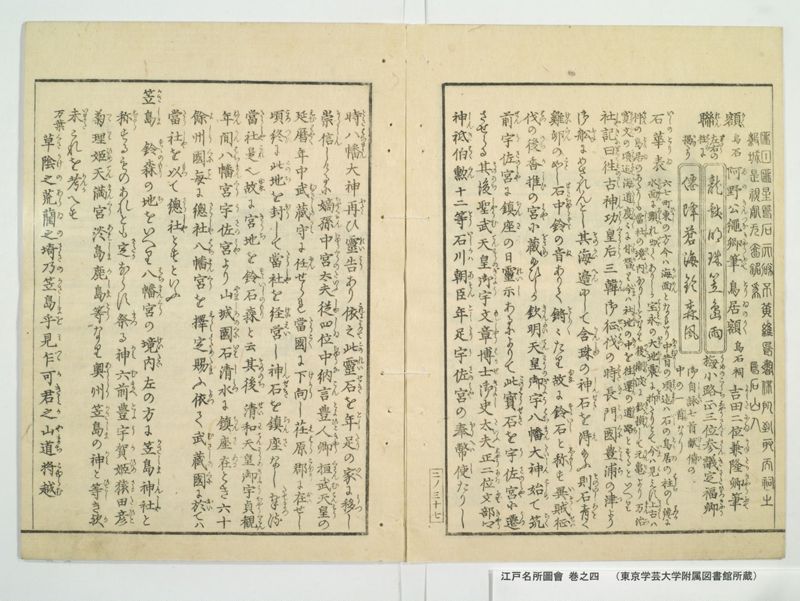
翻刻
【右丁】
匪日匪星烏石而條不黄維烏■■即到所祠土
榖城是視■■會銘焉 烏石山入
額(かく)《割書:烏石|》阿野公繩卿筆(あのきんつなきやうふて) 鳥居額(とりゐのかく)《割書:烏石祠|》吉田二位兼隆卿筆(よしたにゐかねたかきやうふて)
聨(れん)《割書:左右(さいう)の|柱(はしら)に》
《割書:掲(かけ)たり|》
龍献明珠笠嶋雨#1梅小路正三位参議定福卿(うめのこうちしやうさんみさんきさたひろきやう)
僊降蒼海鈴森風#1《割書:御自詠( しえい)七首 献備(けんひ)の|中の一首( しゆ)なり》
石華表(いしのとりゐ)《割書:六七町 東(ひかし)の方今は海面(かいめん)となれり中昔(なかむかし)の頃迠(ころまて)は石(いし)の鳥居(とりゐ)の柱(はしら)のみ纔(わつか)に|水面(すいめん)に顕(あらは)れ出(いて)てありしか宝永(はうえい)の大地震(おほちしん)に折(をれ)たりとて今(いま)は見(み)えす上古(そのかみ)は》
《割書:件(くたん)の鳥居(とりゐ)のあたりも當社(たうしや)の境内(けいたい)なりしとなり後(のち)潮波(てうは)に欽損(きんそん)して元亀(けんき)より万治(まんち) |寛文(くわんふん)の頃迠(ころまて)海道(かいたう)度々(たひ〳〵)に付替(つけかは)り今(いま)は社地(しやち)の中(なか)を往還(わうくわん)の道路(たうろ)とするといへり》
社記曰(しやきにいはく)往古(そのかみ)神功皇后三韓御征伐(しんこうくわうこう かん せいはつ )の時(とき)長門國(なかとのくに)豊浦(とよら)の津(つ)より
御舩( ふね)にめされんとし其(その)海邊(かいへん)にして含珠(かんしゆ)の神石(しんせき)を得(え)給ふ則石(そのいし)青(あを)く
雞卵(けいらん)の如(こと)し石中(せきちゆう)鈴(すゝ)の音(ね)ありて鏘々(そう〳〵)たり故(ゆゑ)に鈴石(すゝいし)と称(しよう)す異賊(いそく)征(せい)
伐(はつ)の後(のち)《振り仮名:香椎の宮|かしひ みや》に藏(をさめ)給ひしか欽明天皇御宇(きんめいてんわうのぎよう)八幡大神(はちまんたいしん)始(はしめ)て筑(ちく)
前(せん)宇佐宮(うさのみや)に鎮座(ちんさ)の日 靈示(れいし)あるによりて此(この)寳石(はうせき)を宇佐宮(うさのみや)に遷(うつ)
させらる其後(そののち)聖武天皇御宇(しやうむてんわうのぎよう)文章博士御史太夫正二位文部卿(もんしやうはかせきよしたいふしやうにゐふみ きやう)
神祇伯勲十二等石川朝臣年足(しんきはくくん とういしかはあそんとしたり)宇佐宮(うさのみや)の奉幣使(ほうへいし)たりし
【左丁】
時(とき)八幡大神(はちまん )再(ふたゝ)ひ靈告(れいこう)あり依之(これによつて)此(この)靈石(れいせき)を年足(としたり)の家(いへ)に移(うつ)し
崇信(そうしん)しけるに嫡孫(ちやくそん)中宮太夫従四位中納言豊人卿(ちゆうくうのたいふしゆしゐちゆうなこんとよひときやう)桓武天皇(くわんむてんわう)の
延暦(えむりやく)年中 武藏守(むさしのかみ)に任(にん)せられ當國(たうこく)に下向(けかう)し荏原郡(えはらこほり)に在(おは)せし
頃(ころ)終(つひ)に此地(このち)を封(ほう)して當社(たうしや)を経営(けいえい)し神石(しんせき)を鎮座(ちんさ)なし奉(たてまつ)る
當社(たうしや)是(これ)也 故(ゆゑ)に宮地(きうち)を鈴石森(すゝいしのもり)と云 其後(そののち) 清和天皇御宇(せいわてんわうのきよう)貞観(ちやうくわん)
年間(ねんかん)八幡宮(はちまんくう)宇佐宮(うさのみや)より山城國(やましろのくに)石清水(いはしみつ)に鎮座(ちんさ)在(ある)とき六十
餘州(よしう)國毎(くにこと)に總社(さうしや)八幡宮(はちまんくう)を擇定(えらみさため)賜(たま)ふ依(よつ)て武藏國(むさしのくに)に於(おい)ては
當社(たうしや)を以(もつ)て總社(さうしや)とすといふ
笠島(かさしま) 鈴森(すゝのもり)の地(ち)をいへり八幡宮(はちまんくう)の境内(けいたい)左の方に笠島神社(かさしましんしや)と
称(しよう)するものあれとも定(さたか)ならす祭(まつ)る神(かみ)六前(むまへ)豊宇賀姫(とようかひめ)猿田彦(さるたひこ)
《振り仮名:菊理姫|つゝりひめ#2》天満宮(てんまんくう)淡島(あはしま)鹿島(かしま)等(とう)なり奥州(あうしう)笠島(かさしま)の神(かみ)と等(ひとし)き欤(か)
未(いまた)これを考(かんか)へす
《割書:万葉|》草蔭(くさかけ)之(の)荒藺(あらゐ)之(の)崎(さき)乃(の)笠島(かさしま)乎(を)見乍(みつゝ)可(か)君(きみ)之(か)山道(やまち)將越(こゆらむ)
現代語訳
【右丁】
匪日匪星烏石而條不黄維烏■■即到所祠土
榖城是視■■會銘焉 烏石山入
額(阿野公繩卿筆) 鳥居額(吉田二位兼隆卿筆)
聯(左右の柱に掲げたり)
龍献明珠笠嶋雨 梅小路正三位参議定福卿
僊降蒼海鈴森風(御自詠七首 献備の中の一首なり)
石華表 六七町東の方今は海面となれり中昔の頃まで石の鳥居の柱のみわずかに水面に現れ出でてありしが宝永の大地震に折れたりとて今は見えず上古は
この鳥居のあたりも当社の境内なりしとなり後潮波に浸食されて元亀より万治・寛文の頃まで海道度々に付替り今は社地の中を往還の道路とするといえり
社記に曰く往古神功皇后三韓御征伐の時長門国豊浦の津より御船に召されんとしその海辺にして含珠の神石を得給う則石青く鶏卵の如し石中鈴の音ありて鏘々たり故に鈴石と称す異賊征伐の後香椎の宮に蔵給いしが欽明天皇御宇八幡大神始めて筑前宇佐宮に鎮座の日霊示あるによりてこの宝石を宇佐宮に遷させらるその後聖武天皇御宇文章博士御史大夫正二位文部卿神祇伯勲十二等石川朝臣年足宇佐宮の奉幣使たりし
【左丁】
時八幡大神再び霊告あり依ってこの霊石を年足の家に移し崇信しけるに嫡孫中宮大夫従四位中納言豊人卿桓武天皇の延暦年中武蔵守に任せられ当国に下向し荏原郡にあらせし頃終にこの地を封してこの社を経営し神石を鎮座し奉る当社これなり故に宮地を鈴石森と云うその後清和天皇御宇貞観年間八幡宮宇佐宮より山城国石清水に鎮座あるとき六十余州国毎に総社八幡宮を択定賜う依って武蔵国においては当社を以て総社とするという
笠島 鈴森の地をいえり八幡宮の境内左の方に笠島神社と称するものあれども定かならず祭る神六前豊宇賀姫猿田彦菊理姫天満宮淡島鹿島等なり奥州笠島の神と等しきか未だこれを考えず
万葉 草蔭の荒藺の崎の笠島を見つつ可君が山道越ゆらむ
英語訳
【Right page】
"Neither sun nor star, the crow stone and its provisions, not yellow, maintaining crow... immediately arriving at the shrine's earth, examining the castle of grain... inscribed... Crow Stone Mountain entry"
Plaque (Calligraphy by Lord Ano Kintsuna) Torii Gate Plaque (Calligraphy by Lord Yoshida Second Rank Kanetaka)
Couplet (hanging on the left and right pillars):
"Dragon offers bright pearl, Kasashima rain" Lord Umenokoji Third Rank Counselor Sadahiro
"Immortal descends to the azure sea, Suzumori wind" (One poem from seven self-composed poems offered as tribute)
Stone Torii Gate Six or seven towns to the east, now it has become sea surface. Until ancient times, only the pillars of the stone torii gate barely appeared above the water surface, but they broke in the great earthquake of Hoei era and are no longer visible. In ancient times, the area around this torii gate was also within the precincts of this shrine. Later, it was eroded by tidal waves, and from Genki through Manji and Kanbun eras, the coastal road was relocated many times. Now the highway passes through the shrine grounds.
The shrine records say: In ancient times, when Empress Jingu was about to board her ship from Toyoura port in Nagato Province for the conquest of the three Korean kingdoms, she obtained a divine stone containing pearls at that seashore. The stone was blue like a chicken egg, and there was a bell-like sound from within the stone, ringing clearly. Therefore it was called the "Bell Stone." After the conquest of foreign enemies, it was stored at Kashii Shrine, but during Emperor Kinmei's reign, when Hachiman Great Deity first enshrined at Usa Shrine in Chikuzen, there was a divine revelation, and this precious stone was moved to Usa Shrine. Later, during Emperor Shomu's reign, Ishikawa no Asomi Toshitari, who held the titles of Doctor of Literature, Imperial Historian, Senior Second Rank, Minister of Education, and Shinto Administrator with Twelfth Order Merit, served as an envoy to Usa Shrine.
【Left page】
At that time, Hachiman Great Deity gave another divine revelation, and this sacred stone was moved to Toshitari's house for worship. His legitimate grandson, Lord Toyohito, Middle Palace Administrator, Junior Fourth Rank, Middle Counselor, was appointed as Governor of Musashi during the Enryaku era of Emperor Kammu, came down to this province, and while residing in Ebara District, finally consecrated this land, established this shrine, and enshrined the divine stone. This is our shrine. Therefore, the shrine grounds are called Suzuishi-no-mori (Bell Stone Grove). Later, during Emperor Seiwa's reign in the Jogan era, when Hachiman Shrine was enshrined from Usa Shrine to Iwashimizu in Yamashiro Province, head Hachiman shrines were designated in each of the sixty-odd provinces. Therefore, in Musashi Province, this shrine was designated as the head shrine.
Kasashima This refers to the land of Suzumori. On the left side of Hachiman Shrine's precincts, there is something called Kasashima Shrine, but this is not certain. The six deities enshrined are Toyouka-hime, Sarutahiko, Kukuri-hime, Tenmangu, Awashima, and Kashima. Whether these are the same as the deities of Kasashima in Oshu is not yet investigated.
Man'yoshu poem: "Looking at Kasashima of Arai Point in the grass shadows, might you be crossing the mountain path?"