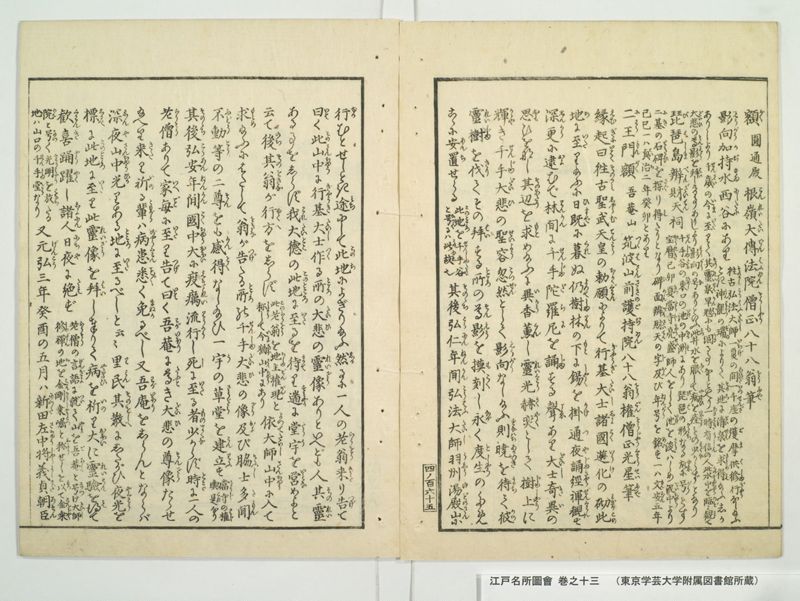
翻刻
【右丁】
額(がく)《割書:円通殿》根嶺大伝法院僧正(こんれいたいでんはふゐんそうしやう)八十八 翁(をう)筆(ふで)
影向加地水(えうがうかぢすゐ)西谷(にしたに)にあり《割書:往古(そのかみ)弘法大師(こうはふたいし)一夏(いちげ)の間(あひだ)一千座(いつせんざ)の護摩供修行(ごまくしゆぎやう)なし給ふ|とき神龍(しんりよう)の瑞(ずゐ)によりて其地(そのち)に清泉(せいせん)を求得(もとめえ)給ふしか》
《割書:ありしより千歳(せんさい)の今(いま)に至(いた)りて其(その)霊泉(れいせん)旱魃(かんはつ)にも涸(かる)る事なしといへり一時(あるとき)有信(うしん)の人 此(この)水中(すゐちゆう)を臨(のぞ)み観(み)て|大悲(だいひ)の尊影(そんえう)を拝(はい)しける事ありしより影向(えうがう)の号(な)ありといふ此(この)井水を服(ふく)して病(やまひ)を痊(いやす)もの少(すくな)からずとなり》
琵琶島弁財天祠(びはしまべんざいてん )《割書:千手谷(せんじゆたに)の東(ひがし)口の池(いけ)の中洲(なかす)にあり琵琶(びは)の形(かたち)なる故(ゆゑ)に号(がう)とす|宝暦(ほうれき)己卯 夏(なつ)当寺(たうじ)亮盛師(りやうせい )人をして池(いけ)を浚(さら)はしめ泥中(でいちゆう)より》
《割書:二基(にき)の石碑(せきひ)を探(さぐ)り得(え)たりとなり碑面(ひめん)弁財天(べんざいてん)の字(じ)及(およ)び年号(ねんがう)を銘(めい)す一は文安(もんあん)五年|己巳一は貞治(ていち)二年癸卯とあり》
二王門額(にわうもんがく)《割書:吾菴山》筑波山前護持院(つくはさんさきのごぢゐん)八十八 翁(をう)権僧正光星(ごんそうじやうくわうせい)筆(ふで)
縁起曰(えむぎにいはく)往古(そのかみ)聖武天皇(しやうむてんわう)の勅願(ちよくぐわん)によりて行基大士(ぎやうぎたいし)諸国遊化(しよこくいうけ)の砌(みぎり)此(この)
地(ち)に至(いた)り給ふに日(ひ)既(すで)に暮(くれ)ぬ仍(よつて)樹林(しゆりん)の下(もと)に錫(しやく)を掛(かけ)通夜(つや)誦経(じゆきやう)禅観(ぜんくわん)す
深更(しんかう)に逮(およ)むで林間(りんかん)に千手陀羅尼(せんじゆだらに)を誦(じゆ)する声(こゑ)あり大士(だいし)奇異(きい)の
思(おも)ひをなし其辺(そのあたり)を求(もと)め給ふに異香(いかう)熏(くん)し霊光(れいくわう)赫奕(かくやく)として樹上(じゆしやう)に
輝(かゝや)き千手大悲(せんじゆだいひ)の聖容(せいよう)忽然(こつぜん)として影向(えうがう)なし給ふ則(すなはち)暁(あかつき)を待(まち)て彼(かの)
霊樹(れいじゆ)を伐(きり)てその拝(はい)する所(ところ)の尊影(そんえう)を摸刻(もこく)し永(なが)く度生(としやう)のため
こゝに安置(あんち)せらる《割書:此地(このところ)を千手谷(せんしゆたに)|と号(なつく)るは此故(このゆゑ)也》其後(そのゝち)弘仁年間(こうにんねんかん)弘法大師(こうはふたいし)羽州(うしう)湯殿山(ゆどのさん)に
【左丁】
行(ゆか)むとせしとき途(みち)にして此地(このち)によぎり給ふ然(しか)るに一人の老翁(らうをう)来(きた)り告(つげ)て
曰(いは)く此(この)山中(さんちゆう)に行基大士(ぎやうきたいし)作(つく)る所(ところ)の大悲(たいひ)の霊像(れいざう)ありといへども人 其(その)霊(れい)
ある事をしらず我(われ)大徳(たいとこ)の此地(このところ)に至(いた)るを待(まて)り遄(すみやか)に堂宇(たうう)を営(いとな)めよと
云て後(のち)其翁(そのをきな)が行方(ゆくへ)をしらず《割書:此(この)老翁(らうをう)を地主権現(ちしゆごんげん)と|称(しよう)して今猶(いまなほ)山中(さんちゆう)にあり》依(よつて)大師(たいし)山中(さんちゆう)に入て
求(もとめ)給ふにはたして翁(をきな)が告(つげ)たる所(ところ)の千手大悲(せんしゆだいひ)の像(ざう)及(およ)び脇士(けふし)多聞(たもん)
不動(ふどう)等(とう)の二尊( そん)をも感得(かんとく)なし給ひ一宇( う)の草堂(さうだう)を建立(こんりふ)す《割書:当寺(たうじ)の権(はじ)|輿(め)是(これ)なり》
其後(そのゝち)弘安年間(こうあんねんかん)国中(こくちゆう)大(おほい)に疫癘(えきれい)流行(りうかう)し死(し)に至(いた)る者(もの)少(すくな)からず時(とき)に一人の
老僧(らうそう)ありて家毎(いへごと)に至(いた)り告(つげ)て曰(いは)く吾菴(わがいほり)に尊(たふと)き大悲(だいひ)の尊像(そんざう)たゝせ
給へり来(きた)り祈(いの)る輩(ともがら)は病患(びやうくわん)悉(こと〴〵)く免(まぬか)るべし又 吾菴(わがいほり)をしらんならば
深夜(しんや)山中(さんちゆう)光(ひか)りある地(ところ)に至(いた)るべしと云々 里民(りみん)其教(そのをしへ)にしたがひ夜光(やくわう)を
標(しるべ)に此地(このところ)に至(いた)り此 霊像(れいざう)を拝(はい)し奉りて病(やまひ)を祈(いの)り大(おほい)に霊験(れいけん)を得(え)て
歓喜(くわんき)踊躍(やうやく)し諸人(しよにん)日夜(にちや)に絶(たえ)ず《割書:老僧(らうそう)の言語(げんぎよ)に就(つい)て山(やま)を吾菴(ごあん)と号(なつ)け大師(たいし)|修禅(しゆぜん)の地(ち)を金剛(こんかう)乗崛(しやうくつ)と称(しよう)せしを以(もつ)て金乗(こんじやう)》
《割書:院(ゐん)と号(なつ)く光明(くわうみやう)を放(はなち)たる|地(ち)は山口の千手堂(せんしゆたう)なり》又 元弘(げんこう)三年癸酉の五月は新田左中将義貞朝臣(につたさちゆうじやうよしさだあそん)
現代語訳
【右丁】
**額(円通殿)**
根嶺大伝法院僧正、八十八翁の筆。
**影向加地水(えうがうかぢすゐ)**
西谷にある。〔割書:往古、弘法大師が一夏の間、一千座の護摩供の修行をなされたとき、神龍の瑞兆によりて、その地に清泉を求め得られた。それより千歳の今に至るまで、その霊泉は旱魃にも涸れることがないといわれる。ある時、信心深い人がこの水中を覗き見て、大悲の尊い御影を拝したことがあり、それより「影向(えうがう)」の名があるという。この井水を服して病を癒す者は少なくないとのことである。〕
**琵琶島弁財天祠(びわじまべんざいてんしゃ)**
〔割書:千手谷の東口の池の中洲にある。琵琶の形であるゆえに、この名で呼ばれる。宝暦己卯の夏、当寺の亮盛師が人をして池を浚わせ、泥の中から二基の石碑を探り得た。碑面には弁財天の字および年号が銘されており、一つは文安五年己巳、もう一つは貞治二年癸卯とある。〕
**二王門の額**
〔割書:「吾菴山」〕筑波山前護持院、八十八翁・権僧正光星の筆。
**縁起に曰く、**
往古、聖武天皇の勅願によって、行基大士が諸国を遊化される折、この地にお越しになられたところ、日がすでに暮れてしまった。よって樹林の下に錫杖を掛け、一夜を通して読経・禅観に励まれた。夜更けに近づくと、林の中から千手陀羅尼を誦する声がある。大士は不思議に思い、その辺りを求めていくと、異香が漂い、霊光が赫々として樹の上に輝き、千手大悲の聖なる御姿がたちまち影向(現れ)なされた。そこで暁を待って、かの霊樹を伐り、拝した尊影を模刻し、永く衆生済度のためにここに安置された。〔割書:この地を「千手谷」と号するのはこの故である。〕
その後、弘仁年間に弘法大師が羽州・湯殿山へ
【左丁】
行こうとされたとき、道すがらこの地に立ち寄られた。すると一人の老翁が来て告げていうには、「この山中に行基大士の作られた大悲の霊像があるが、人はその霊験あることを知らない。我は大徳(弘法大師)がこの地に至るのを待っていた。速やかに堂宇を営むべし」と言って、その後その老翁の行方が分からなくなった。〔割書:この老翁を地主権現と称して、今なお山中にある。〕そこで大師が山中に入り求められると、果たして翁が告げた通りの千手大悲の像、および脇侍の多聞・不動等の二尊をも感得なされ、一宇の草堂を建立された。〔割書:当寺の草創はこれに始まる。〕
その後、弘安年間に国中に大いに疫病が流行し、死に至る者が少なくなかった。時に一人の老僧があって、家々を訪ね告げて曰く、「我が庵に尊き大悲の尊像がいらっしゃる。来て祈る者は病患をことごとく免れることができよう。また我が庵を知りたいならば、深夜に山中の光ある所へ至るべし」と言った。里の人々はその教えに従い、夜の光を道しるべにこの地に至り、この霊像を拝み奉って病を祈り、大いに霊験を得て歓喜踊躍し、諸人は日夜絶えることがなかった。〔割書:老僧の言葉により山を「吾菴(ごあん)」と号け、大師が修禅された地を「金剛乗崛(こんごうじょうくつ)」と称したのを以て「金乗院(こんじょういん)」と号くこととなった。光明を放った地は山口の千手堂である。〕
また元弘三年癸酉の五月には、新田左中将義貞朝臣が……
英語訳
**[Right Folio]**
**Plaque (Entsu-den Hall)**
Written by the Sōjō (senior Buddhist prelate) of Konrei Daidenpō-in, the eighty-eight-year-old elder.
**The "Eōgō Kajisui" (Holy Manifestation Sacred Water)**
Located in the West Valley. [Inserted note: In ancient times, when the Great Master Kōbō Daishi conducted one thousand sessions of *goma* (fire ritual) practice over the course of a summer retreat, through an auspicious sign from a divine dragon, he sought and found a clear spring at that spot. From that time to the present, a thousand years later, it is said that this sacred spring never runs dry even during drought. On one occasion, a devout person looked into the water and beheld the venerable form of Daihi (the Great Compassionate One), and it is said that from this event the spring came to be called "Eōgō" (Divine Manifestation). It is reported that not a few people have drunk this well water and been cured of illness.]
**The Shrine of Biwa-jima Benzaiten**
[Inserted note: Located on a small island in the pond at the eastern entrance of Senjuya Valley. It is so named because the island is shaped like a *biwa* (lute). In the summer of the *kimō* year of the Hōreki era, the Venerable Ryōsei of this temple had workers dredge the pond, and from the mud they recovered two stone monuments. Inscribed on the face of the monuments were the characters for Benzaiten along with dates: one marked the 5th year of Bun'an (己巳, 1448), and the other the 2nd year of Jōji (癸卯, 1363).]
**The Plaque of the Niō-mon (Two Kings Gate)**
[Inserted note: "Goan-zan"] Written by the eighty-eight-year-old elder, Provisional Senior Prelate Kōsei, of Tsukubazan-saki Goji-in Temple.
**The temple's *engi* (founding legend) states:**
In ancient times, in accordance with the votive wish of Emperor Shōmu, the Great Bodhisattva Gyōki, while traveling through various provinces to teach the Buddhist teachings, arrived at this place to find that the sun had already set. He therefore hung his staff (shakujo) beneath the trees and spent the night in sutra-chanting and Zen meditation. As deep night approached, a voice chanting the *Senju Dhāraṇī* (Thousand-Armed Dhāraṇī) was heard from within the forest. The Great Master, filled with a sense of wonder, searched the surrounding area, whereupon a wondrous fragrance drifted through the air, a sacred light shone brilliantly from atop a tree, and the holy form of Senju Daihi (the Thousand-Armed Bodhisattva of Great Compassion) appeared suddenly in a divine manifestation. He then waited for dawn, felled the sacred tree, carved a likeness of the venerable image he had beheld, and enshrined it here permanently for the salvation of all sentient beings. [Inserted note: It is for this reason that this place is called "Senjuya" (Thousand-Armed Valley).]
Later, during the Kōnin era, when Kōbō Daishi was on his way to Yudonosan in Ushū (Dewa Province),
**[Left Folio]**
he stopped at this place along the road. Thereupon an old man came and said: "In this mountain there is a sacred image of Daihi made by the Great Bodhisattva Gyōki, yet people do not know of its sacred power. I have been awaiting the arrival of the Great Virtue (Kōbō Daishi) at this place. Quickly establish a temple hall here." After saying this, the whereabouts of the old man became unknown. [Inserted note: This old man is venerated as the Chishu Gongen (Local Deity of the Land), and even now remains in the mountain.] Thereupon the Great Master entered the mountain in search, and indeed found as the old man had told: the image of Senju Daihi, along with the attendant images of Tamon (Bishamonten) and Fudō and two other venerable figures. He then built a simple grass-thatched hall on the site. [Inserted note: This is the founding of the present temple.]
Thereafter, during the Kōan era, a great epidemic spread throughout the land, and not a few people died. At this time, an old monk went from house to house and proclaimed: "In my hermitage resides a venerable sacred image of Daihi. Those who come and pray shall be freed from all illness. If you wish to find my hermitage, go to the place in the mountain that glows with light deep in the night." The villagers followed his instructions, guided by the light in the night to this place, and worshipped the sacred image, praying for relief from illness. They received great miraculous benefit and rejoiced with jubilation, and people came without cease day and night. [Inserted note: Based on the old monk's words, the mountain was named "Goan" (My Hermitage), and because the place where the Great Master had practiced Zen meditation was called "Kongōjō-kutsu" (Vajrayāna Cave), the temple came to be known as "Konjō-in" (院 of the Diamond Vehicle). The place that emitted the sacred light is the Senju-dō (Thousand-Armed Hall) at Yamaguchi.]
Furthermore, in the fifth month of the *kinoto-tori* year of Genkō 3 (1333), Nitta Sachu-jō Yoshisada Ason (Lord Nitta Yoshisada, Lieutenant General of the Left)…