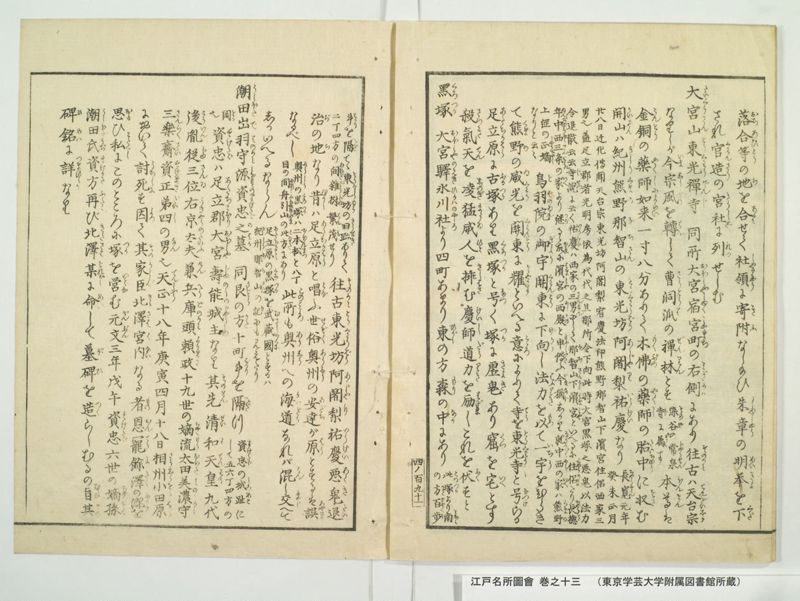
翻刻
【右丁】
落合(おちあひ)等(とう)の地(ち)を合(あは)せて社領(しやりやう)に寄附(きふ)なし給ひ朱章(しゆしやう)の明挙(めいきよ)を下(くだ)
され官造(くわんさう)の宮社(きうしや)に列(れつ)せしむ
大宮山(たいくうさん)東光禅寺(とうくわうぜんじ) 同所 大宮宿(おほみやしゆく)宮町(みやまち)の右側(みぎかは)にあり往古(そのかみ)は天台宗(てんだいしう)
なりしが今(いま)宗風(しうふう)を転(てん)して曹洞派(さうとうは)の禅林(ぜんりん)とす《割書:染谷(そめや)の常泉(じやうせん)|寺(じ)に属(ぞく)す》本尊(ほんそん)は
金銅(こんとう)の薬師如来(やくしによらい)一寸八分ありて木仏(もくぶつ)の薬師(やくし)の胎中(たいちゆう)に収(をさ)む
開山(かいさん)は紀州(きしう)熊野(くまの)那智山(なちさん)の東光坊阿闍梨祐慶(とうくわうばうあじやりいうけい)なり《割書:長寛(ちやうくわん)元年|癸未正月》
《割書:廿八日迁化伝聞天台宗東光坊阿闍梨宥慶法印熊野那智山下浜宮住侶西家三|男也盖足立郡者光明房依為代代之旦那所令下向此時大宮黒塚之悪鬼以法力》
《割書:令退散云云 寺説(じせつ)に云く祐慶(いうけい)は西家の三男(さんなん)にして那智山(なちさん)下浜宮(くたはまみや)といへるに住侶(ぢゆうりよ)たり長徳(ちやうとく)|年中(ねんぢゆう)西三条(にしさんてう)の家(いへ)より継(つが)るゝ故(ゆゑ)に浜宮(はまみや)の西殿(にしとの)と申伝(もふしつた)ふ今猶(いまなほ)しかり就中(なかんつく)西(にし)の家(いへ)は熊野(くまの) 》
《割書:上䌉の正嫡(しやうちやく)|なりと云々》鳥羽院(とばのゐん)の御宇(ぎよう)関東(くわんとう)に下向(げかう)し法力(はふりき)を以(もつ)て一宇(いちう)をひらき
て熊野(くまの)の威光(ゐくわう)を関東(くわんとう)に耀(かゝやかす)といへる意(こゝろ)によりて寺(てら)を東光寺(とうくわうし)と号(なつけ)らる
足立原(あたちかはら)に古塚(ふるつか)あり黒塚(くろつか)と号(なつ)く塚(つか)に虗鬼(きよき)あり窟(くつ)を宅(いへ)とす
殺気(さつき)天(てん)を凌(しのぎ)猛威(まうゐ)人(ひと)を𢮿(さしはさ)む慶師(けいし)道力(だうりき)を励(はげま)しこれを伏(ふく)すと
黒塚(くろつか) 大宮駅(おほみやのえき)氷川社(ひかはのやしろ)より四町あまり東(ひがし)の方 森(もり)の中(なか)にあり《割書:此塚(このつか)より南(みなみ)|の方(かた)百歩(ひやくほ)》
【左丁】
《割書:斗(はかり)を隔(へだ)てゝ東光坊(とうくわうばう)の旧跡(きうせき)ありて|二丁四方の間(あひだ)雑樹(ざうじゆ)繁茂(はんも)せり》往古(そのかみ)東光坊阿闍梨祐慶(とうくわうばうあじやりいうけい)悪鬼(あくき)退(たい)
治(ぢ)の地(ち)なり昔(むかし)は足立原(あたちかはら)と唱(とな)ふ世俗(せぞく)奥州(あうしう)の《振り仮名:安達が原|あだち はら》とするは誤(あやまり)
なるべし《割書:奥州(あうしう)の黒塚(くろつか)は二本松(にほんまつ)と八丁|目の間(あひだ)舟引山(ふなひきやま)の此方(こなた)にあり》此所(このところ)も奥州(あうしう)への海道(かいだう)なれば混(こん)し交(まじ)へて
しかいへるならん《割書:足立原(あたちかはら)の黒塚(くろつか)を武蔵国(むさしのくに)とするは|紀州(きしう)那智山(なちさん)の記(き)にも見えたり》
潮田出羽守源資忠之墓(うしほたではのかみみなもとのすけたゞのはか) 同 艮(うしとら)の方(かた)十町斗( ばかり)を隔(へだ)つ《割書:資忠(すけたゞ)の城趾(しろあと)に|して五六丁四方の》
《割書:岡(をか)|也》資忠(すけたゞ)は足立郡(あたちこほり)大宮(おほみや)寿能城主(じゆのうのじやうしゆ)なり其先(そのせん)清和天皇(せいわてんわう)九代
後胤(こういん)従三位右京太夫兼兵庫頭頼政(じゆさんゐうきやうのたいふけんへうごのかみよりまさ)十九世の嫡流(ちやくりう)太田美濃守(おほたみのゝかみ)
三楽斎資正(さんらくさいすけまさ)第四(だいし)の男(なん)也 天正(てんしやう)十八年庚寅四月十八日 相州(さうしう)小田原(をたはら)
において討死(うちしに)す因(よつ)て其(その)家臣(かしん)北沢宮内(きたさはくない)なる者(もの)恩寵(おんてう)余沢(よたく)の深(ふかき)を
思(おも)ひ私(わたくし)にこのところに塚(つか)を営(いとな)む元文(げんぶん)三年戊午 資忠(すけたゞ)六世の嫡孫(ちやくそん)
潮田氏資方(うしほたうぢすけかた)再(ふたゝ)び北沢(きたさは)某(それがし)に命(めい)して墓碑(ぼひ)を造(つく)らしむるの旨(むね)其(その)
碑銘(ひめい)に詳(つまひらか)なり
現代語訳
【右丁】
……落合などの土地を合わせて社領として寄附され、朱章(天皇の朱印状)による明確な認可を下され、官造の宮社(国家が造営する神社)に列せしめられた。
**大宮山 東光禅寺** 同所・大宮宿宮町の右側にある。もとは天台宗であったが、今は宗旨を転じて曹洞派の禅林(禅寺)となっている。《染谷の常泉寺に属す》本尊は金銅製の薬師如来で、高さ一寸八分あり、木造の薬師如来像の胎内に納められている。開山は紀州・熊野那智山の東光坊阿闍梨祐慶である。《長寛元年 癸未正月》
《廿八日に遷化(入滅)したと伝え聞く。天台宗東光坊阿闍梨宥慶法印は、熊野那智山下浜宮の住侶にして、西家の三男である。そもそも足立郡は、光明房が代々の檀那として下向することになっていた。このとき、大宮黒塚の悪鬼を法力によって退散させたという。 寺の説によれば、祐慶は西家の三男であり、那智山下浜宮と呼ばれる地に住侶であった。長徳年中に西三条の家から継がれたことから、浜宮の西殿と申し伝える。今もなおそう呼ばれている。とりわけ西の家は熊野上綱の正嫡であるという。》
鳥羽院の御代に関東へ下向し、法力をもって一宇(一つの堂宇)を開き、熊野の威光を関東に輝かせるという意によって、寺を「東光寺」と名付けられた。
足立原(あだちがはら)に古い塚があり、「黒塚」と呼ぶ。塚には虚鬼(妖怪)がいて、洞窟を住処としていた。殺気は天を凌ぎ、猛威は人を脅かした。祐慶師は道力(法力)を奮い、これを降伏させたという。
**黒塚** 大宮駅(宿場)の氷川社より東へ四町あまりの、森の中にある。《この塚より南の方へ百歩》
【左丁】
《ほどを隔てて東光坊の旧跡があり、二丁四方の間に雑木が繁茂している。》もとは東光坊阿闍梨祐慶が悪鬼を退治した地である。昔は「足立原(あたちがはら)」と称した。世間では奥州の「安達が原(あだちがはら)」とするが、それは誤りであろう。《奥州の黒塚は、二本松と八丁目の間、舟引山のこちら側にある。》この場所も奥州への街道沿いにあるため、混同されてそのように言われるようになったのであろう。《足立原の黒塚を武蔵国のものとする記述は、紀州那智山の記録にも見られる。》
**潮田出羽守源資忠之墓** 同所の艮(北東)の方角へ十町ばかりを隔てる。《資忠の城跡であって、五、六丁四方の岡(丘)である。》資忠は足立郡大宮・寿能城主である。その先祖は、清和天皇の九代後胤、従三位右京大夫兼兵庫頭頼政より十九世の嫡流にあたる、太田美濃守三楽斎資正の第四男である。天正十八年(1590年)庚寅、四月十八日、相州小田原において討死した。そのため、家臣の北沢宮内なる者が、主君の深い恩寵・余沢を思い、私に(個人的に)この地に塚を営んだ。元文三年(1738年)戊午、資忠の六世の嫡孫・潮田氏資方が、再び北沢某に命じて墓碑を造らせた旨が、その碑銘に詳しく記されている。
英語訳
[Right page]
…combining [the lands of] Ochiai and other areas, these were donated as shrine estates (*sharyō*), and with the formal issuance of a vermilion-sealed decree (*shushō*), the shrine was listed among the officially constructed (*kanzō*) shrines and sanctuaries.
**Taikūzan Tōkō Zenji (East Light Zen Temple, Great Palace Mountain)** Located on the right side of Miyamachi, Ōmiya-juku, in the same area. It was originally of the Tendai sect, but has since converted to become a Zen temple of the Sōtō school. *(It is affiliated with Jōsenji Temple in Someya.)* The principal image (*honzon*) is a gilt-bronze (*kondō*) statue of Yakushi Nyorai (Medicine Buddha), measuring one *sun* and eight *bu* in height, enshrined within the body (*tainai*) of a wooden Yakushi statue.
The founder (*kaisan*) of the temple is Tōkōbō Ajari Yūkei of Nachi-san, Kumano, Kishū Province. *(In the first month of Chōkan 1 [1163], year of Mizunoto-Hitsuji)*
*(He passed away [entered nirvana] on the 28th day, it is said. The Tendai monk Tōkōbō Ajari Yūkei Hōin was a resident priest of Shimo-Hamomiya at Nachi-san, Kumano, and the third son of the Nishi family. Adatchi District had long been a domain of Kōmyōbō as its hereditary patron, which is why [Yūkei] made his way down there. At this time, it is said that he used his spiritual power to drive away the evil demon of Kurotsuka in Ōmiya. According to the temple's account, Yūkei was the third son of the Nishi family and served as a resident priest at a place called Nachi-san Shimo-Hamomiya. Because the lineage was inherited from the Nishi-Sanjō family during the Chōtoku era, he was known as the "Nishi-dono of Hamomiya." This remains the case today. In particular, the Nishi family is said to be the legitimate heir of the chief Kumano priest [*Kumano Jōkō*].)*
During the reign of Emperor Toba (*Toba-in*), [Yūkei] traveled to the Kantō region and, through his spiritual power, established a temple (*ichiū*), with the intent of making Kumano's glory shine throughout the Kantō region—and thus the temple was named "Tōkōji" (East Light Temple).
In the Adachi Plain (*Adachigahara*), there is an ancient mound called "Kurotsuka" (Black Mound). A demon (*kyoki*) dwelled in this mound, making a cave its home. Its murderous aura pierced the sky, and its ferocity threatened the people. Master Yūkei summoned his spiritual power and subdued it.
**Kurotsuka (Black Mound)** Located in a forest more than four *chō* to the east of the Hikawa Shrine at the Ōmiya post-station. *(About one hundred paces to the south of this mound,)*
[Left page]
*…lies the former site of the Tōkōbō, where miscellaneous trees grow thickly within an area of about two *chō* square.* This is the place where Tōkōbō Ajari Yūkei subdued the evil demon long ago. In former times, it was called "Adachigahara" (*Atachigahara*). The popular claim that this is the "Adachigahara" of Ōshū (Mutsu Province) is likely an error. *(The Kurotsuka of Ōshū is located on this side of Funahikiyama, between Nihonmatsu and Hatchōme.)* Since this place is also along the highway to Ōshū, it seems the two locations have become confused and conflated. *(That the Kurotsuka of Adachigahara is in Musashi Province is also noted in the records of Nachi-san in Kishū Province.)*
**Tomb of Ushiota Dewa-no-Kami Minamoto no Suketada** Approximately ten *chō* in the *ushitora* (northeast) direction from the same place. *(This is the site of Suketada's castle, an elevated area of some five or six *chō* square.)* Suketada was the lord of Junō Castle in Ōmiya, Adachi District. He was a descendant in the direct line (*chakuryū*) of the ninth generation from Emperor Seiwa, through Jūsanmi Ukyō-no-Taifu and concurrently Hyōgo-no-Kami Yorimasa—specifically the nineteenth-generation direct descendant—and the fourth son of Ōta Mino-no-Kami Sanrakusai Sukemasa.
On the eighteenth day of the fourth month of Tenshō 18 (1590), the year of Kanoe-Tora, he died in battle at Odawara in Sagami Province. Accordingly, his retainer, one Kitazawa Kunai, in deep gratitude for his lord's immense benevolence and generosity, privately constructed a burial mound at this place. In Genbun 3 (1738), the year of Tsuchinoe-Uma, Suketada's sixth-generation direct heir, Ushiota Sukemasa (氏資方), again ordered a certain Kitazawa to erect a grave marker. The full details are recorded in the inscription on that monument.