翻刻
琉球船
此船宝永二
土州浦エ漂着ス船モ
カクノゴトシ
供琉人
路次楽
正使小姓《割書:美少年| ナリ》
楽正従者
讃議官従者
医師
一此度は故にありて殊に
美々しく又いつの
世にあるべくも覚へず
見る人見ぬ人此一枚摺
引くらべ見物有らば次第
よくわかりぬべし
一行列之要は琉王かく【がく=楽】
童子の美服其外行粧
の音楽にて■かん之駅はやん
ことなきわけにて楽童子
馬上の美をつくし候
一行列之義は駅々亦は
ときにより少しつゝ増減
前後あり此摺物は粗
格式の許列をしるす
琉人江戸へ出立之節
行列通行道筋
伏見
御本陣ゟ塩屋丁
伯耆丁 南部丁
鷹匠丁 下板橋通
箱屋丁 丹波橋通
両がへ丁 鑓屋丁
墨染 藤のもり
巻 染
藤のもり
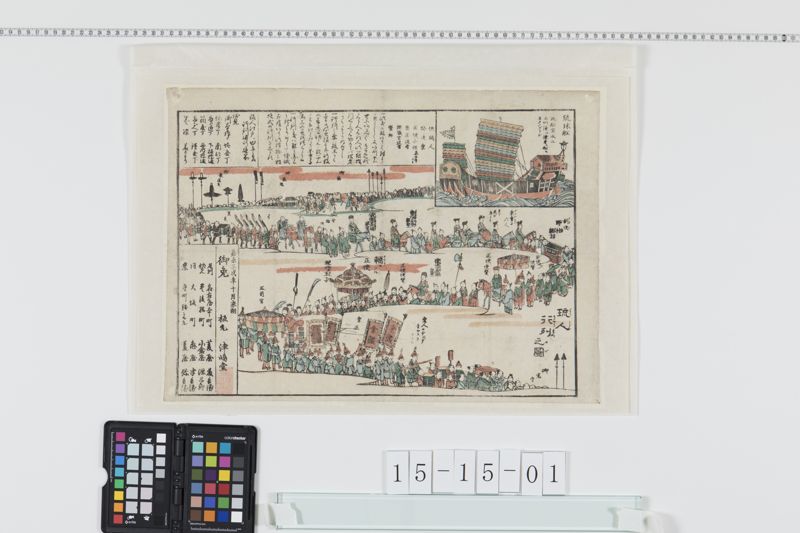
【図】
琉人(りうじん)
行列(きやうれつ)
之図(のづ)
【行列の先頭から末尾に向かって】
御
先
手
楽人ロテニテ【ロヂニテ?口テニテ?】
音ガクヲ
ツトム
【幟】金鼓
【幟】金鼓
楽正
【黒い札】□□□□
【黒い札】中山三□□
三司官
玉川王子(タマカハヲヽシ)
轎(キヤウ)ニノル
正使
正使使賛
讃儀官(サンギクハン)我謝(ガシヤ)
親雲上
正使使賛
副使
使賛
副使(フクシ)
野村(ノムラ)
親方(オヤカタ)
楽童子(ガクドウジ)
六人
至テ
美少
年ナリ
楽正伊舎堂(ガクシヤウイシヤダウ)
親雲上
儀衛正高嶺(ギヱイシヤウカウレイ)
親雲上
堂
輸
使【常翰使?】
弓
具足
御
長道
具
御
家?
老?
御
馬
嘉永三戌年十月来朝
《題:御免 板元 津島堂》
尾州 名古屋本町 菱屋 藤兵衛
伏見 豊後橋町 小倉屋 源三郎
同 大坂町 亀屋 半兵衛
京 寺町錦上ル 菱屋 弥兵衛
現代語訳
## 琉人行列之図(りゅうじん行列の図)
**琉球船**
この船は、宝永2年(1705年)に土佐の浦へ漂着した船も、このような形をしていた。
**行列の構成員**
- 供の琉人
- 路次楽(行進中の音楽隊)
- 正使小姓(注:大変美しい少年である)
- 楽正従者
- 讃議官従者
- 医師
一、このたびの行列は特別な事情があって、とりわけ華やかである。また、このようなことは滅多にあるものではない。見た人も見られなかった人も、この一枚刷りを手引きとして見物すれば、順序がよくわかるであろう。
一、行列の見どころは、琉球王の楽童子の美しい衣装と、その他行列を飾る音楽である。■かん之駅はやんことなきわけで、楽童子が馬上で美しさを存分に見せてくれる。
一、行列の構成は、宿場ごと、また場合によって少しずつ増減・前後することがある。この刷り物は、おおよその格式・序列を記したものである。
---
**琉人、江戸へ出立の節の行列通行道筋**
伏見より:
御本陣より塩屋町、伯耆町、南部町、鷹匠町、下板橋通、箱屋町、丹波橋通、両替町、鑓屋町、墨染、藤の森
巻(丸)染、藤の森
---
**【図の説明】**
「琉人行列之図」
行列の先頭から末尾に向かって:
- 御先手(さきて/先導役)
- 楽人が路次にて音楽を務める
- 【幟】金鼓 【幟】金鼓
- 楽正
- 【黒い札】□□□□ / 中山三□□
- 三司官
- 玉川王子(たまかわをうじ)
- 轎(きょう)に乗る正使
- 正使使賛
- 讃儀官(さんぎかん)我謝(がしゃ)親雲上
- 正使使賛
- 副使 使賛
- 副使 野村(のむら)親方(おやかた)
- 楽童子 六人(至って美しい少年である)
- 楽正 伊舎堂(いしゃどう)親雲上
- 儀衛正 高嶺(こうれい)親雲上
- 堂輸使(常翰使?)
- 弓
- 具足
- 御長道具
- 御家老
- 御馬
---
嘉永3年戌年(1850年)10月来朝
【御免 板元 津島堂】
- 尾州 名古屋本町 菱屋 藤兵衛
- 伏見 豊後橋町 小倉屋 源三郎
- 同 大坂町 亀屋 半兵衛
- 京 寺町錦上ル 菱屋 弥兵衛
英語訳
## Illustrated Procession of Ryukyuan Envoys (琉人行列之図)
**Ryukyuan Vessel**
The ship that ran aground on the shores of Tosa Province in the 2nd year of Hōei (1705) was of this same form.
**Members of the Procession**
- Attendant Ryukyuans
- Road-procession musicians (rojigaku)
- Pages of the Chief Envoy (Note: They are exceedingly beautiful young men)
- Attendants of the Music Master
- Attendants of the Consulting Official
- Physician
Item: This procession is especially magnificent due to particular circumstances, and such a sight may not be seen again in any age. Whether one has seen it or not, by comparing this single-sheet print as a guide while viewing, the order of the procession should become quite clear.
Item: The highlights of the procession are the splendid costumes of the young musician-attendants of the Ryukyuan King, and the accompanying music of the procession. For reasons that make the post-station [stops] no ordinary occasion, the musician-attendants display their beauty mounted on horseback to the fullest.
Item: The composition of the procession increases or decreases slightly, and the order shifts, depending on each post-station and the circumstances. This print records the general prescribed order of the procession.
---
**Route of the Procession when the Ryukyuan Envoys Depart for Edo**
From Fushimi:
From the Main Lodging (Honjin) → Shioya-chō → Hōki-chō → Nanbu-chō → Takajō-chō → Shimo-Itabashi-dōri → Hakoya-chō → Tanbabashi-dōri → Ryōgae-chō → Yariya-chō → Sumizome → Fujinomori
Maki-some, Fujinomori
---
**[Description of the Illustrated Procession]**
"Illustrated Procession of Ryukyuan Envoys"
From the head to the rear of the procession:
- Advance guard (Osakite)
- Musicians performing music along the road
- [Banners] Kinko (金鼓 / Golden Drum) [Banners] Kinko
- Music Master (Gakushō)
- [Black placard] □□□□ / Chūzan San□□
- Three Senior Officials (Sanshikan)
- Prince Tamakawa (Tamakawa Ōji)
- Chief Envoy riding in a palanquin (kyō)
- Chief Envoy's Attendant-Advisors
- Consulting Official (Sangi-kan): Gasha Peechin (我謝親雲上)
- Chief Envoy's Attendant-Advisors
- Vice Envoy's Attendant-Advisors
- Vice Envoy: Nomura Oyakata (野村親方)
- Six Musician-Attendants (Gaku-dōji) — described as exceedingly beautiful young men
- Music Master: Ishadō Peechin (伊舎堂親雲上)
- Chief of Ceremonial Guard: Kōrei Peechin (高嶺親雲上)
- Tōyu-shi (堂輸使, possibly Jōkan-shi / diplomatic secretary)
- Bow[-bearers]
- Armor[-bearers]
- Ceremonial long-handled weapons (O-nagadōgu)
- Senior Retainer (O-karō)
- Horses
---
Arrived in the 10th month of the 3rd year of Kaei, the Year of the Dog (1850)
[Licensed print; Publisher: Tsushimadō]
- Bishu (Owari), Nagoya Honmachi: Hishiya Tōbei
- Fushimi, Bungo-bashi-chō: Oguraya Genzaburō
- Same [Fushimi], Ōsaka-chō: Kamеya Hanbei
- Kyō (Kyoto), Teramachi, above Nishiki: Hishiya Yahei