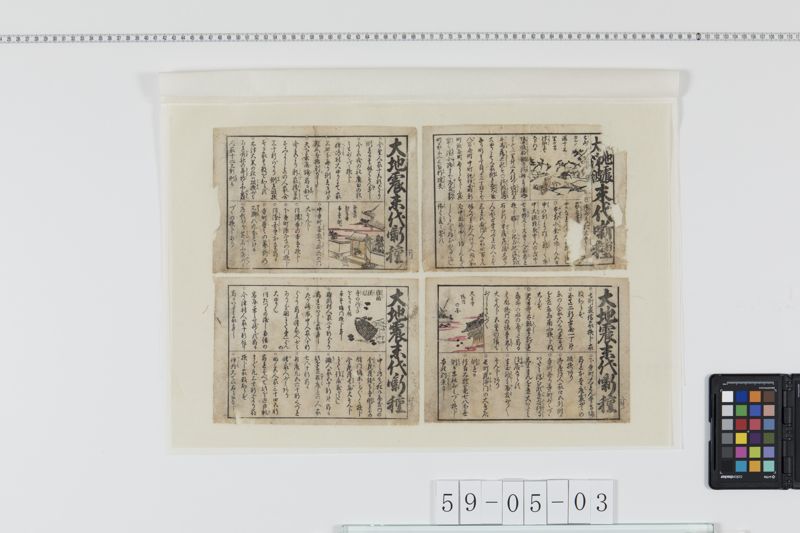
翻刻
【一枚目・右上】
《割書:大地震|大津波》《題:末代話種》
土州(とさ)
カンノ
浦十三
里が間
津浪(つなみ)にて
ながれる
【挿し絵あり】
坂井飯郡(さかいゝごふり)鯛(たい)の浜(はま)村より徳島(とくしま)
まで二里計二尺程づ【ゝ脱】地割(ちわ)れ
牛馬(うしむま)落込(をちごみ)死(し)す○阿波徳島(あわとくしま)
大ゆりにて人家 倒(たふ)れ出火(しゆつくは)と成
通り町壱丁目ゟ三丁目まで
八百(やを)屋仲町 紀伊国(きのくに)町新
町紙屋町通うらすじ不残
牢(らう)ヶ浜(はま)小路(しやうぢ)まで屋敷(やしき)数軒(すけん)
町家千二三百 軒(けん)焼失(せうしつ)
○讃州(さぬき)高松(たかまつ)大ゆりにし□
家過半崩□……【大きな破れあり】
やかなれとも人家損じ多し
○豊前(ぶぜん)小倉(こくら)大地しん五日
申(さる)の刻より猶々 烈(はげ)しく市(し)
中(ちう)大混雑(おほこんざつ)夜中(やちう)五六度ゆり
七日 朝(あさ)又々大ゆり人家(じんか)崩(くづ)れ
損じ夥(おびたゝ)し○肥前(ひぜん)肥後(ひご)筑前(ちくぜん)
右同断○豊後(ぶんご)鶴崎(つるさき)大ゆり
人家過半つぶれ死人かず
しれず府内(ふない)人家四百けん
余くづれ死人けが人数不知
尤 中国路(ちうごくぢ)国々(くに〴〵)地しん甚だ
しく候へ共 格別(かくべつ)の事なし
依(よつ)て爰(こゝ)に略(りやく)す
【二枚目・右下】
《箱:九》
《題:大地震末代噺種》
○長町裏借家損じ家
数知らず
○玉造二軒茶屋一丁斗
東の人家大くつれその
近辺東西南北損じ数
しらず
○天王寺 太鼓堂(たいこだう)くづれ
亀井の水のやかた崩る
其余境内の諸堂 悉(こと〴〵)く
大そんじ五重の塔も
少しかたぶく
【挿し絵あり】
天王寺
境内
の図
○下寺町大れん寺高塀
崩れ本堂 庫裏(くり)少々の
破損あり
○御蔵跡人家四五軒倒る
○寺町通り寺町少々づゝ
いたみ浮(うか)む瀬辺遊行寺(せへんゆぎやうじ)
しよまん近辺大いたみ
住居(すまい)ならす
○生玉 神主屋敷(かんしやしき)少〳〵
そんじあり
○長町 毘沙門(びしやもん)の大鳥居
倒(たふ)れる
○住吉石灯籠七八分通
側(こけ)る末社少々づゝ損じ
本社 別条(べつでう)なし
【三枚目・左上】
《箱:十》
《題:大地震末代噺種》
○今里人家十五軒ばかり
倒れる其余はそん多(おゝ)し
○今宮戎の社広田の社
とも少々づゝ損じ
○稗島(へじま)村大ゆりにて家
三四分通り例れるけが
死人は格別なし
○天下茶屋塀崩る都(すべ)て
今宮より新家(しんげ)勝間(こつま)等(とう)
すみよし迄の人家合
三十軒ばかり倒(たふ)れ破損
する家其数を知らず
○木津大黒の社は破損(はそん)少々
あれ共(ども)神の奇特(きどく)にや無難(ぶなん)
人家十二三軒 倒(こけ)る
【挿し絵あり】
玉造の
観音寺
本堂倒る
○中寺町 当麻寺(たへまじ)掛所(かけしよ)の門
大そんじ
○同 隣寺(りんじ)の本堂損じ
○下寺町源正寺の門損じ
○同 浄国寺(じやうこくじ)本堂崩る
○寺町寺々の墓所(はかしよ)の
石牌(せきひ)八九分こける
○道頓ぼり芝居(しばい)小屋 少々(しやう〳〵)
づゝの損じあり
【四枚目・左下】
《箱:十一》
《題:大地震末代噺種》
難波(なんば)
鉄(てつ)
元(げん)
寺(じ)の釣(つり)がね
をちる其余
本堂塀門損じ多し
【挿し絵あり】
○難波村人家二十軒ばかり
崩れるいたみ家多し
○尼崎市中人家八十軒
ばかり崩れ怪我人少々
あり近国にて第一ばん
の
大ゆり也
○同たつみの渡し南詰の
宿屋茶みせ残らず崩る
○今津村人家十軒余り
崩るいたみ家多し
○中之島高松御屋敷内の
金毘羅絵馬堂(こんひらゑまだう)倒(たふ)れその
余門塀等こと〴〵く損じ
金毘羅 長屋(ながや)大そんじ
にて住居(すまい)成がたし
○灘(なだ)人家五十軒計崩る
此近辺 兵庫(ひやうご)迄の人家
七八十軒崩る
○兵庫凡五六十軒くづれ
怪我(けが)人少々あり
○西ノ宮人家三十四五軒
崩れすべて此近辺 御影(みかげ)
まで凡三十軒ばかり崩
損じ家数知らず
○伊丹(いたゝみ)大てい右におなじ
現代語訳
## 【一枚目・右上】
**大地震・大津波 末代話種(まつだいはなしぐさ)**
土佐(高知県)のカンノ浦から十三里の間、津波によって流される。
〔挿し絵:津波の様子〕
坂井飯郡(さかいいごおり)の鯛の浜村から徳島まで、二里ほどの間に二尺ほどずつ地割れが生じ、牛馬が落ち込んで死んだ。〇阿波・徳島では大揺れにより人家が倒れ、火災が発生し、通り町一丁目から三丁目まで、八百屋仲町、紀伊国町、新町、紙屋町通り、その裏筋も残らず、牢ヶ浜小路まで、屋敷数軒・町家千二、三百軒が焼失した。
〇讃州(讃岐・香川県)高松では大揺れにより、家屋の過半が崩れ〔大きな破損により一部判読不能〕……、穏やかではあるが人家の損壊が多い。
〇豊前(福岡・大分県)小倉では大地震が五日の申の刻(午後四時頃)よりさらに激しくなり、市中は大混乱となった。夜中に五、六度揺れ、七日の朝また大きな揺れがあり、人家の崩壊・損壊が夥しかった。〇肥前・肥後・筑前も同様。〇豊後(大分県)鶴崎では大揺れにより、人家の過半が潰れ、死者の数は知れない。府内(大分市)では人家四百軒余りが崩れ、死者・怪我人の数は不明。なお、中国路(山陽・山陰地方)各国でも地震は甚だしかったが、格別の被害はなかった。よってここでは略す。
---
## 【二枚目・右下】
**大地震末代噺種 〔箱:九〕**
〇長町裏の借家で損壊した家屋の数は知れず。
〇玉造の二軒茶屋から一丁ほど東の人家が大きく崩れ、その近辺の東西南北にわたる損壊数は不明。
〇天王寺では太鼓堂が崩れ、亀井の水のやかたが崩れた。その他、境内の諸堂もことごとく大きな損壊を受け、五重の塔も少し傾いた。
〔挿し絵:天王寺境内の図〕
〇下寺町の大蓮寺では高塀が崩れ、本堂・庫裏に少々の破損あり。
〇御蔵跡では人家四、五軒が倒れた。
〇寺町通りの各寺は少々ずつ傷み、浮かむ瀬辺(うかむせあたり)の遊行寺、そのもん(書院?)近辺は大いに傷み、住居として使えなくなった。
〇生玉神社の神主屋敷に少々の損壊あり。
〇長町の毘沙門の大鳥居が倒れた。
〇住吉(大社)では石灯籠の七、八割が倒れ、末社も少々ずつ損じたが、本社は別条(異状)なし。
---
## 【三枚目・左上】
**大地震末代噺種 〔箱:十〕**
〇今里では人家十五軒ほどが倒れ、その他の損壊も多い。
〇今宮戎の社・広田の社も少々ずつ損壊した。
〇稗島村では大揺れにより家屋の三、四割が倒れたが、怪我人・死者は格別に出なかった。
〇天下茶屋では塀が崩れた。総じて今宮より新家・勝間などを経て住吉までの人家を合わせると三十軒ほどが倒れ、破損した家屋の数は知れない。
〇木津の大黒社は少々の破損はあったが、神の御利益によるものか、人的被害はなかった。人家十二、三軒が倒れた。
〔挿し絵:玉造の観音寺の本堂が倒れた図〕
〇中寺町の当麻寺掛所(末寺・出張所)の門が大きく損壊した。
〇同所、隣寺の本堂が損壊した。
〇下寺町の源正寺の門が損壊した。
〇同所、浄国寺の本堂が崩れた。
〇寺町の各寺の墓所(はかしょ)の石牌(墓石)の八、九割が倒れた。
〇道頓堀の芝居小屋は少々ずつ損壊あり。
---
## 【四枚目・左下】
**大地震末代噺種 〔箱:十一〕**
難波・鉄元寺(てつがんじ)の釣り鐘が落下した。その他、本堂・塀・門の損壊が多い。
〔挿し絵:釣り鐘が落ちる図〕
〇難波村では人家二十軒ほどが崩れ、損壊家屋も多い。
〇尼崎の市中では人家八十軒ほどが崩れ、怪我人も少々あり。近国にて第一番の大揺れであった。
〇同、たつみの渡し(辰巳の渡し)南詰めの宿屋・茶見世は残らず崩れた。
〇今津村では人家十軒余りが崩れ、損壊家屋も多い。
〇中之島の高松御屋敷内の金毘羅絵馬堂が倒れ、その他、門・塀などもことごとく損壊。金毘羅長屋も大きな損壊を受け、住居としては使えなくなった。
〇灘では人家五十軒ほどが崩れ、この近辺から兵庫まで七、八十軒が崩れた。
〇兵庫ではおよそ五、六十軒が崩れ、怪我人も少々あり。
〇西宮では人家三十四、五軒が崩れ、総じてこの近辺から御影まで、およそ三十軒ほどが崩れ、損壊家屋の数は知れない。
〇伊丹もおおむね右に同じ。
英語訳
## [Panel 1 – Upper Right]
**Great Earthquake and Great Tsunami: Tales for Generations to Come**
Along the thirteen *ri* (approx. 51 km) of coastline from Kanno-ura in Tosa Province (present-day Kōchi Prefecture), [people and homes were] swept away by the tsunami.
[Illustration: Scene of the tsunami]
From Tai-no-hama Village in Sakai-i District to Tokushima, the ground cracked open at intervals of roughly two *shaku* (approx. 60 cm) over a distance of about two *ri* (approx. 8 km), and livestock (oxen and horses) fell into the crevices and perished. ○ In Awa Province's Tokushima, severe shaking caused houses to collapse and fires to break out; from Tōri-machi 1-chōme to 3-chōme, Yaoya Nakacho, Kinokuni-chō, Shinmachi, Kamiyachō-dōri and its back lanes, all without exception down to Rō-ga-hama Kōji—several large residences and approximately 1,200–1,300 townhouses were destroyed by fire.
○ In Sanuki Province (present-day Kagawa Prefecture), Takamatsu, severe shaking caused more than half the houses to collapse [remainder illegible due to large tear in document]…; though relatively calm, damage to houses was extensive.
○ In Buzen Province (present-day Fukuoka/Ōita), Kokura, the great earthquake intensified further from around 4 p.m. on the 5th day (of the 11th month), throwing the city into great confusion. The earth shook five or six times through the night, and on the morning of the 7th day there was another great tremor, causing tremendous collapse and damage to houses. ○ Hizen, Higo, and Chikuzen Provinces experienced the same. ○ In Bungo Province (present-day Ōita Prefecture), Tsurusaki, severe shaking caused more than half the houses to be crushed, and the number of dead is unknown. In Funai (present-day Ōita City), over 400 houses collapsed and the number of dead and injured is unknown. Furthermore, though the earthquake was severe throughout the provinces of the Chūgoku region, there were no particularly notable incidents; they are therefore omitted here.
---
## [Panel 2 – Lower Right]
**Great Earthquake: Tales for Generations to Come [Box: 9]**
○ In the rental houses behind Nagamachi, the number of damaged homes is beyond count.
○ About one *chō* (approx. 109 m) east of Futamatsu Chaya (Two-House Teahouse) in Tamazukuri, houses suffered severe collapse; the extent of damage in the surrounding area in all directions is unknown.
○ At Tennōji (Temple), the drum hall (*taikodō*) collapsed, and the building housing the Kamei spring also collapsed. Moreover, all the various halls within the temple precincts suffered severe damage, and even the five-storied pagoda tilted slightly.
[Illustration: Map/view of the Tennōji precinct]
○ At Dairenji Temple in Shimoteramachi, the high outer wall collapsed and the main hall and kitchen quarters (*kuri*) suffered minor damage.
○ Near the former Okura (public storehouse) site, four or five houses collapsed.
○ Along Teramachi-dōri, each temple suffered some damage; around the Yugyōji Temple near Ukamuse, there was extensive damage rendering the buildings uninhabitable.
○ The *kannushi* (Shinto priest) residence at Ikutama Shrine suffered minor damage.
○ The large *torii* gate of the Bishamonten in Nagamachi collapsed.
○ At Sumiyoshi (Grand Shrine), seven to eight out of ten stone lanterns toppled, the subsidiary shrines suffered minor damage each, but the main shrine was undamaged.
---
## [Panel 3 – Upper Left]
**Great Earthquake: Tales for Generations to Come [Box: 10]**
○ In Imazato, about fifteen houses collapsed and many others were damaged.
○ Imamiya Ebisu Shrine and Hirota Shrine both suffered minor damage.
○ In Hejima Village, severe shaking caused thirty to forty percent of houses to collapse, but there were no significant casualties.
○ At Tenka Chaya, the perimeter wall collapsed. In total, from Imamiya through Shinge and Kotsuma to Sumiyoshi, approximately thirty houses in all collapsed, and the number of damaged houses is beyond count.
○ The Daikoku Shrine in Kizu suffered minor damage, but perhaps through divine protection no one was harmed. Twelve or thirteen houses collapsed.
[Illustration: The main hall of Kannon-ji Temple in Tamazukuri collapsed]
○ The gate of the Taima-dera branch temple (*kakesho*) in Nakateramachi suffered severe damage.
○ The main hall of the neighboring temple in the same area was damaged.
○ The gate of Genshōji Temple in Shimoteramachi was damaged.
○ The main hall of Jōkokuji Temple in the same area collapsed.
○ Seven to eight out of ten grave markers (*sekihi*) in the temple cemeteries along Teramachi toppled.
○ The theater buildings in Dōtonbori each suffered minor damage.
---
## [Panel 4 – Lower Left]
**Great Earthquake: Tales for Generations to Come [Box: 11]**
The hanging bell (*tsurigane*) of Tetsuganji Temple in Namba fell down. In addition, the main hall, perimeter walls, and gates suffered extensive damage.
[Illustration: The falling bell of Tetsuganji Temple]
○ In Namba Village, approximately twenty houses collapsed, with many others damaged.
○ In Amagasaki, approximately eighty houses in the town collapsed with some injured persons; it was said to have been the most severe shaking of any place in the surrounding provinces.
○ At the same location, all the inns and tea-stalls at the south end of the Tatsumi Ferry crossing collapsed entirely.
○ In Imazumi Village, more than ten houses collapsed with many others damaged.
○ Within the Takamatsu Domain residence on Nakanoshima, the Konpira votive picture hall (*emadō*) collapsed, and all remaining gates, walls, and other structures were entirely destroyed; the Konpira long tenement house (*nagaya*) was so severely damaged as to be uninhabitable.
○ In Nada, approximately fifty houses collapsed; in the surrounding area stretching to Hyōgo, some seventy to eighty houses collapsed.
○ In Hyōgo, approximately fifty to sixty houses collapsed, with some injured persons.
○ In Nishinomiya, some thirty-four or thirty-five houses collapsed; altogether in the surrounding area through to Mikage, approximately thirty houses collapsed, and the total number of damaged houses is beyond count.
○ In Itami, conditions were generally the same as described above.