翻刻
【右丁】
武蔵野地名考云或古記曰 荏原郡霞關日本武
尊蝦夷之儲關也尓来連綿大被置之挙國之勝
景而然其遠眺隔雲霞故有霞關之號云云
續千載
おなしくは空に霞の關もかな雲井の鳫をしはしとゝめん 為世
同
わかれ行春の霞の關守も過る月日をとゝめやはする 宣子
新拾遺
徒に名をのみとめてあつま路の霞の關も春そくれぬる 《割書:よみ人| しらす》
新明題
關の戸にきゝしやそらね鳥か鳴あつまのよは霞こふりき 仙洞
夫木
立とまる霞の關の朝朗花も幾重か匂ひそふらむ 亀山院
同
あつまには霞を關の名に立て春来る事を人に告らむ 慈鎮
同
わけそむる關路の名のみ霞にて末は霧なるむさしのゝ秋 為守
同
心あてにそれかとそみる桜花霞の關の春のゆふくれ 光随
同
空にたつ春の霞の關もりや朧月夜の名をとゝむらん 為氏
名寄
くれぬとも春のなこりを忍へとや關に霞の名をとゝむらん 顕氏
回國雜記 名(な)にきゝし霞(かすみ)の關(せき)を越(こえ)てこれかれ歌(うた)よみ
連哥(れんか)なといひすてけるに
【左丁 絵図】
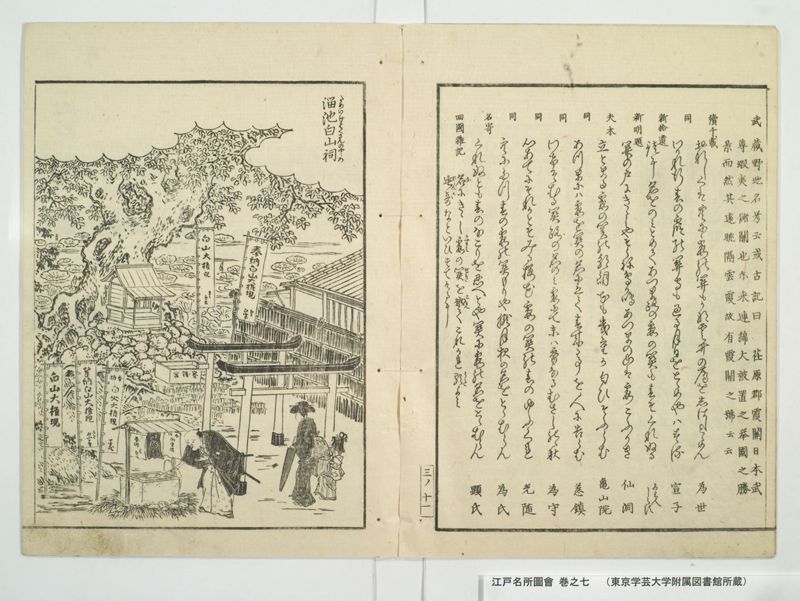
溜池白山祠(ためけはくさんのやしろ)
現代語訳
【右丁】
『武蔵野地名考』に云う、ある古記に曰く「荏原郡の霞が関は、日本武尊が蝦夷征伐の際の備えの関所である。それ以来連綿と大いに設置され、国の勝景となった。その遠望は雲霞を隔てているので、霞が関の号があるという」と。
『続千載集』
同じくは空に霞の関もがな雲井の雁をしばしととめん 為世
『同』
別れ行く春の霞の関守も過ぐる月日をとどめやはする 宣子
『新拾遺集』
いたずらに名をのみとどめて東路の霞の関も春ぞ暮れぬる 詠み人知らず
『新明題』
関の戸に聞きしやそらね鳥が鳴く東の夜は霞こふりき 仙洞
『夫木集』
立ち止まる霞の関の朝朗花も幾重か匂いそうらん 亀山院
『同』
東には霞を関の名に立てて春来ることを人に告げん 慈鎮
『同』
分け染める関路の名のみ霞にて末は霧なる武蔵野の秋 為守
『同』
心当てにそれかとぞ見る桜花霞の関の春の夕暮れ 光随
『同』
空に立つ春の霞の関守や朧月夜の名をとどむらん 為氏
『名寄』
暮れぬとも春の名残を忍べとや関に霞の名をとどむらん 顕氏
『廻国雑記』名に聞きし霞の関を越えて、これかれ歌詠み
連歌などと言い捨てけるに
【左丁 絵図】
溜池白山祠(ためいけはくさんのやしろ)
英語訳
[Right page]
The "Musashino Place Name Study" states that according to an ancient record: "Kasumigaseki in Ebara District was a barrier post prepared by Prince Yamato Takeru against the Emishi. Since then it has been continuously maintained as a great installation and has become a scenic spot of the province. Because its distant view is separated by clouds and mist, it is called Kasumigaseki (Mist Barrier)."
From "Zoku Senzai-shū" (Continued Collection of a Thousand Years):
If only there were a mist barrier in the sky too, to briefly halt the wild geese in the clouds — Tameyo
From the same:
Even the keeper of the mist barrier where spring departs cannot stop the passing months and days — Senshi
From "Shin Shūi-shū" (New Gleanings Collection):
Vainly preserving only its name, spring has ended even at the mist barrier on the eastern road — Anonymous
From "Shin Myōdai":
Did I hear a bird cry at the barrier gate? In the eastern night, mist had fallen — Sentō
From "Fuboku-shū" (Collection of Poetic Treasures):
At the mist barrier where one stops, how many layers of morning cherry blossoms must add their fragrance? — Emperor Kameyama
From the same:
In the east, let us establish mist as the barrier's name to announce spring's arrival to people — Jichin
From the same:
Only the name of the barrier path begins with mist, but ends in the fog of Musashino's autumn — Tamemori
From the same:
Guessing which they might be, I gaze at the cherry blossoms of Kasumigaseki's spring evening — Kōzui
From the same:
Does the keeper of spring's mist barrier standing in the sky preserve the name of hazy moonlit nights? — Tameji
From "Nayose":
Even if day does not end, does the barrier preserve the name of mist so we may cherish spring's remnants? — Akiuji
From "Kaikoku Zakki" (Miscellaneous Records of Provincial Tours): Having crossed the famous Kasumigaseki, various people composed poems and renga verses
[Left page illustration]
Tameike Hakusan Shrine