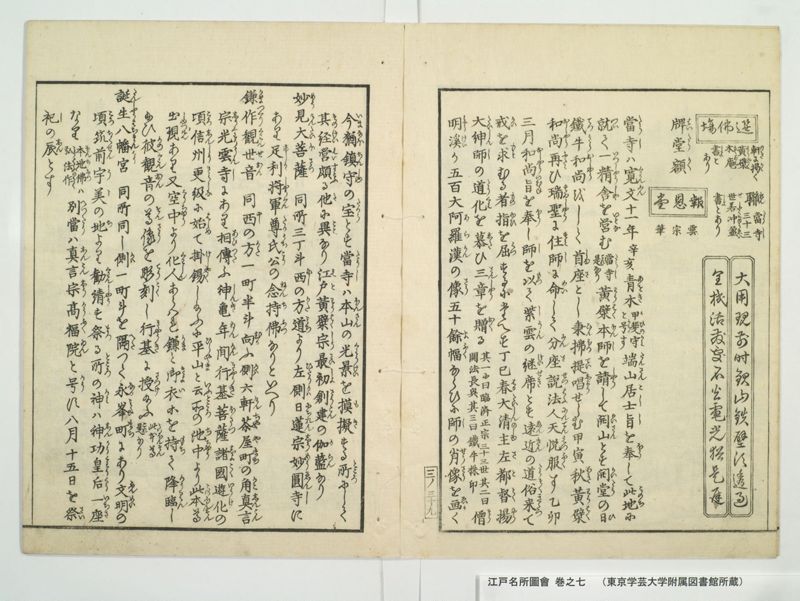
翻刻
【右丁】
選佛塲#1#2
《割書:軒(のき)に掲(かゝ)く|黄檗(おうばく)|木庵(もくあん)|書(しよ)と| あり》
聨《割書:當寺(たうし)|三十三》
《割書:世若冲盈(しやくちゆうゑい)|書(しよ)とあり》
大用現前時銀山鉄壁須透過#1
全機活敷處石火電光猶是遅#1
牌堂額(はいたうかく)
報恩堂#1#2雲宗筆#2
當寺(たうし)は寛文(くわんふん)十一年辛亥 青木(あをき)《割書:甲斐守(かひのかみ)|と号(かう)す》端山居士(たんさんこし)旨(し)を奉(ほう)して此地(このち)に
就(つい)て一精舎(いつしやうしや)を営(いとな)む《割書:當寺(たうし)|是(これ)なり》黄檗(わうはく)本師(ほんし)を請(しやう)して開山(かいさん)とす開堂(かいたう)の日(ひ)
鐵牛和尚(てつきうおしやう)をして首座(しゆさ)とし秉佛(ひんほつ)提唱(ていしよう)せしむ甲寅 秋(あき)黄檗(わうはく)
和尚(おしやう)再(ふたゝ)ひ瑞聖(すゐしやう)に住(すみ)師(し)に命(めい)して分座説法(ふんさせつはふ)人天悦服(にんてんえつふく)す乙卯
三月 和尚旨(おしやうのむね)を奉(ほう)し師(し)を以(もつ)て紫雲(しうん)の継席(けいせき)とす遠近(ゑんきん)の道俗(たうそく)来(きたつ)て
戒(かい)を求(もと)むる者(もの)指(ゆひ)を屈(くつ)するにたへす丁巳 春(はる)大清主(たいしんのしゆ)左都督(さととく)楊(やう)
大紳(たいしん)師(し)の道化(たうくえ)を慕(した)ひ三章(さんしやう)を贈(おく)る《割書:其一に曰臨済正宗三十三世其二曰|開法長興其三曰鐵牛株印#3》僧(そう)
明溪(みやうけい)か五百大阿羅漢( あらかん)の像(さう)五十餘幅( よふく)ならひに師(し)の肖像(せうさう)を画(ゑか)く
【左丁】
今猶(いまなほ)鎮守(ちんしゆ)の宝(たから)とす當寺(たうし)は本山(ほんさん)の光景(くわうけい)を摸擬(もき)する所(ところ)にして
其(その)経営(けいえい)頗(すこふ)る他(た)に異(こと)なり江戸(えと)黄檗宗(わうはくしう)最初(さいしよ)創建(さうこん)の伽藍(からん)なり
妙見大菩薩(めうけんたいほさつ) 同所三丁斗 西(にし)の方(かた)道(みち)より左側(ひたりかは)日蓮宗(にちれんしう)妙圓寺(めうゑんし)に
あり足利将軍尊氏公(あしかゝしやうくんたかうちこう)の念持佛(ねんちふつ)なりといへり
鎌作観世音(かまつくりくわんせおん) 同 西(にし)の方(かた)一町半斗 向(むか)ふ側(かは)六軒茶屋町( けんちややまち)の角(かと)真言(しんこん)
宗(しう)光雲寺(くわううんし)にあり相傳(あひつた)ふ神亀年間(しんきねんかん)行基菩薩(きやうきほさつ)諸國遊化(しよこくいうけ)の
頃(ころ)信州(しんしう)更級(さらしな)に始(はしめ)て掛錫(けしやく)し給ふに平山(ひらやま)と云(いふ)所(ところ)の池中(ちちゆう)より此(この)本尊(ほんそん)
出現(しゆつけん)あり又 空中(くうちゆう)より化人(くわしん)あらはれ鎌(かま)と御衣(きよい)等を持(もち)て降臨(かうりん)し
給ひ彼(かの)観音(くわんおん)の尊像(そんさう)を彫刻(てうこく)し行基(きやうき)に授(さつけ)給ふ《割書:此(この)本尊(ほんそん)|是(これ)なり》
誕生八幡宮(たんしやうはちまんくう) 同所同し側(かは)一町斗を隔(へた)つて永峯町(なかみねまち)にあり文明(ふんめい)の
頃(ころ)筑前(ちくせん)宇美(うみ)の地(ち)より勧請(くわんしやう)す祭(まつ)る所(ところ)の神(かみ)は神功皇后(しんかうくわうくう)一座(いちさ)
なり《割書:本地佛(ほんちふつ)は|弘法作(こうはふのさく)》別當(へつたう)は真言宗(しんこんしう)髙福院(かうふくゐん)と号(かう)す八月十五日を祭(さい)
祀(し)の辰(しん)とす
現代語訳
【右丁】
選仏場
(軒に掲げる黄檗木庵の書あり)
聯(当寺三十三世若冲盈の書とあり)
「大用現前の時 銀山鉄壁も須く透過すべし
全機活発の処 石火電光も猶お是れ遅し」
牌堂額 報恩堂 雲宗筆
当寺は寛文十一年辛亥(1671年)、青木甲斐守と号する端山居士が旨を奉じて、この地に一精舎を営んだ(当寺がこれである)。黄檗本師を請じて開山とし、開堂の日に鉄牛和尚をして首座として秉仏提唱させた。甲寅(1674年)秋、黄檗和尚が再び瑞聖に住し、師に命じて分座説法させ、人天が悦服した。乙卯(1675年)三月、和尚の旨を奉じ、師をもって紫雲の継席とした。遠近の道俗が来て戒を求める者は指を屈するに堪えない。丁巳(1677年)春、大清国主左都督楊大紳が師の道化を慕い、三章を贈った(その一に「臨済正宗三十三世」、その二に「開法長興」、その三に「鉄牛株印」とある)。僧明溪が五百大阿羅漢の像五十余幅ならびに師の肖像を画いた。
【左丁】
今なお鎮守の宝とする。当寺は本山の光景を模擬する所であって、その経営は頗る他と異なっている。江戸黄檗宗最初創建の伽藍である。
妙見大菩薩 同所三町ばかり西の方、道より左側、日蓮宗妙円寺にある。足利将軍尊氏公の念持仏であるといわれている。
鎌作観世音 同じく西の方一町半ばかり向う側、六軒茶屋町の角、真言宗光雲寺にある。相伝によると、神亀年間(724-729年)行基菩薩が諸国遊化の頃、信州更級に初めて掛錫されたときに、平山という所の池中よりこの本尊が出現した。また空中より化人が現れ、鎌と御衣等を持って降臨し、かの観音の尊像を彫刻して行基に授けた(この本尊がそれである)。
誕生八幡宮 同所同じ側、一町ばかりを隔てて永峯町にある。文明の頃(1469-1487年)筑前宇美の地より勧請した。祀る所の神は神功皇后一座である(本地仏は弘法作)。別当は真言宗高福院と号する。八月十五日を祭祀の辰とする。
英語訳
【Right page】
Buddha Selection Hall
(There is a calligraphy by Huangbo Mokuan hanging from the eaves)
Couplet (There is a calligraphy by the 33rd generation of this temple, Jakuchū-ei)
"When great function manifests, even silver mountains and iron walls must be penetrated
Where complete mechanism operates actively, even stone sparks and lightning are still slow"
Plaque of Memorial Hall Hōon Hall Calligraphy by Unshū
This temple was established in Kanbun 11, year of the Metal Boar (1671), when lay practitioner Tanzan (also known as Aoki Kai-no-kami) followed imperial orders to establish a hermitage on this land (this is the current temple). He invited Master Huangbo to be the founding abbot, and on the day of the hall opening, he had Master Tetsugyū serve as head monk to expound the Dharma. In autumn of Kinoe-Tora (1674), Master Huangbo resided again at Zuishō-ji and commanded the master to give joint Dharma talks, which delighted both humans and heavenly beings. In Kinoto-U (1675), March, following the master's orders, he made the teacher the successor of Shiun. Monks and laypeople from far and near came seeking precepts in numbers too many to count on one's fingers. In spring of Hinoto-Mi (1677), the Great Qing's Left Governor-General Yang Taishin, admiring the master's spiritual transformation, presented three inscriptions (the first saying "33rd generation of the authentic Rinzai lineage," the second "Opening Dharma at Chōkō," and the third "Tetsugyū's seal"). Monk Myōkei painted images of five hundred great arhats in over fifty scrolls as well as a portrait of the master.
【Left page】
These are still treasured as protective treasures today. This temple imitates the scenery of the head temple, and its management is quite different from others. It is the first Ōbaku sect temple built in Edo.
Myōken Daibosatsu Located about three chō west of the same place, on the left side from the road, at Nichiren sect Myōen-ji temple. It is said to be the devotional Buddha of Ashikaga Shōgun Takauji.
Kamatsukuri Kanzeon Located about one and a half chō west on the opposite side, at the corner of Rokken-chaya-machi, at Shingon sect Kōun-ji temple. According to tradition, during the Jinki era (724-729), when Bodhisattva Gyōki was traveling and teaching throughout the provinces, when he first stayed in Sarashina, Shinshū, this principal image emerged from a pond in a place called Hirayama. Also, a transformed being appeared from the sky, descended carrying a sickle and sacred robes, carved this statue of Kannon, and bestowed it upon Gyōki (this is that principal image).
Tanshō Hachiman-gū Located on the same side, separated by about one chō in Nagamine-machi. It was transferred from Umi in Chikuzen during the Bunmei era (1469-1487). The enshrined deity is Empress Jingū alone (the honji-butsu is a work by Kōbō). The steward temple is called Kōfuku-in of the Shingon sect. August 15th is designated as the festival day.