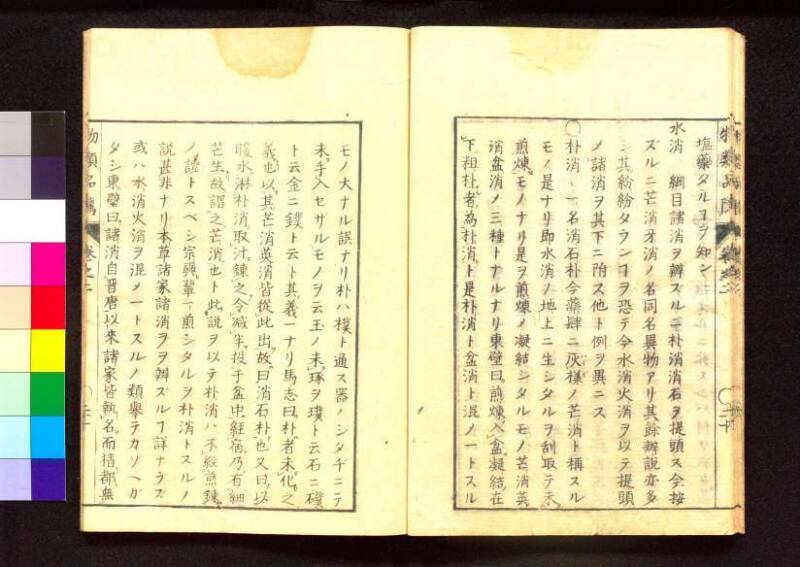
翻刻
【柱】物類品隲 巻之二 ○二十
塩薬タルコトヲ知ン
水消 綱目諸消ヲ弁ズルニ朴-消石ヲ提-頭ス今按
ズルニ芒苦消牙消ノ名同名異物アリ其 ̄ノ余弁説亦多
シ其 ̄ノ紛-紛タランコトヲ恐テ今水-消火-消ヲ以テ提頭
シテ諸消ヲ其下ニ附ス他ト例ヲ異ニス
○朴消 一-名消-石-朴今薬肆ニ《振り仮名:灰-様|ハイデ》ノ芒-消ト称スル
モノ是ナリ即水-消ノ地上ニ生シタルヲ刮-取テ未 ̄タ_二
煎煉 ̄セ_一モノナリ是ヲ煎-煉シテ凝-結シタルモノ芒-消英
消盆-消ノ三-種トナルナリ東壁曰 ̄ク煎-煉 ̄シテ入_レ盆 ̄ニ凝-結 ̄シテ在
_レ 下 ̄ニ粗-朴 ̄ナル者 ̄ノ為_二朴-消 ̄ト_一ト是朴-消ト盆-消ト混シテ一トスル
モノ大ナル誤ナリ朴ハ撲ト通ス器ノシタヂニテ
末 ̄タ手-入セザルモノヲ云玉ノ未 ̄タ_レ琢ヲ-璞ト云石ニ□#1
ト云金二鏷#2ト云ト其 ̄ノ義一ナリ馬-志曰 ̄ク朴 ̄ハ者未 ̄タ_レ化 ̄セ之
義 ̄ナリ也以 ̄テ_二其 ̄ノ芒-消英-消皆従_レ此出 ̄ヲ_一故 ̄ニ曰_二消-石-朴 ̄ト_一也又曰 ̄ク以_二
暖-水 ̄ヲ_一淋_二朴-消 ̄ニ_一取_レ汁 ̄ヲ錬_レ之 ̄ヲ令_レ減_レ半 ̄ヲ投_二于盆中_一 ̄ニ経_レ宿 ̄ヲ乃 ̄チ有_二細
芒生 ̄スルコト_一故 ̄ニ謂_二之 ̄ヲ芒-消 ̄ト_一也ト此 ̄ノ説ヲ以テ朴-消ハ不_レ経_二煎-錬 ̄ヲ_一
ノ証トスベシ宗-奭 ̄カ輩一-煎シタルヲ朴-消トスルノ
説甚-非ナリ本-草諸家諸-消ヲヲ弁ずルコト詳ナラズ
或ハ水-消火-消ヲ混シテ一トスルノ類挙テカゾヘガ
タシ東-壁曰 ̄ク諸-消自_二晋唐_一以-来諸-家皆執 ̄テ_レ名 ̄ヲ而猜コト都テ無_二
【柱】物類品隲 巻之二 ○二十一
現代語訳
【柱】物類品隲 巻之二 ○二十
塩薬であることを知るべし
水消 綱目では諸消を弁別するのに朴消石を筆頭に挙げている。今考えてみるに、芒硝、苦消、牙消の名は同じ名前でも異なる物質があり、その他の弁説も多い。その紛らわしいことを恐れて、今、水消・火消を筆頭にして諸消をその下に付す。他と例を異にする。
○朴消 一名消石朴。今薬舗で灰様(ハイデ)の芒消と称するものがこれである。すなわち水消の地上に生じたものを掻き取って、まだ煎煉していないものである。これを煎煉して凝結したものが芒消・英消・盆消の三種となるのである。東壁が言うには「煎煉して盆に入れ、凝結して下にある粗朴なるものを朴消とする」と。これは朴消と盆消を混同して一つとするもので、大きな誤りである。朴は撲と通じ、器の下地で、まだ手入れしていないものを言う。玉のまだ琢磨していないものを璞と言い、石に□と言い、金に鏷と言うのと、その義は同じである。馬志が言うには「朴とは、まだ化していないという義である。それによって、その芒消・英消は皆これより出るゆえに消石朴と言う」また言うには「暖水で朴消を淋し、汁を取って之を錬り、半分になるように令し、盆中に投じ、一夜を経ると、すなわち細かい芒が生じるゆえに、之を芒消と謂う」と。この説をもって朴消は煎錬を経ないことの証とすべし。宗奭らが一煎したものを朴消とする説は甚だ非である。本草諸家が諸消を弁別することは詳らかでなく、あるいは水消・火消を混同して一つとする類は挙げて数えがたい。東壁が言うには「諸消は晋唐以来、諸家は皆名を執って猜することは全く無い
【柱】物類品隲 巻之二 ○二十一
英語訳
【Header】Butsurui Hinshitsu, Volume 2, Page 20
One should know that this is a salt medicine.
Water nitrate: The Gangmu (Compendium) distinguishes various nitrates by placing poxiao (crude saltpeter) at the head. Considering now, mirabilite, bitter nitrate, and tooth nitrate have the same names but are different substances, and there are many other explanations. Fearing this confusion, I now place water nitrate and fire nitrate at the head and attach the various nitrates below them. This differs from other examples.
○Poxiao (Crude saltpeter): Also called xiaoshi-po. What pharmacies today call ash-like mirabilite is this. That is, it is what grows on the surface from water nitrate, scraped and collected, not yet refined through boiling. When this is refined and condensed, it becomes the three types: mirabilite, refined nitrate, and basin nitrate. Dongbi says, "What is refined and put into basins, condensed and remaining at the bottom as coarse and crude, is called poxiao." This confuses poxiao and basin nitrate as one, which is a great error. Po is interchangeable with pu, referring to the base material of a vessel that has not yet been worked. An unpolished jade is called pu, an unworked stone is called □, and unrefined gold is called □, and their meanings are the same. Mazhi says, "Po means that which has not yet been transformed. Therefore, mirabilite and refined nitrate all come from this, hence it is called xiaoshi-po." He also says, "Using warm water to leach poxiao, taking the liquid and refining it until it is reduced by half, throwing it into a basin, after one night, fine crystals grow, hence it is called mirabilite." This explanation should be taken as proof that poxiao does not undergo refinement. The theory of Zongshi and others that considers once-boiled material as poxiao is greatly mistaken. The various schools of materia medica are not detailed in distinguishing the various nitrates, and cases of confusing water nitrate and fire nitrate as one are too numerous to count. Dongbi says, "Since the Jin and Tang dynasties, all schools have held to names without any conjecture
【Header】Butsurui Hinshitsu, Volume 2, Page 21