翻刻
【柱】物類品隲 巻之三 ○二十四
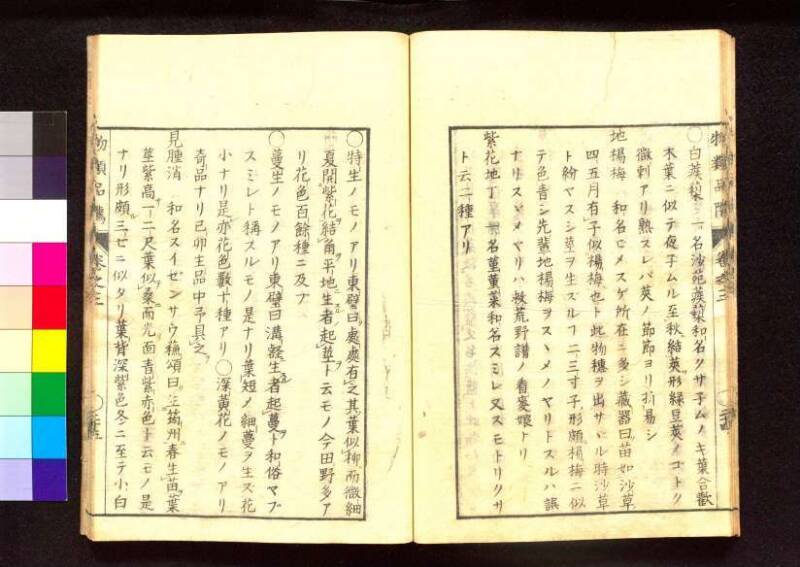
○白蒺䔧 一-名沙-苑蒺-䔧和-名クサネムノキ葉合歓
木葉ニ似て夜ネムル至_レ秋 ̄ニ結_レ莢 ̄ヲ形緑-豆-莢ノゴトク
微-刺アリ熟スレバ莢ノ節節ヨリ折-易シ
地楊梅 和-名ヒメスゲ所-在ニ多シ蔵-器曰 ̄ク苗如_二沙-草 ̄ノ_一
四-五月有_レ子似_二楊-梅 ̄ニ_一也ト此 ̄ノ物穂ヲ出サヾル時沙-草
ト紛ヤスシ茎ヲ生ズルコト二-三-寸子 ̄ノ形頗 ̄ル楊-梅ニ似
テ色青シ先-輩地-楊-梅ヲスヽメノヤリトスルハ誤
ナリスヾメヤリハ救荒野譜ノ看-麦-娘ナリ
紫花地丁 一-名菫-菫-名和-名スミレ又スモトリクサ
ト云二-種アリ
○特-生ノモノアリ東-璧曰 ̄ク処-処有_レ之其 ̄ノ葉似_レ柳 ̄ニ而微-細
夏開_二紫-花 ̄ヲ_一結_レ角 ̄ヲ平-地 ̄ニ生 ̄スル者 ̄ノ起_レ茎 ̄ヲト云モノ今田-野多ア
リ花-色百-余-種ニ及ブ
○蔓-生ノモノアリ東-璧曰溝-壑 ̄ニ生 ̄スル者起_レ蔓 ̄ヲ ト和-俗ヤブ
スミレト称スルモノ是ナリ葉-短シテ細-蔓ヲ生ズ花
小ナリ是 ̄レ亦花-色数-十-種アリ○深-黄-花ノモノアリ
奇-品ナリ已-卯主-品中予具_レ之 ̄ヲ
見腫消 和名スイゼンサウ蘇-頌曰 ̄ク生_二筠-州 ̄ニ春生_レ苗 ̄ヲ葉
茎紫高 ̄サ一-二-尺葉似 ̄テ_レ桑 ̄ニ而光 ̄リ面青-紫-赤-色ト云モノ是
ナリ形頗 ̄ル三-七ニ似タリ葉-ノ背深-紫色冬ニ至テ小-白
【柱】物類品隲 巻之三 ○二十五
現代語訳
【柱】物類品隲 巻之三 ○二十四
○白蒺藜 別名沙苑蒺藜、和名クサネムノキ。葉は合歓木の葉に似て夜眠る。秋に至って莢を結び、形は緑豆の莢のようで微細な刺がある。熟すと莢の節々から折れやすくなる。
地楊梅 和名ヒメスゲ、各地に多く生育している。蔵器が言うには「苗は沙草のようで、四、五月に楊梅に似た実をつける」とのこと。この植物は穂を出していない時は沙草と紛らわしい。茎は二、三寸程度に生長する。実の形は楊梅によく似ているが色は青い。先輩たちが地楊梅をススメノヤリとするのは誤りで、ススメヤリは救荒野譜の看麦娘である。
紫花地丁 別名菫菫菜、和名スミレ、またはスモトリグサと呼ぶ。二種類がある。
○直立して生えるものがある。東璧が言うには「各地にあり、その葉は柳に似て微細、夏に紫花を開き実をつける。平地に生えるものは茎を立てる」というもので、今田野に多くある。花色は百余種に及ぶ。
○蔓性のものがある。東璧が言うには「溝や谷に生えるものは蔓を出す」とあり、和俗でヤブスミレと称するものがこれである。葉は短くて細い蔓を生やす。花は小さい。これもまた花色は数十種ある。○深黄色の花のものがある。珍品である。己卯年の主品中に私はこれを詳しく記載した。
見腫消 和名スイゼンソウ。蘇頌が言うには「筠州に生え、春に苗を出し、葉茎は紫色で高さ一、二尺、葉は桑に似て光沢があり、表面は青紫赤色」というものがこれである。形はかなり三七に似ている。葉の裏は深紫色で、冬に至って小白い
【柱】物類品隲 巻之三 ○二十五
英語訳
【Column】Butsuruihinsitsu, Volume 3, ○24
○White Tribulus (Bai Ji Li): Also known as Sha Yuan Ji Li, Japanese name Kusanemunoki. The leaves resemble those of the silk tree and fold at night. In autumn, it forms pods shaped like mung bean pods with fine thorns. When ripe, the pods break easily at the joints.
Earth Bayberry (Di Yang Mei): Japanese name Himesuge, abundant in various locations. According to Zangqi, "The sprouts resemble sand grass, and in the fourth and fifth months bear fruit resembling bayberries." When this plant has not yet produced ears, it easily confused with sand grass. The stem grows to about 2-3 inches. The fruit shape closely resembles bayberry but is blue in color. The error of earlier scholars in identifying earth bayberry as susumenoyari is incorrect; susumenoyari is the kanbakuniang of the Kyukoyafu (Famine Relief Plant Guide).
Purple Flower Violet (Zi Hua Di Ding): Also known as Jin Jin Cai, Japanese name Sumire or Sumotorikusa. There are two varieties.
○There is an upright-growing type. According to Dongbi, "Found everywhere, its leaves resemble willow but are fine, blooming purple flowers in summer and bearing fruit. Those growing on flat ground send up stems." These are now abundant in fields. Flower colors number over a hundred varieties.
○There is a creeping type. According to Dongbi, "Those growing in ditches and valleys send out vines." This is what the common people call yabu-sumire (wild violet). The leaves are short and produce thin vines. The flowers are small. This also has dozens of flower color varieties. ○There is one with deep yellow flowers, which is a rare variety. I documented this thoroughly in my principal works of the Tsuchinoto-u year.
Tumor-Reducing Plant (Jian Zhong Xiao): Japanese name Suizensou. According to Su Song, "Grows in Junzhou, sends up sprouts in spring, leaves and stems are purple, 1-2 feet high, leaves resemble mulberry but are glossy, with blue-purple-red colored surface." This matches that description. The shape considerably resembles sanqi (Panax notoginseng). The back of the leaves is deep purple, and in winter small white [flowers appear].
【Column】Butsuruihinsitsu, Volume 3, ○25