翻刻
【上巻八丁裏】
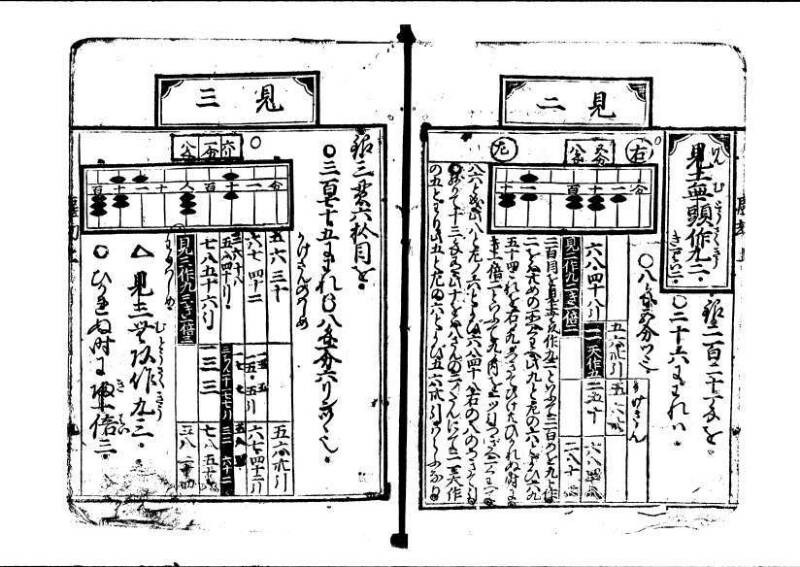
見二
/見(けん)二/無頭作九(むとうさくきう)二・
き一はい二・
銀二百二十一匁を
○二十六にわれは
○八匁五分つつ也
右 分 かけさん
1一 五六卅引 五六卅
五分 2十 六八四十八引 一一天作五 二五十 六八四十八
八匁 2百 見二作九二き一倍二 二八十六
6一
左 2十
二百目を見二無頭作九二といふて二百めを九と作
二をは廿めの所へくわへ此九と左の六とよひ六九
五十四これを右の九のつきてひけ共ひかれぬ時に
き一倍二といふて九の内を一つ引つぎヘ二くわへて
八六と成此八と左の六とよび六八四十八右の八のつきて引
○残りて十三匁有此十をは八さんの二のたんにて二一天作
の五とわり此五と左の六とよび五六卅引はらふなり
【上巻九丁表】
見三
銀三貫六拾目を・
○三百七十五にわれは〇八匁一分六りんつつ也・
かけさんのはしめ
右 分 五六三十 五六卅引
一 六七四十二 《割書:一五五|一五・五引》 六七・四十二引
六り 6十 《割書:三六十八|五八四十引・》 《割書:一七 七|三ちん一十一七七引》 《割書:五八 四十|三二 六十二》
一分 百 七八五十六引 一三三 七八五十六
八匁 3人 見三作九三き一倍三 三八二十四
十 わりはしめ
5一
7十
左 3百
△見三/無頭作九(むとうさくきう)三・
○ひかれぬ時に/帰(き)一/倍(はい)三・
現代語訳
【上巻八丁裏】
見二法
見二・無頭作九(むとうさくきゅう)の二・
気一倍二・
銀二百二十一匁を
二十六に分ければ
八匁五分ずつになる
右 分 掛け算
1一 五六三十引 五六三十
5分 2十 六八四十八引 一一天作五 二五十 六八四十八
8匁 2百 見二作九二 気一倍二 二八十六
6一
左 2十
二百目の位を「見二無頭作九二」といって、二百目を九と作り、二をば二十目の位へ加える。この九と左の六を呼んで「六九五十四」とし、これを右の九の次にて引こうとしても引かれぬ時には「気一倍二」といって、九の内を一つ引いて次へ二を加えて八六となる。この八と左の六を呼んで「六八四十八」とし、右の八の次にて引いて、残って十三匁あり。この十をば、八算の二の段にて「二一天作(てんさく)の五」と割り、この五と左の六を呼んで「五六三十」を引き払うなり。
【上巻九丁表】
見三法
銀三貫六十目を
三百七十五に分ければ、八匁一分六厘ずつになる
掛け算のはじめ
右 分 五六三十 五六三十引
一 六七四十二 《一五五 一五・五引》 六七・四十二引
6厘 6十 《三六十八 五八四十引》 《一七七 三進一十 一七七引》 《五八四十 三二六十二》
1分 百 七八五十六引 一三三 七八五十六
8匁 3人(貫) 見三作九三 気一倍三 三八二十四
十 割りはじめ
5一
7十
左 3百
△見三
無頭作九(むとうさくきゅう)三・
ひかれぬ時には帰一(きいち)倍三・
英語訳
[Volume 1, Folio 8 Verso]
The "Ken'ni" (見二) Method
Ken'ni: "Mutō saku kyū" (no-head makes nine) — two
"Ki'ichi bai'ni" (borrow one, double two)
If 221 monme of silver is
divided by twenty-six:
it becomes 8 monme 5 bu each
Right bu (tenths) Multiplication
1 [one] Five-six: thirty, subtract Five-six: thirty
5 bu 2 [tens] Six-eight: forty-eight, subtract One-one-ten-makes-five Two-five: ten Six-eight: forty-eight
8 monme 2 [hun.] Ken'ni makes nine-two Ki'ichi-bai'ni Two-eight: sixteen
6 [ones]
Left 2 [tens]
At the position of two-hundreds, apply "Ken'ni mutō saku kyū-ni" — make the two-hundreds into nine, and add two to the position of the twenties. Call this nine and the left's six as "six-nine: fifty-four." When one tries to subtract at the position next to the nine and cannot, apply "ki'ichi bai'ni" — subtract one from the nine and add two to the next position, making eighty-six. Call this eight and the left's six as "six-eight: forty-eight," subtract at the position next to the eight, and the remainder is 13 monme. For this ten, apply the second row of the "Hazan" (eight-algorithm) as "ni'ichi ten-saku no go" (two-one-heaven-makes-five) and divide; call this five and the left's six as "five-six: thirty" and subtract it away.
[Volume 1, Folio 9 Recto]
The "Ken'san" (見三) Method
If 3 kan 60 monme of silver is
divided by three hundred seventy-five: it becomes 8 monme 1 bu 6 rin each
Start of multiplication
Right bu Five-six: thirty Five-six: thirty, subtract
[one] Six-seven: forty-two [One-five-five One-five-five, subtract] Six-seven: forty-two, subtract
6 rin 6 [tens] [Three-six: eighteen Five-eight: forty, subtract] [One-seven-seven Three-advance-ten One-seven-seven, subtract] [Five-eight: forty Three-two: sixty-two]
1 bu [hun.] Seven-eight: fifty-six, subtract One-three-three Seven-eight: fifty-six
8 monme 3 [kan] Ken'san makes nine-three Ki'ichi-bai'san Three-eight: twenty-four
[tens] Start of division
5 [ones]
7 [tens]
Left 3 [hun.]
△ Ken'san (見三)
"Mutō saku kyū" (no-head makes nine) — three
When it cannot be subtracted: "Ki'ichi" (borrow one) "bai'san" (triple)