翻刻
【右丁】
周(しうの)孝王 馬(むま)三千 疋(びき)を羸非子(ゑいひし)【注】に授(さづけ)て此馬をよく養(やしなふ)て数(かず)多(おゝく)すべしと【欄外上部に▲】
勅(みことのり)し給ふ非子(ひし)勅命(ちよくめい)をうけて其馬を汧渭(けんい)といふ大 河(が)の辺(ほとり)に養(やしな)ふ。
此 河(かわ)の向(むかひ)は西戎(せいじう)にて毎日(まいにち)戎(ゑびす)の馬(むま)共を引来(ひきゝた)り此 河(かわ)にて水(みづ)を養(かふ)。非(ひ)
子(し)一つの計(はかりこと)を生(な)し牝(め)馬を岸(きし)の上につなぎ置(をき)。なれたる牡(お)馬を河(かは)に
入て浴(かはあみ)し水(みづ)飼(かふ)。其時 岸(きし)の上なる牝馬(めむま)ども牡(お)馬を慕(した)ひしきりに
嘶鳴(いななき)ければ河向(かはむかひ)なる戎(ゑひす)の馬共 牝(め)馬の嘶(なく)を聞(きゝ)て数(す)千 疋(びき)川を渡(わたつ)て
此方(こなた)の岸(きし)に来(きた)るをこと〴〵く取て一年ならざるに多(おゝく)の馬を献(たてまつ)る
孝王大に喜(よろこ)び非子(ひし)に秦国(しんのくに)を賜(たま)ふ是 秦(しんの)始皇帝(しくわうてい)の元祖(ぐわんそ)なり
周(しうの)宣王(せんわう)は姜(きやう)皇后(くはうごう)を愛(あい)し昼夜(ちうや)酒宴(しゆゑん)して政事(まつりこと)に怠(おこた)りたまふ尹吉甫(いんきつほ)【欄外上部に▲】
これを嘆(なげ)き諫表(かんひやう)を上(たてまつ)る王 怒(いかつ)て其 表(ひやう)を地(ち)に投打(なけうつ)皇后(くわうごう)其 表(ひやう)を取(とら)
しめつく〴〵と見(み)給ひて是 皆(みな)王の過(とが)にあらず妾(しやう)が科(とが)なりとて自(みづから)
簪(かんざし)を脱(ぬぎ)き【ママ】衣裳(いしやう)を謝(しや)して王の前(まへ)に跪(ひざまづ)き陛下(へいか)色(いろ)を楽(たのしみ)て政事(まつりごと)に
怠(おこた)りたまふ事 皆(みな)是 妾(しやう)を愛(あい)し給ふゆへなり願(ねがは)くは妾(しやう)を死(ころ)して
政事(まつりごと)を理(おさめ)給へと諫(いさめ)たまふ宣王(せんわう)遂(つゐ)に過(あやまち)を改(あらた)めよく政(まつりごと)を行(おこな)ひ給ふ
【注 羸は音「ルイ」。贏が音「エイ」なので羸は誤ヵ】
【左丁】
【右から横書き】
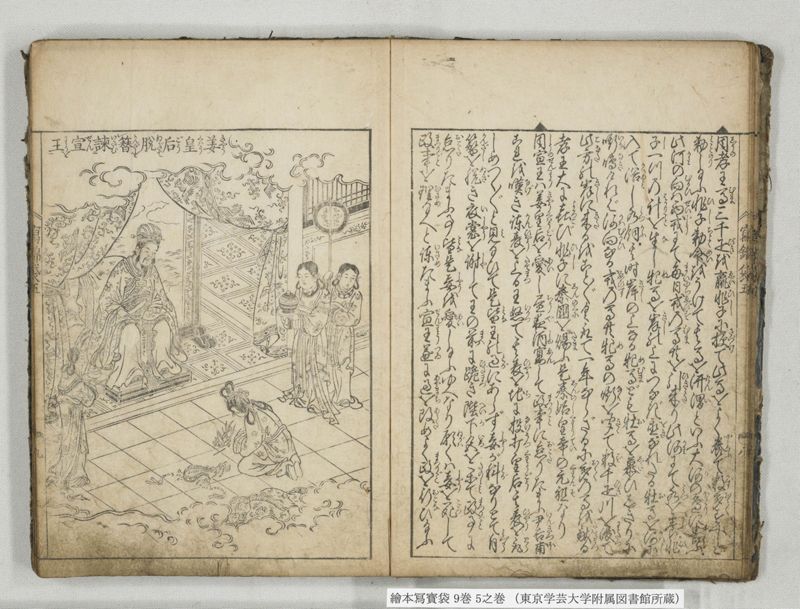
姜(きやう)皇(くはう)后(ごう)脱(ぬぎて)_レ簪(かんざしを)諫(いさむ)_二宣(せん)王(わうを)_一
現代語訳
【右丁】
周の孝王は馬三千匹を羸非子(えいひし)に授けて「この馬をよく養って数を多くするように」と勅命を下された。非子は勅命を受けて、その馬を汧渭(けんい)という大河のほとりで養った。
この川の向こう側は西戎(せいじゅう)の土地で、毎日戎族の馬たちを引き連れてきて、この川で水を飲ませていた。非子は一つの策略を考え出し、雌馬を岸の上につないで置き、慣れた雄馬を川に入れて水浴びさせ、水を飲ませた。その時、岸の上にいる雌馬たちが雄馬を慕ってしきりにいなないたので、川向こうにいる戎族の馬たちが雌馬の鳴き声を聞いて、数千匹が川を渡ってこちらの岸にやって来るのを、ことごとく捕らえて、一年もたたないうちに多くの馬を献上した。
孝王は大いに喜び、非子に秦国を賜った。これが秦の始皇帝の元祖である。
周の宣王は姜皇后を愛し、昼夜酒宴をして政事を怠られた。尹吉甫(いんきつほ)はこれを嘆き、諫言の表を上った。王は怒ってその表を地面に投げ打ったが、皇后がその表を取らせて、つくづくと見られて「これは皆、王の過ちではなく、私の罪です」として、自ら簪を脱ぎ、衣裳を改めて王の前にひざまづき「陛下が色事を楽しんで政事を怠られることは、皆これ私を愛してくださるゆえです。願わくは私を殺して、政事をお治めください」と諫められた。宣王はついに過ちを改めて、よく政治を行われた。
【左丁】
姜皇后、簪を脱ぎて宣王を諫む
英語訳
【Right Page】
King Xiao of Zhou granted three thousand horses to Ying Feizi and commanded him, "Raise these horses well and increase their number." Feizi received the imperial command and raised the horses by the banks of the great river called Qianwei.
Across this river was the territory of the Western Rong, and every day they would bring their horses to drink water at this river. Feizi devised a stratagem: he tied mares on the riverbank and let the tamed stallions enter the river to bathe and drink water. At that time, the mares on the bank longed for the stallions and neighed incessantly. Hearing the neighing of the mares, several thousand horses of the Rong people across the river swam over to this side of the bank, and he captured them all. Within less than a year, he had presented many horses to the king.
King Xiao was greatly pleased and granted the state of Qin to Feizi. This was the ancestor of Qin Shi Huang, the First Emperor of Qin.
King Xuan of Zhou loved Empress Jiang and indulged in banquets day and night, neglecting state affairs. Yin Jifu lamented this and submitted a memorial of remonstrance. The king became angry and threw the memorial to the ground, but the empress had the memorial retrieved and read it carefully, saying, "This is not the king's fault but mine." She then removed her hairpin, changed her clothes, knelt before the king and said, "Your Majesty's indulgence in pleasure and neglect of state affairs is all because of your love for me. I beg you to put me to death and attend to governing the state." King Xuan finally reformed his ways and governed well.
【Left Page】
Empress Jiang removes her hairpin and remonstrates with King Xuan