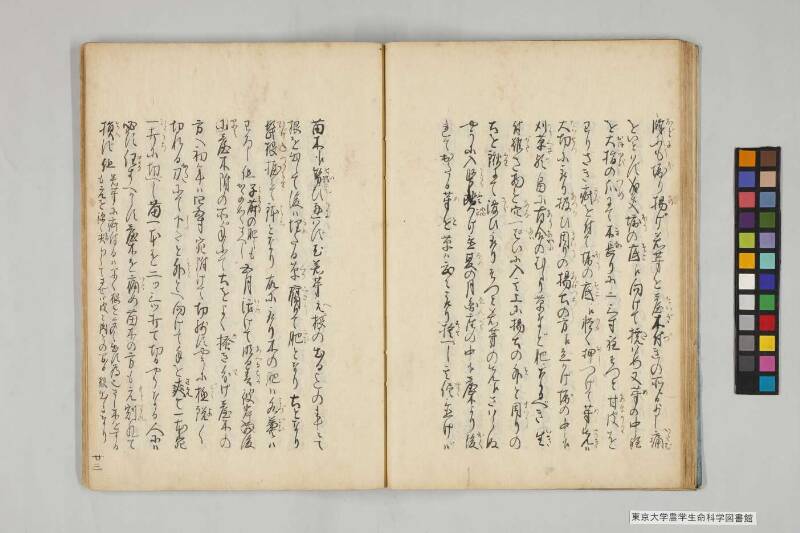
翻刻
/餘(不ど)尓も/堀(不)り/揚(あ)げ若芽を/臺木付(だいぎづ)きの所ゟ少し/痛(いたむ)
をいとはず成丈/堀(不り)の/底(そこ)江向けて/撓(た)はめ又/芽(め)の中程
を/大指(おほゆび)の/爪(つめ)尓て/木長(きな)り尓二三寸程そつと/甘皮(あまかわ)を
わりさき/疵(きづ)を付て/堀(不り)の/底(そこ)江/軽(かる)く/押(おし)つけて/芽先(めさき)は
/大切(たいせつ)尓取り/扱(あつか)ひ/周(まはり)りの/揚土(あげつち)の方江立かけ堀の中江
/刈草(かりくさ)/歟(か)畠尓/有合(ありあい)のむしり草など肥になるべき/生(いき)
付/難(がた)き物を/穴(あな)一ぱい尓入其上尓揚土の/外(そ)と/周(まはり)りの
土を/鍬(くわ)尓て/浚(さら)ひ取りそつと若芽の先江さはらぬ
やう尓入/堅踏(かたくふみ)つけ置/夏(なつ)の月/圓座(ゑんざ)の中江臺木より/後(おく)
連て出たる/芽(め)と草は度々取り/捨(春て)べし其/侭(まゝ)置けば
苗木江精気/通(かよ)はず尤若芽へ。根の出る迄の事にて
根を出して後は/埋(うめ)たる/草腐(くさくさ)りて/肥(こひ)となり土となり
/髭根握(ひげ年つか)みて/鉢(はち)となり故尓取り木の肥は/水糞(みづごひ)は
わろし但《割書:/子蒔(みまき)の肥しも|かくの如くすへし》五月/活(いけ)けて/明(あく)る/春(はる)彼岸後
早々臺木附の所。手尓て土をよく/掻(か)き/分(わ)け臺木の
方へ初年は四五寸宛附けて切残須やう尓/極(ごく)/鋭(よ)く
切れる/刀(なた)尓て/下(し)たと/外(そと)とへ向けて手を/爽(さえ)て一本宛
/一打(ひとうち)尓切べし苗一本を二ツ三ツ打て切るやうなる人尓は
必須/任(まか)すへから須臺木を/痛(いた)め苗木の方も/元割(もとわれ)れて
/損(そん)ず但《割書:若芽尓疵付るは早く根を多く出須為也さし木をする|も元を深く/尖(とが)らしてさせば皮と肉との間ゟ根出るなり》
現代語訳
一尺余りにも掘り上げ、若芽を台木付きの所から少し傷むことを厭わず、成る丈け堀の底へ向けて撓め、また芽の中程を親指の爪にて木なりに二三寸程そっと甘皮を割り裂き、傷を付けて堀の底へ軽く押し付けて、芽先は大切に取り扱い、周りの上げ土の方へ立て掛け、堀の中へ刈草か畑に有り合わせの毟り草など肥やしになるべき生き付き難い物を穴一杯に入れ、其の上に上げ土の外と周りの土を鍬にて攫い取り、そっと若芽の先へ触らぬよう入れ、堅く踏み付け置く。夏の月、円座の中へ台木より後から連なって出たる芽と草は度々取り捨てるべし。其の侭置けば
苗木へ精気通わず。尤も若芽へ根の出る迄の事にて、根を出して後は埋めたる草腐りて肥やしとなり土となり、髭根掴みて鉢となり、故に取り木の肥やしは水糞は悪し。但し《割書:種蒔きの肥やしもかくの如くすべし》五月に活けて明くる春彼岸後、早々台木附の所、手にて土をよく掻き分け、台木の方へ初年は四五寸宛付けて切り残すよう、極めて鋭く切れる鉈にて下と外とへ向けて手を冴えて一本宛一打ちに切るべし。苗一本を二つ三つ打ちて切るような人には必ず任すべからず。台木を傷め、苗木の方も元割れて損ず。但し《割書:若芽に疵付けるは早く根を多く出す為也。挿し木をするも元を深く尖らして挿せば皮と肉との間より根出るなり》
英語訳
Dig up to a depth of over one foot, bend the young shoots from where they attach to the stock tree toward the bottom of the hole without concern for slight damage, and around the middle of the shoot, gently split the bark two or three inches along the natural grain using the thumbnail to create wounds, then lightly press this into the bottom of the hole. Handle the shoot tips with great care, lean them against the excavated soil on the sides, and fill the hole completely with cut grass or weeds pulled from the field—anything that can serve as fertilizer but is difficult to keep alive. On top of this, scrape up the excavated soil and surrounding earth with a hoe, carefully add it without touching the shoot tips, and tamp down firmly. During the summer months, frequently remove any shoots and weeds that emerge from behind the stock tree within the circular area. If left as they are,
the vital energy will not flow to the saplings. This is particularly important until roots emerge on the young shoots. After roots develop, the buried grass will rot and become fertilizer and soil, the fibrous roots will take hold and form a root ball, so liquid manure is poor fertilizer for cuttings. Note: {{Fertilizer for seed sowing should also be done in this manner}} After keeping them alive in May, early in the spring after the equinox of the following year, carefully scrape away the soil by hand around where they attach to the stock tree. In the first year, leave four to five inches attached to the stock tree side, and using an extremely sharp hatchet, cut decisively in one stroke per sapling, angling the cut downward and outward with a practiced hand. Never entrust this task to someone who would hack at a single sapling two or three times. This damages the stock tree and causes the sapling end to split and be ruined. Note: {{Wounding young shoots is to make them produce many roots quickly. Even when making cuttings, if you sharpen the base and insert it deeply, roots will emerge from between the bark and wood}}